
How Medications Cross the Placenta and Affect the Fetus
 Jan, 16 2026
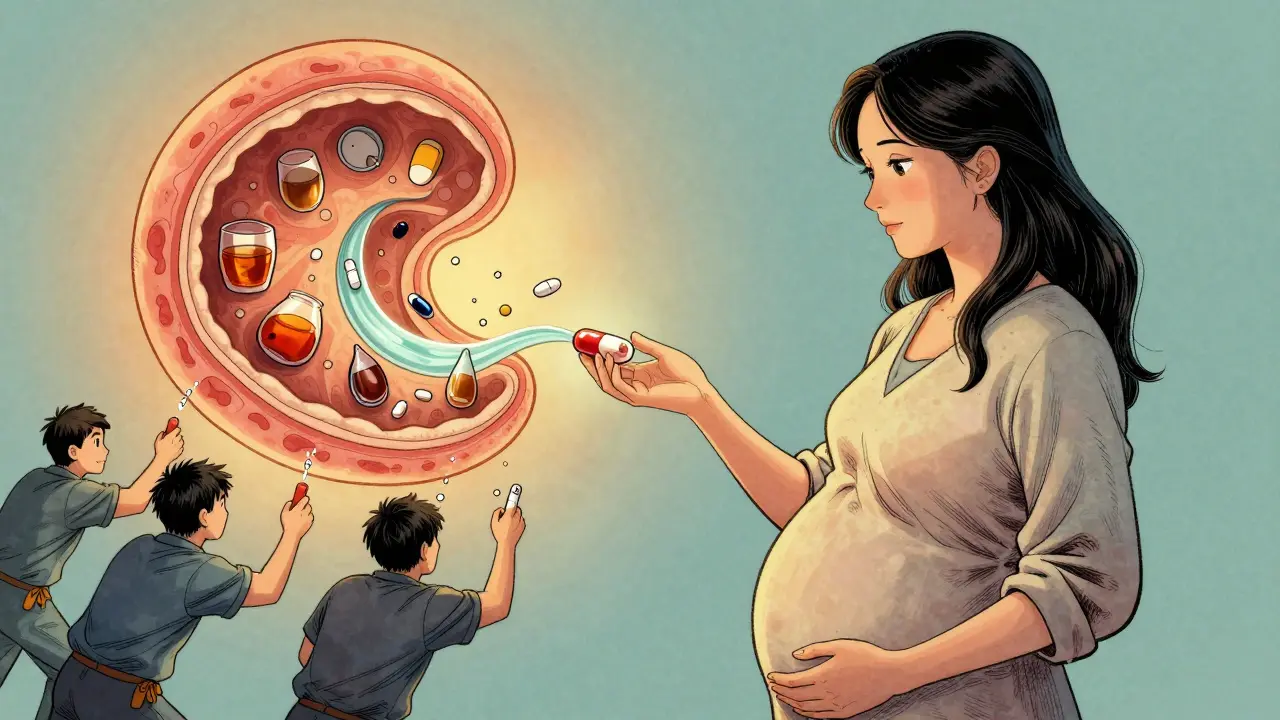
When a pregnant person takes a pill, gets an injection, or uses a patch, it’s easy to assume the medication stays with them. But that’s not how it works. The placenta isn’t a wall - it’s a busy exchange station. Every hour, hundreds of chemicals move back and forth between mother and baby. Some help. Some hurt. And many do both, depending on timing, dose, and the drug’s chemistry.
The Placenta Isn’t a Filter - It’s a Gatekeeper
The placenta looks like a spongy disc, about the size of a dinner plate and weighing half a kilogram at full term. But inside, it’s packed with millions of tiny finger-like projections called villi. These create a surface area of nearly 15 square meters - bigger than a small apartment - for blood to exchange nutrients, oxygen, and yes, drugs. For decades, doctors thought the placenta protected the baby like a shield. That changed in the late 1950s when thousands of babies were born with missing limbs after their mothers took thalidomide for morning sickness. The drug slipped right through. Since then, we’ve learned the placenta doesn’t block drugs - it decides which ones get through based on their size, solubility, and how they interact with transport proteins.How Drugs Actually Get Through
Not all drugs cross the same way. The main routes are:- Passive diffusion: Small, fat-soluble molecules slip easily between cells. Think alcohol, nicotine, or caffeine. These cross quickly and reach nearly the same levels in the baby’s blood as in the mother’s.
- Active transport: Some drugs hitch a ride on special proteins that normally carry nutrients. Zidovudine, an HIV drug, uses these transporters to get into the fetus - which is why it’s preferred in pregnancy over other antivirals.
- Efflux pumps: The placenta has its own security system. Proteins like P-glycoprotein (P-gp) and BCRP act like bouncers, pushing certain drugs back into the mother’s bloodstream. HIV protease inhibitors like lopinavir and saquinavir get kicked out this way, keeping fetal exposure low.
- Receptor-mediated endocytosis: Large molecules like antibodies (IgG) are actively pulled across. That’s why some biologic drugs can reach the fetus in significant amounts.
Size matters. Drugs under 500 daltons (like ibuprofen or sertraline) cross far more easily than larger ones. Insulin, at over 5,800 daltons, barely makes it through. Even then, only the unbound portion of a drug crosses - if 99% of it sticks to proteins in the mother’s blood (like warfarin), very little gets to the baby.
Timing Changes Everything
The placenta changes as pregnancy progresses. In the first trimester, it’s thinner and less equipped with those protective efflux pumps. That’s why some drugs are most dangerous early on - when organs are forming. A medication that’s safe at 30 weeks might be risky at 8 weeks. For example, valproic acid, used for epilepsy, crosses easily at any stage. But if taken in the first 12 weeks, it raises the risk of major birth defects from the normal 2-3% to nearly 11%. That’s why doctors avoid it in early pregnancy unless there’s no alternative.
Real-World Examples: What Crosses and What Doesn’t
Some drugs are well-studied. Others aren’t. Here’s what we know:- Sertraline (Zoloft): Crosses with a cord-to-maternal ratio of 0.8-1.0. About 30% of babies exposed show temporary jitteriness or feeding issues after birth - not permanent harm, but enough to warrant monitoring.
- Methadone: Reaches 65-75% of maternal levels. Leads to neonatal abstinence syndrome (NAS) in 60-80% of newborns - meaning the baby goes through withdrawal. Still, it’s safer than uncontrolled opioid use.
- Phenobarbital: Crosses almost completely. Used for seizures, but can cause drowsiness and feeding problems in newborns.
- Insulin: Too large to cross significantly. Safe for gestational diabetes.
- Penicillin: Crosses easily but is low-risk. Often used in pregnancy without concern.
- Warfarin: 99% bound to proteins. Minimal transfer - but when it does cross, it can cause fetal bleeding or bone deformities. Avoided in pregnancy.
Even within the same drug class, transfer varies. Lopinavir (an HIV drug) only reaches 60% of maternal levels due to P-gp efflux. Zidovudine? It hits 95%. That’s why treatment choices matter.
Why Some Drugs Are Riskier Than Others
It’s not just about how much gets through - it’s what the drug does to a developing body. A fetus doesn’t metabolize drugs like an adult. Liver enzymes are immature. Kidneys don’t filter well. A drug that’s harmless to mom might build up in the baby and interfere with brain development, heart formation, or bone growth. For example, isotretinoin (Accutane) for acne causes severe birth defects even in tiny amounts. That’s why it’s banned in pregnancy - no exceptions. On the flip side, folic acid crosses easily and prevents neural tube defects. That’s why it’s recommended before conception.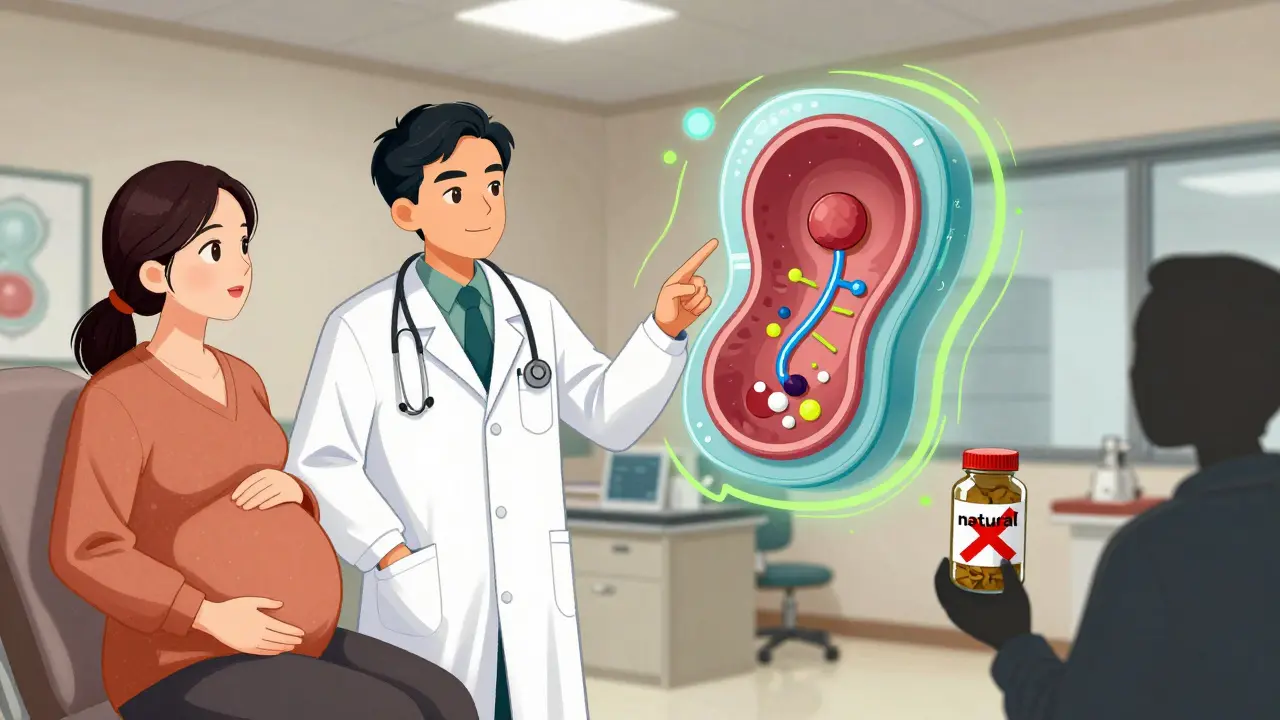
What’s New in Research
Scientists aren’t just guessing anymore. New tools are changing the game:- Placenta-on-a-chip: Microfluidic devices that mimic the placenta’s structure. One study showed glyburide (a diabetes drug) crossed at 5.6% - matching real-world data.
- Non-invasive imaging: Using radioactive tracers, researchers can now watch drugs move in real time to the fetal liver - without harming the baby.
- Transporter inhibitors: Early trials are testing drugs that can temporarily block P-gp to help deliver medicine to the fetus for conditions like congenital infections or tumors.
Still, big gaps remain. Most studies use placentas from full-term births. But the most critical development happens in the first trimester - and we still don’t have enough data on how drugs behave then.
What You Should Know as a Patient
If you’re pregnant or planning to be:- Don’t stop prescribed meds without talking to your doctor. Untreated conditions like epilepsy, depression, or high blood pressure can be more dangerous than the drugs.
- Ask: “Is this drug studied in pregnancy? What’s the evidence?”
- Use the lowest effective dose for the shortest time.
- Avoid OTC drugs, herbs, and supplements unless approved. Many people assume “natural” means safe - it doesn’t.
- Keep a list of everything you take - including vitamins, CBD, and sleep aids.
The FDA now requires drug labels to include detailed pregnancy data. Look for the “Pregnancy” section on the label. If it says “insufficient data,” that’s not an excuse to guess - it’s a sign to talk to your provider.
The Bigger Picture
Right now, 45% of prescription drugs have no solid data on safety in pregnancy. That’s not because scientists aren’t trying - it’s because testing on pregnant people is ethically complex and legally restricted. Most safety data comes from accidental exposures or animal studies, which don’t always translate to humans. That’s why research funding has jumped from $12.5 million in 2015 to nearly $48 million in 2022. The goal isn’t just to avoid harm - it’s to design drugs that can safely reach the fetus when needed, like for treating fetal arrhythmias or infections. The future may include targeted therapies that deliver medicine only to the placenta or the fetus, sparing the mother. But until then, the best tool we have is knowledge - and honest conversations between patients and providers.Can I take over-the-counter painkillers while pregnant?
Acetaminophen (Tylenol) is generally considered safe in pregnancy when used as directed. NSAIDs like ibuprofen or naproxen are fine in early pregnancy but should be avoided after 20 weeks because they can reduce amniotic fluid and affect fetal kidney development. Always check with your doctor before taking any OTC medicine.
Do antidepressants harm the baby?
Some SSRIs like sertraline and citalopram cross the placenta but are among the best-studied and safest options for depression during pregnancy. Untreated depression carries risks too - including preterm birth and low birth weight. The decision should be made with your doctor, weighing the benefits of treatment against potential temporary side effects in the newborn.
Why do some drugs cross more easily than others?
Drugs that are small (under 500 daltons), fat-soluble, and not heavily bound to proteins cross more easily. For example, alcohol and nicotine are small and dissolve in fat, so they pass quickly. Large molecules like insulin or proteins like antibodies behave differently - insulin barely crosses, while IgG antibodies are actively transported. Efflux proteins like P-gp also block certain drugs, such as some HIV medications.
Is it safe to take medication in the first trimester?
The first trimester is the most sensitive time for fetal development. Many organs form between weeks 3 and 8, so exposure to certain drugs can cause birth defects. However, not all medications are risky - some, like folic acid and certain thyroid medications, are essential. The key is not to avoid all meds, but to use only those that are necessary and well-studied. Never stop a prescribed medication without medical advice.
What should I do if I took a medication before knowing I was pregnant?
Don’t panic. Most medications don’t cause harm, and the risk depends on the drug, dose, and timing. Call your doctor or a teratology specialist - they can review what you took, when, and how likely it is to affect the baby. In many cases, the risk is low or nonexistent. Avoid self-diagnosing or searching online - professional guidance is key.
Are herbal supplements safe during pregnancy?
No. Many herbal products are not tested for safety in pregnancy. Some, like black cohosh or goldenseal, can trigger contractions. Others, like St. John’s wort, can interfere with medications and cross the placenta. Always tell your provider about any supplements you’re taking - even if you think they’re harmless.
swarnima singh
January 17, 2026 AT 18:24Ryan Hutchison
January 18, 2026 AT 21:55Samyak Shertok
January 19, 2026 AT 09:16Stephen Tulloch
January 19, 2026 AT 16:04Melodie Lesesne
January 21, 2026 AT 01:38Chelsea Harton
January 22, 2026 AT 14:54Corey Chrisinger
January 23, 2026 AT 08:44Bianca Leonhardt
January 23, 2026 AT 14:20Travis Craw
January 25, 2026 AT 10:33Christina Bilotti
January 26, 2026 AT 03:24Isabella Reid
January 27, 2026 AT 08:51Jody Fahrenkrug
January 28, 2026 AT 08:58Kasey Summerer
January 29, 2026 AT 16:57