
How to Prevent Moisture Damage to Pills and Capsules: Expert Storage Tips
 Jan, 11 2026
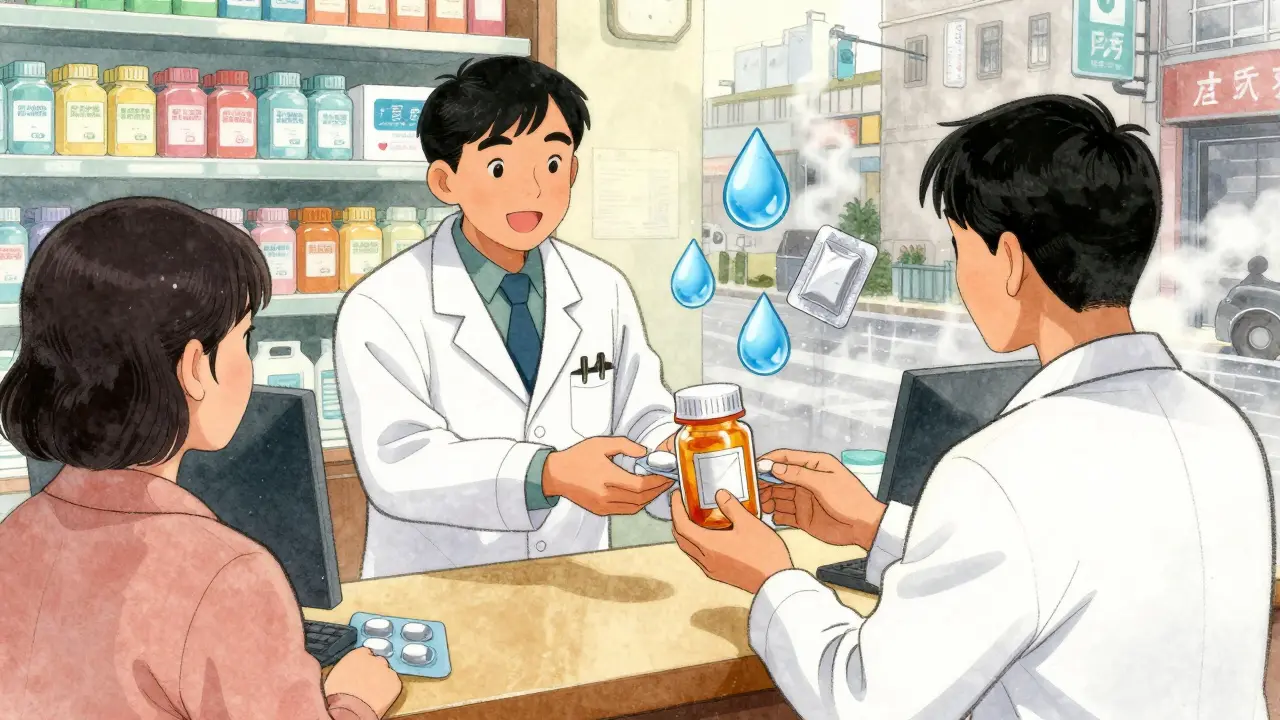
Moisture doesn’t just ruin your phone or your books-it can also ruin your pills and capsules. If your medications are exposed to humidity, they can break down, lose potency, or even turn harmful. You might not notice it right away, but a single pill that’s gone bad could mean your treatment isn’t working. In places like Perth, where humidity spikes in summer, or in tropical climates worldwide, this isn’t just a theoretical risk-it’s a daily reality for millions.
Why Moisture Destroys Pills and Capsules
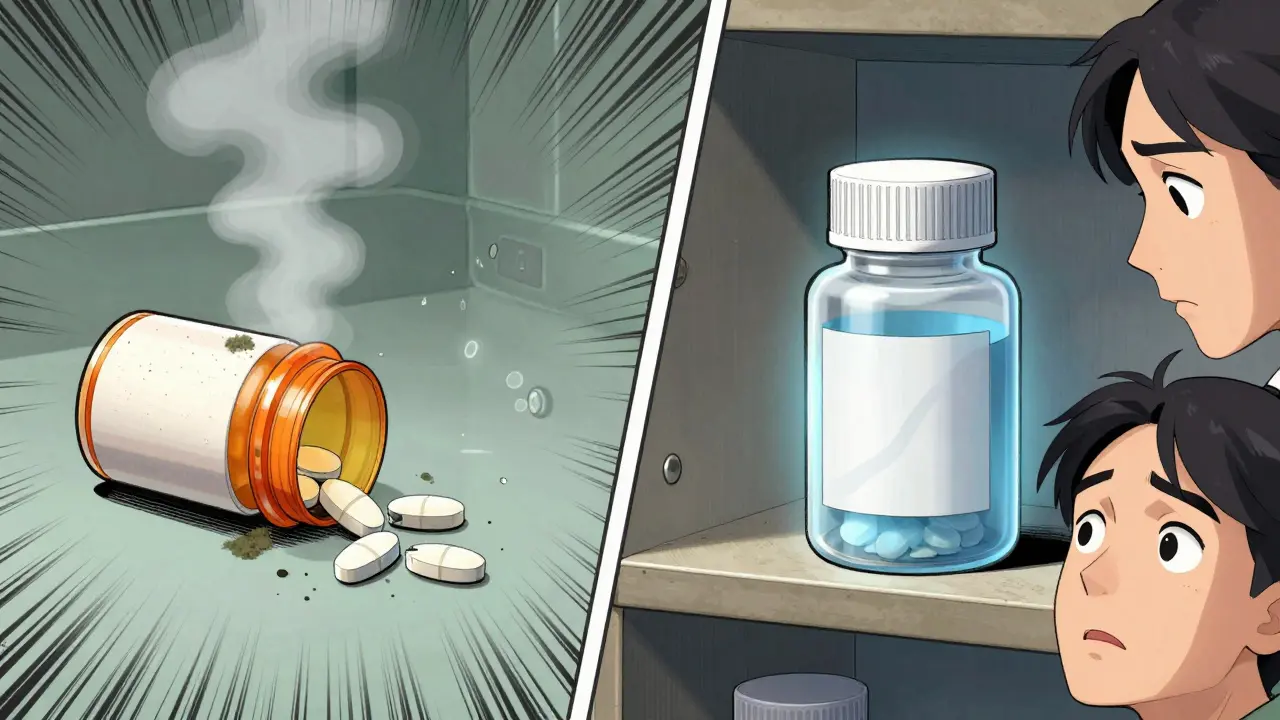
Pills and capsules aren’t just sugar and powder. They contain active ingredients designed to work in your body under precise conditions. When moisture gets in, it triggers chemical reactions. One of the most common is hydrolysis, where water breaks apart molecules in the drug. Aspirin, for example, turns into salicylic acid and vinegar when wet. That’s not just ineffective-it can irritate your stomach. Vitamin C, antibiotics like amoxicillin, and even some supplements are equally vulnerable.Even if the pill looks fine, the active ingredient might be gone. Studies show that uncoated tablets exposed to humid air for just 10 days can lose over 90% of their key ingredient. That’s not speculation-it’s lab-tested data from Colorcon and Biogrund. The result? Your medication doesn’t work. And in some cases, degraded drugs can produce toxic byproducts.
The Three-Layer Defense System
Pharmaceutical companies don’t leave this to chance. They use three proven layers to protect pills from moisture. You should too.- Film coating-This is the first line of defense. Not all coatings are the same. Older coatings made from HPMC (hydroxypropyl methylcellulose) offer basic protection. But newer PVA-based coatings like Opadry® Amb II are three times better at blocking moisture. These coatings form a tight, invisible shield around the pill, keeping water vapor out even before it reaches the tablet core.
- Proper packaging-HDPE bottles (the plastic ones) are common, but they’re not enough on their own. They stop liquid spills, but water vapor still slips through. The best packaging combines thick plastic with aluminum blisters or foil-foil seals. These are airtight and block nearly all moisture.
- Desiccants-These are the little packets you find in pill bottles. Most are made of silica gel. They don’t just absorb moisture-they soak up to 40% of their own weight in water. In long-term testing, adding a correctly sized desiccant kept moisture levels in a pill bottle from rising more than 0.9% over six months. Without it? Moisture climbed over 3% in the same time.
The most effective medications use all three. A 2023 study by Colorcon showed that even in a basic plastic bottle, PVA-coated tablets stayed stable. But uncoated pills? They failed no matter the packaging. That’s why some pharmacies now only stock PVA-coated versions of antibiotics-customer complaints about spoiled meds dropped by 90%.
What You Can Do at Home
You won’t control how your pills are coated, but you control how you store them. Here’s what actually works:- Keep pills in their original bottle-That bottle was designed with the right seal and desiccant. Transferring pills to a plastic box, pill organizer, or ziplock bag removes that protection. Even if it looks clean, your new container has no moisture barrier.
- Never store in the bathroom-Steam from showers, humidity from sinks-it’s the worst place for meds. The same goes for the kitchen near the stove or dishwasher.
- Use the fridge only if instructed-Some liquids and suppositories need refrigeration. But for most pills, cold + humidity = condensation. When you take a bottle out of the fridge, water forms on the outside and can seep in when you open it. Only refrigerate if the label says so.
- Check for desiccants-If your bottle has a little packet labeled “Do Not Eat,” leave it in. Don’t toss it. If it’s missing, ask your pharmacist for a replacement. Some pharmacies now include extra desiccants for humid climates.
- Close the cap tightly-Every time you open a bottle, you let in humid air. In a 500-pill bottle used daily, you’re replacing the air inside over 250 times. That’s 250 chances for moisture to get in. Always snap the cap shut firmly.
What Doesn’t Work
There’s a lot of bad advice out there. Don’t fall for it.- Putting pills in rice-Rice doesn’t absorb moisture fast enough, and it can leave residue on pills. It’s a myth from old TV shows.
- Using silica gel from electronics-Those packets aren’t pharmaceutical-grade. They might contain dust or chemicals not safe for contact with medicine.
- Leaving pills in a car-Heat and humidity combine in cars to accelerate degradation. Even a cold day in the car can create condensation inside the bottle.
- Ignoring expiration dates-Moisture damage can happen long before the printed date. If your pills smell funny, look discolored, or feel sticky, throw them out. Don’t wait for the label.
Signs Your Pills Are Damaged
You don’t need a lab to tell if your meds are compromised. Look for these red flags:- Tablets that are cracked, chalky, or crumble easily
- Capsules that are sticky, swollen, or leaking
- Discoloration-yellowing, dark spots, or uneven coloring
- A strange smell-vinegar, mustiness, or chemical odors
- Pills that don’t dissolve normally in water
If you see any of these, don’t take them. Contact your pharmacist. They can replace them, especially if the damage happened before you opened the bottle.
When to Ask Your Pharmacist
Not all meds are created equal. Some are more sensitive than others. Ask your pharmacist:- Is my medication moisture-sensitive?
- Does it come with a PVA coating?
- Can you give me a bottle with a fresh desiccant?
- Are there better packaging options for my climate?
Pharmacists in high-humidity areas like Southeast Asia, Florida, or coastal Australia are used to these questions. Many now offer upgraded packaging for customers who live in humid homes or travel often.
The Bigger Picture
This isn’t just about one bottle of pills. Moisture damage contributes to 67% of medication shortages in the U.S. alone. When drugs degrade, people don’t get better. They get sicker. Hospitals see more readmissions. Insurance costs go up. It’s a public health issue.Manufacturers are responding. New biodegradable desiccants are hitting the market. Smart packaging with moisture-indicating labels is in testing. But until those become standard, your best defense is simple: keep pills dry, in their original container, with the desiccant left inside.
Medication safety isn’t about fancy gadgets or expensive gadgets. It’s about basic habits. Treat your pills like you’d treat your phone-keep them away from water, heat, and humidity. Your health depends on it.
Can I store pills in the refrigerator to keep them dry?
Only if the label says to. For most pills, the fridge is a bad idea. Cold air holds less moisture, but when you take the bottle out, warm air hits the cold glass or plastic, causing condensation. That water can seep into the bottle and damage your pills. Stick to a cool, dry cupboard instead.
What if the desiccant packet is missing from my pill bottle?
Contact your pharmacy. Most will replace the bottle or add a new desiccant at no cost, especially if you live in a humid area. Never remove the packet unless it’s damaged or expired. If you can’t get a replacement, keep the bottle tightly sealed and store it in a low-humidity area.
Are pill organizers safe to use?
Only for short-term use-like a week or less. Most pill organizers aren’t sealed, and they expose pills to air every time you open them. If you need to use one daily, refill it weekly and keep it in a dry place. Never store medications in organizers for months.
Do all pharmacies use moisture-resistant coatings?
No. Many generic manufacturers still use cheaper HPMC coatings to save money. If you notice your pills degrade quickly, ask your pharmacist if a PVA-coated version is available. It may cost slightly more, but it lasts longer and works better in humid conditions.
How do I know if my pills are still good after being exposed to moisture?
If they look, smell, or feel off-crumbly, sticky, discolored, or smelly-don’t take them. Even if they’re not expired, moisture damage can make them ineffective or unsafe. When in doubt, throw them out and get a new prescription. Your health isn’t worth the risk.
Cassie Widders
January 12, 2026 AT 04:13Just leave your pills in the medicine cabinet and don’t overthink it. I’ve had the same bottle of ibuprofen for three years and I’m still standing.
Amanda Eichstaedt
January 14, 2026 AT 00:04This is actually super useful. I used to keep my vitamins in the bathroom until I noticed they were getting sticky. Now they live in a drawer with my socks. No more weird smells. 🙌
Rinky Tandon
January 15, 2026 AT 11:26Let me be clear-this isn’t about storage, it’s about corporate negligence. The pharmaceutical industry deliberately uses cheap HPMC coatings to maximize margins while you suffer through degraded meds. They know exactly what’s happening. The FDA? Complicit. Desiccants? Afterthoughts. PVA coatings? Only for the rich who can afford premium brands. This is systemic pharmaceutical malpractice disguised as ‘common sense.’
Alex Fortwengler
January 17, 2026 AT 04:23Yeah right and next you’ll tell me rice doesn’t work. I’ve been putting my pills in a jar of rice since 2017 and my blood pressure meds still work. The FDA doesn’t want you to know this. They’re in bed with Big Pharma. You think they want you to save money? Nah. They want you buying new bottles every month.
Monica Puglia
January 18, 2026 AT 11:57Thank you for this. I live in Florida and my mom’s pills used to get all weird. Now I keep everything in the original bottle with the desiccant and in a cool closet. She hasn’t had a bad batch since. 🤍
jordan shiyangeni
January 19, 2026 AT 13:59It’s not just about moisture-it’s about the complete collapse of pharmaceutical integrity. When you remove the desiccant, you’re not just risking degradation, you’re actively participating in the commodification of human health. The fact that people still transfer pills into plastic organizers speaks to a cultural epidemic of carelessness. We treat our bodies like disposable devices. The real tragedy isn’t the degraded aspirin-it’s that we’ve normalized this neglect. Every time you open a pill bottle carelessly, you’re eroding the sacred contract between patient and medicine.
Ben Kono
January 20, 2026 AT 02:24Who cares about coatings I just throw them in the fridge and call it a day. Works for me
Craig Wright
January 20, 2026 AT 20:10As a British citizen who’s seen the NHS struggle with drug shortages, I find this article dangerously naive. The UK doesn’t have the luxury of PVA-coated generics. We rely on cost-effective solutions. To suggest that moisture damage is a personal failure ignores systemic underfunding. If your medication fails, blame the government-not your storage habits. And stop telling people in developing nations how to store their pills like they’re living in a Swiss lab.
Cecelia Alta
January 21, 2026 AT 22:32Okay but let’s be real-how many people actually read the label? I’ve seen grandmas keep their heart meds in the glovebox because ‘it’s always cold in the car.’ And don’t even get me started on the people who leave their insulin in the sun while running errands. This isn’t a storage guide-it’s a survival manual for people who refuse to take responsibility. The fact that this even needs to be said is a national embarrassment.
Eileen Reilly
January 23, 2026 AT 01:16lol i just use those silica packs from my new shoes and toss em in the pill bottle. works great and free. why pay for pharma grade when you can just recycle?
steve ker
January 23, 2026 AT 07:40Why are you wasting time on this. Pills are pills. If they work they work. If they don’t you die. Simple
Abner San Diego
January 23, 2026 AT 07:53So you’re telling me I’m supposed to care about a $0.02 desiccant packet but the government lets pharmaceutical companies charge $1,200 for a 30-day supply of a drug that’s been around since 1950? You’re blaming the patient for not being perfect while the real criminals are the ones pricing medicine out of reach. This article is a distraction. Fix the system before you lecture people on caps.
Lelia Battle
January 24, 2026 AT 03:01There’s a quiet dignity in the act of preserving one’s medicine-not as a ritual of control, but as an act of respect for the body’s fragility. We treat our bodies as machines, yet we neglect the very tools that sustain them. The desiccant isn’t just a packet-it’s a silent guardian. The original bottle isn’t packaging-it’s a covenant between manufacturer and patient. To disregard it is to forget that healing is not merely chemical, but also deeply human.