
Seasonal Affective Disorder: How Light Therapy Helps with Winter Depression
 Jan, 21 2026
What Is Seasonal Affective Disorder?
Seasonal Affective Disorder, or SAD, isn’t just feeling a little down when it’s cold and dark. It’s a real type of depression that shows up every year, usually in late fall and lasts through winter. People with SAD don’t just hate the cold-they feel exhausted, crave carbs, sleep too much, and pull away from friends and family. It’s not laziness. It’s biology.
According to the American Psychiatric Association, about 5% of adults in the U.S. experience SAD. That’s one in every 20 people. The numbers are higher in places farther from the equator, like Alaska or Canada, where winter days are short. But even in places like Perth, Australia, where winters are milder, some people still feel the shift. When daylight fades, your body’s internal clock gets confused. Your brain produces less serotonin, the chemical that helps you feel calm and focused. Melatonin, the sleep hormone, stays high longer, making you feel sluggish even after a full night’s rest.
Why Light Therapy Works
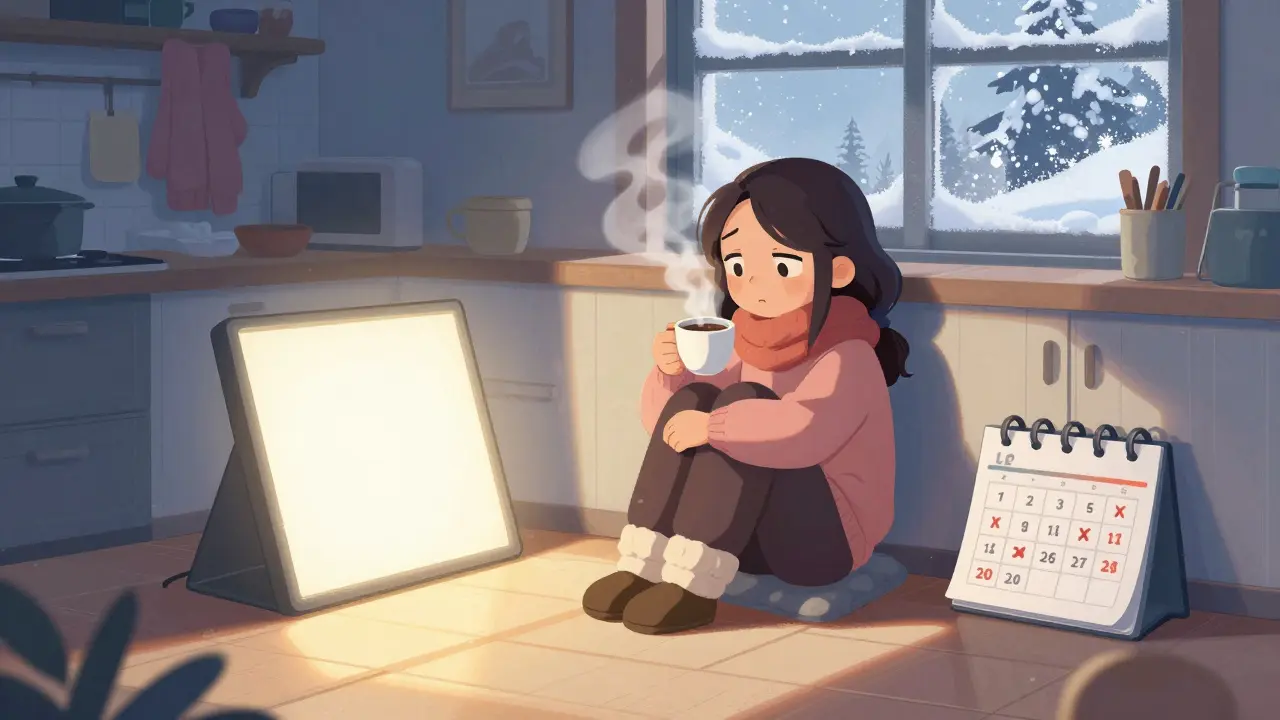
Light therapy isn’t just about brightening your room. It’s about tricking your brain into thinking it’s still summer. The treatment uses a special light box that mimics natural sunlight-without the UV rays that can damage your eyes. The standard dose is 10,000 lux for 30 minutes each morning. That’s about 20 times brighter than a typical indoor light.
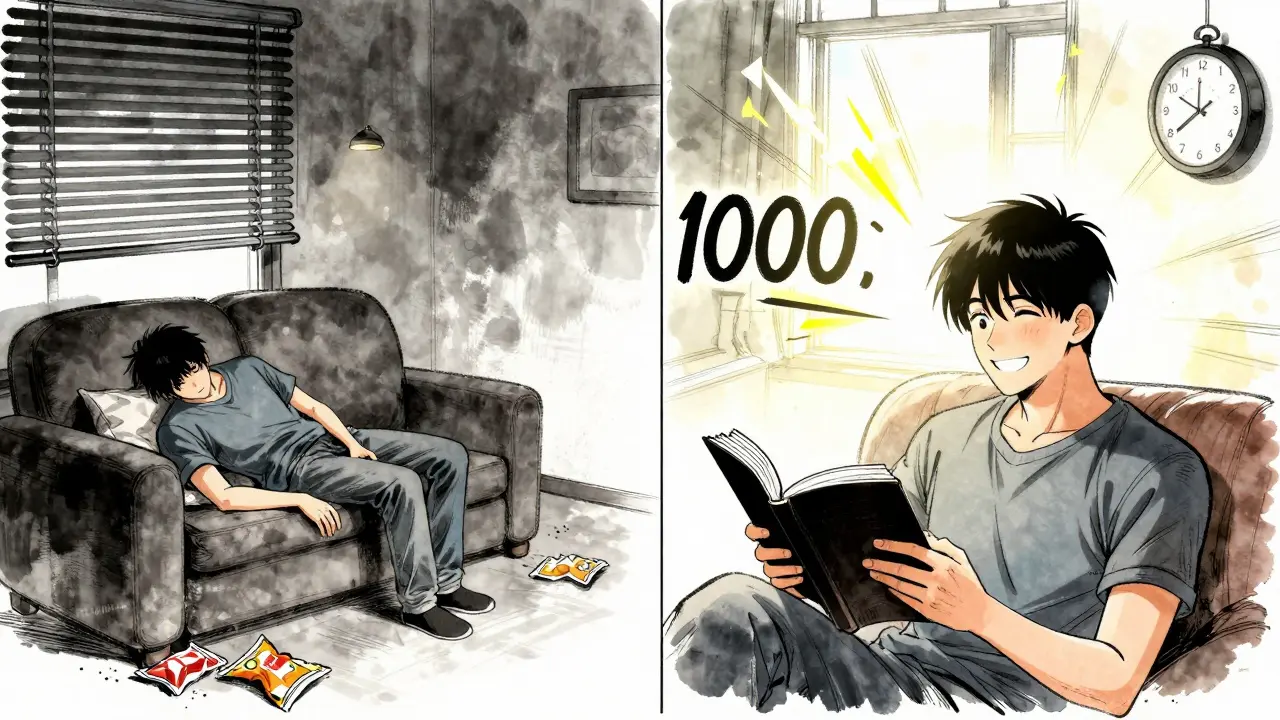
This isn’t guesswork. Back in 1984, Dr. Norman Rosenthal and his team at the National Institute of Mental Health proved it worked. Since then, dozens of studies have confirmed it. A 2024 meta-analysis in JAMA Psychiatry looked at 850 people across 11 trials and found that light therapy significantly reduced depression symptoms. It doesn’t just lift your mood-it resets your body clock. Morning light tells your brain to stop making melatonin and start making serotonin. That’s why timing matters: using the light box within an hour of waking gives the best results.
How to Use Light Therapy Correctly
It sounds simple, but most people do it wrong. You don’t stare at the light. You don’t need to sit perfectly still. You just need to be awake and in the same room with the light box. Sit about 16 to 24 inches away, with the box slightly to the side-around a 30-degree angle. Keep your eyes open. Read, drink coffee, check your phone. Just don’t look directly at the light.
Timing is everything. Morning exposure gives you a 68% chance of remission, according to Dr. Michael Terman’s research. Evening light doesn’t work as well. And consistency matters. Missing a day or two can delay results. Most people start feeling better within 3 to 7 days. If you’re still struggling after two weeks, it might be time to adjust the dose or talk to a doctor.
Not all light boxes are created equal. Look for one that delivers 10,000 lux, filters out UV light, and has been tested by the Center for Environmental Therapeutics (CET). Consumer Reports found that 37% of cheaper, non-certified models don’t even hit their claimed brightness. Stick with brands like Carex, Verilux, or Northern Light Technologies-they’ve been tested in real clinical settings.
How It Compares to Other Treatments
Antidepressants like fluoxetine (Prozac) help with SAD too. But here’s the thing: light therapy works faster. In a 2006 study of 96 patients, those using light therapy showed improvement by week two, while the medication group didn’t catch up until week eight. And light therapy doesn’t cause weight gain, sexual side effects, or nausea like many pills do.
It’s also safer for certain groups. Pregnant women, older adults, and people with liver problems often can’t take antidepressants. Light therapy? No problem. The side effects are mild-maybe a little eye strain, headache, or feeling jittery. Those usually go away after a few days.
But it’s not a magic cure. If your depression is severe, light therapy alone might not be enough. Some people need it combined with talk therapy or medication. And if you have bipolar disorder, light therapy can trigger mania in 5-10% of cases. That’s why it’s important to talk to your doctor before starting.
Real People, Real Results
On Reddit’s SAD community, users share their stories every day. One person, ‘WinterSurvivor89,’ wrote: ‘After five days of using my 10,000 lux box, my energy came back. My SAD score dropped from 22 to 8.’ Another user, ‘LightBoxSkeptic,’ said: ‘I tried three boxes. Nothing worked. Just eye strain.’
Both are true. Not everyone responds. About 40-60% of people with SAD get real relief from light therapy. That’s why it’s not a one-size-fits-all fix. But for those who do? It’s life-changing. Amazon reviews for the Carex Day-Light Classic Plus show 68% of users report ‘significant improvement’ in mood within two weeks. The most common praise? ‘I feel like myself again.’
What to Do If Light Therapy Doesn’t Work
If you’ve tried light therapy for three weeks and still feel stuck, don’t give up. Try adjusting your routine. Move your session earlier. Increase the time to 45 minutes. Make sure you’re not sitting too far away. Check if your light box is still delivering full brightness-some bulbs dim over time.
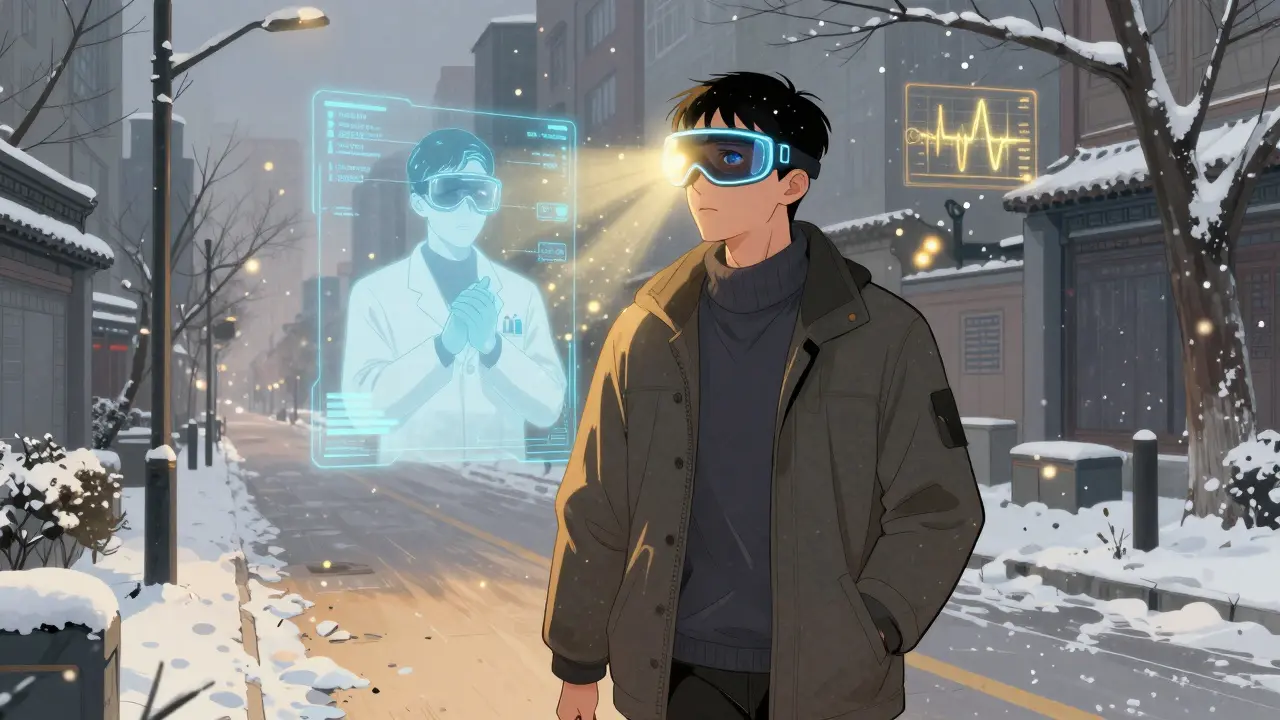
If that doesn’t help, consider other options. Dawn simulators-devices that gradually brighten your room before you wake up-can be easier to stick with. Portable light visors let you move around while getting your dose. Some people combine light therapy with cognitive behavioral therapy (CBT), which helps change negative thought patterns tied to winter.
And if you’re still struggling? Talk to a mental health professional. SAD can be part of a larger depression pattern. You don’t have to suffer through winter alone.
The Future of Light Therapy
Light therapy isn’t just for winter depression anymore. New research shows it works for non-seasonal depression too. A 2024 study found a 41% remission rate for people with regular depression-compared to 23% in the control group. It’s even helping pregnant women with depression, with one trial showing a 54% improvement rate.
The FDA just approved the first prescription light device for treatment-resistant depression. Wearable light therapy glasses are growing in popularity. Companies are building AI systems that adjust light based on your sleep patterns and body rhythms. In a few years, your phone might tell you when to turn on your light box-based on your heart rate, melatonin levels, and even weather data.
But for now, the simplest version still works best. A 10,000 lux box. 30 minutes. Right after you wake up. No prescription needed. No pills. Just light.
When to See a Doctor
You don’t need a doctor to buy a light box. But you should talk to one before starting if:
- You have bipolar disorder
- You have eye conditions like glaucoma or diabetic retinopathy
- You’re pregnant or breastfeeding and considering other treatments
- Your symptoms are severe-thoughts of hopelessness, inability to get out of bed, or suicidal thoughts
Light therapy is safe for most people. But mental health is personal. If you’re unsure, get advice. A doctor can help you decide if light therapy is right for you-or if you need something else.
Margaret Khaemba
January 22, 2026 AT 01:15Also, never thought about how much the timing matters. I used to use it at night because I was tired then. Big mistake. Morning light = instant energy boost.
Malik Ronquillo
January 23, 2026 AT 02:23Alec Amiri
January 24, 2026 AT 21:02Lana Kabulova
January 26, 2026 AT 03:08Ryan Riesterer
January 27, 2026 AT 04:12Akriti Jain
January 28, 2026 AT 07:10Mike P
January 30, 2026 AT 00:58Liberty C
January 30, 2026 AT 08:00