
How to Document Provider Advice About Medications for Later Reference
 Mar, 17 2026
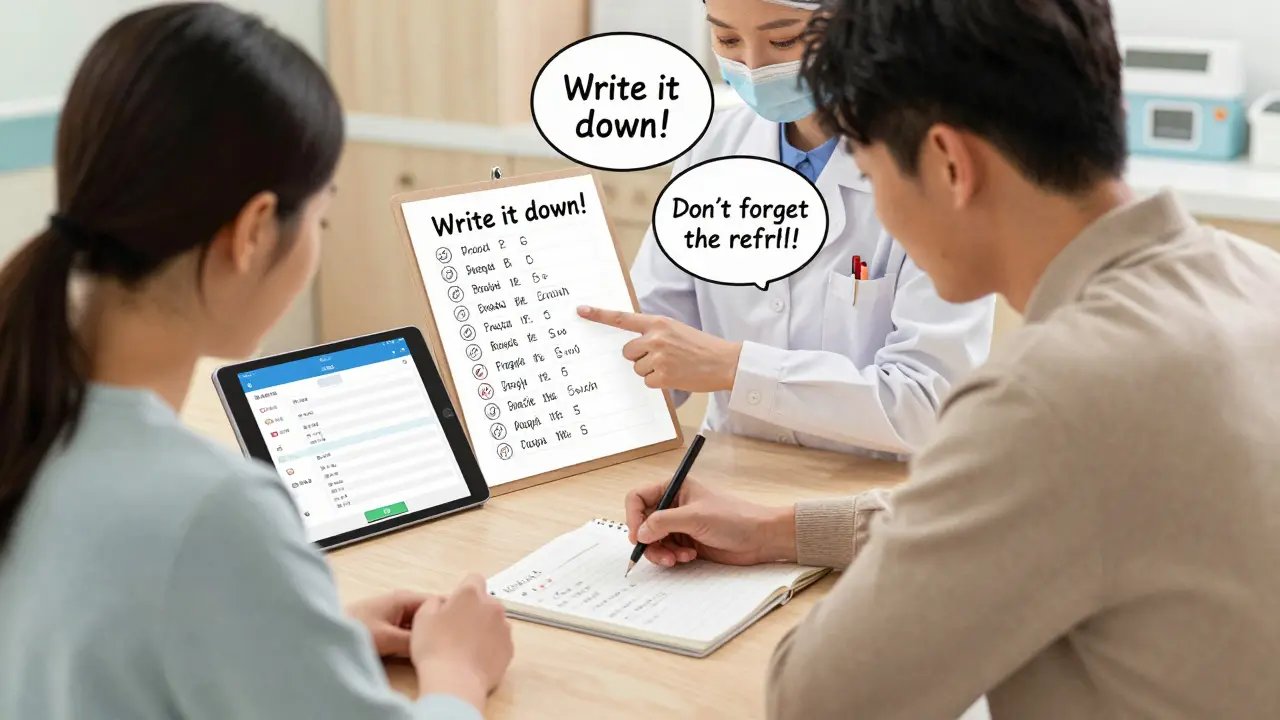
When a doctor, nurse, or pharmacist gives you advice about your meds, it’s not just a quick chat. It’s a critical piece of your health record-one that could keep you safe months or even years from now. Whether it’s a new prescription, a change in dosage, or a warning about side effects, if it’s not written down clearly, it might as well never have been said. And when you’re juggling multiple medications, seeing different providers, or managing a chronic condition, having accurate, accessible records isn’t just helpful-it’s lifesaving.
Why Documentation Matters More Than You Think
Every year in the U.S., about 7,000 people die because of medication errors. Many of these happen because someone didn’t know what was prescribed, when to take it, or what to watch out for. A 2022 study found that nearly 38% of medical malpractice claims involved medication issues. That’s not just bad luck-it’s often a failure to document what was discussed.
Think about this: you see your primary care doctor for a cold. They prescribe an antibiotic. Two weeks later, you go to the ER for chest pain. The ER doctor asks, "What are you taking?" If your record doesn’t show the antibiotic, they might prescribe something that interacts with it. Or worse-they don’t know you’re allergic to penicillin because it was never written down.
Proper documentation isn’t about bureaucracy. It’s about continuity. It’s about making sure every provider who touches your care has the same facts. The Joint Commission, the CDC, and the FDA all agree: clear, complete medication records reduce errors, prevent hospitalizations, and save lives.
What Exactly Needs to Be Documented?
Not every detail needs to be written, but certain things are non-negotiable. Here’s what you need to capture when a provider gives you medication advice:
- Medication name-brand and generic, if applicable. Don’t just write "the pill for blood pressure." Write "Lisinopril 10 mg."
- Dose and frequency-"Take one tablet by mouth twice daily" is better than "take as needed."
- Duration-how long should you take it? "7 days" or "until refill"? Be specific.
- Refills-how many are authorized? This prevents confusion later.
- Reason for use-why are you taking this? "For hypertension" or "for UTI treatment" helps future providers connect the dots.
- Side effects to watch for-"Dizziness when standing up" or "severe rash" should be noted, not just mentioned.
- Allergies and reactions-"Allergic to sulfa-hives in 2021" is better than "allergic to some meds."
- Instructions given-"Take with food," "avoid alcohol," "do not crush"-these matter.
- Patient understanding-Did you repeat the instructions back? Was there confusion? Document that too.
These aren’t suggestions. They’re requirements under guidelines from the American Medical Association, the American Society of Health-System Pharmacists (ASHP), and the National Committee for Quality Assurance (NCQA). In fact, NCQA says inadequate documentation contributes to 22% of preventable drug errors in outpatient care.
How to Document It-The Right Way
There’s a big difference between scribbling on a sticky note and documenting properly. Here’s how to do it right:
- Document at the time of the visit-Don’t wait until later. Memory fades. Details get lost. If it happened today, write it today.
- Use clear, objective language-Avoid opinions like "patient seemed confused." Instead, say: "Patient asked, ‘Can I take this with grapefruit?’ I explained that grapefruit interferes with this medication and advised avoiding it."
- Date and initial every entry-Every note must show when it was written and who wrote it. "J. Smith, RN, 3/15/2026" is standard.
- Use EHR templates wisely-Electronic health records (EHRs) have built-in prompts, but don’t just click "next" without filling in patient-specific details. If the template says "medication list updated," but you don’t type in the actual meds, it’s useless.
- Document refusals and noncompliance-If a patient says, "I’m not taking that because it made me sick last time," write that down. It’s not judgment-it’s context.
- Record phone or telehealth advice-Since 2021, the American Dental Association has required documentation of all medication advice given over the phone, even if it’s outside office hours. The same applies to primary care. If you called in a refill request or got a new instruction via video visit, log it.
The U.S. government’s CMS now requires documentation of current medications in every patient encounter as part of its Merit-based Incentive Payment System (MIPS). That means if you don’t document it, you could lose reimbursement. But beyond money, it’s about safety.
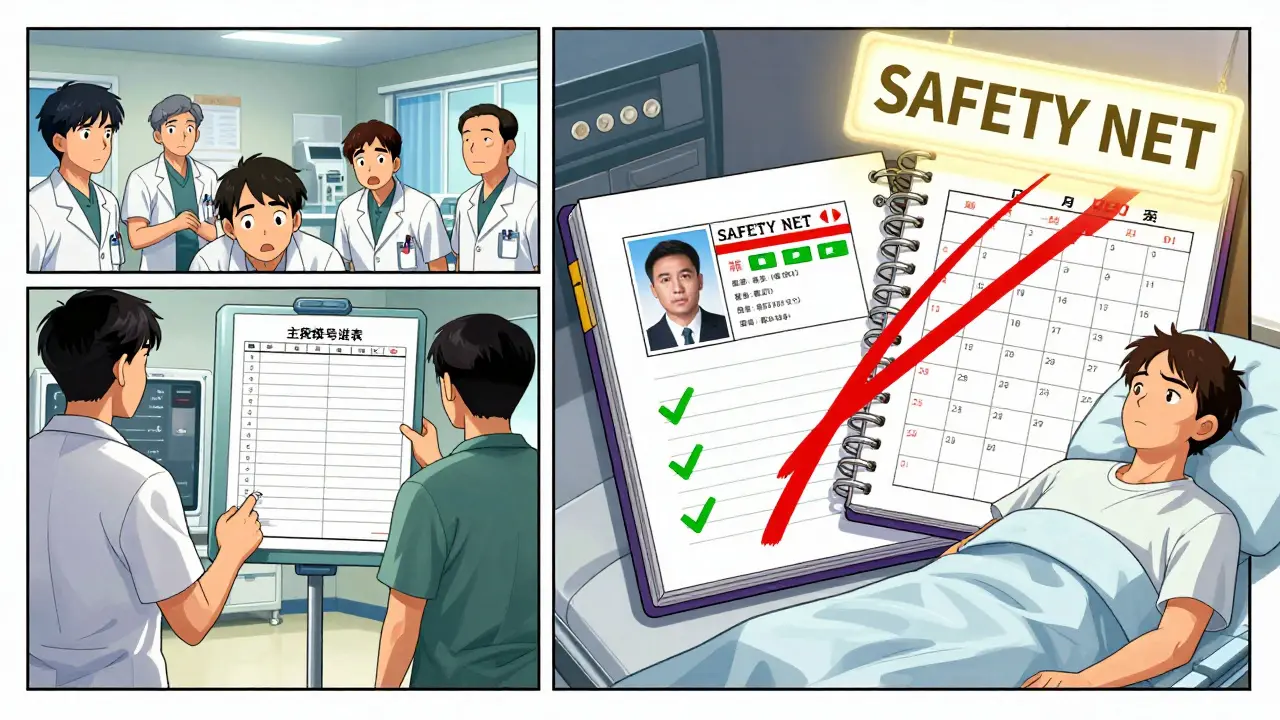
What Happens When Documentation Fails
Imagine this: A 72-year-old woman takes warfarin for atrial fibrillation. Her doctor changes the dose from 5 mg to 7.5 mg during a visit. The nurse forgets to update the record. Three days later, she goes to urgent care for a bruise. The provider doesn’t know about the dose change. They prescribe ibuprofen for pain. Ibuprofen increases bleeding risk with warfarin. She ends up in the hospital with internal bleeding.
That’s not hypothetical. It’s a real case documented in a 2020 NCQA report. The root cause? Incomplete medication documentation.
Another common issue: refill confusion. A patient is told they have two refills. But the record says "no refills." The pharmacy denies the refill. The patient stops taking their medication. Their blood pressure spikes. They end up in the ER. Documentation failure again.
Legal consequences are real. The ADA warns: "What you write in the record could be read aloud in a court of law." If a patient sues because they weren’t told about a side effect, and your note doesn’t mention the warning, you’re vulnerable.
What’s Changing in 2025?
By 2025, 95% of medication documentation will happen through interoperable electronic health records. That means your record will follow you across clinics, hospitals, and pharmacies. But this only works if the data is accurate.
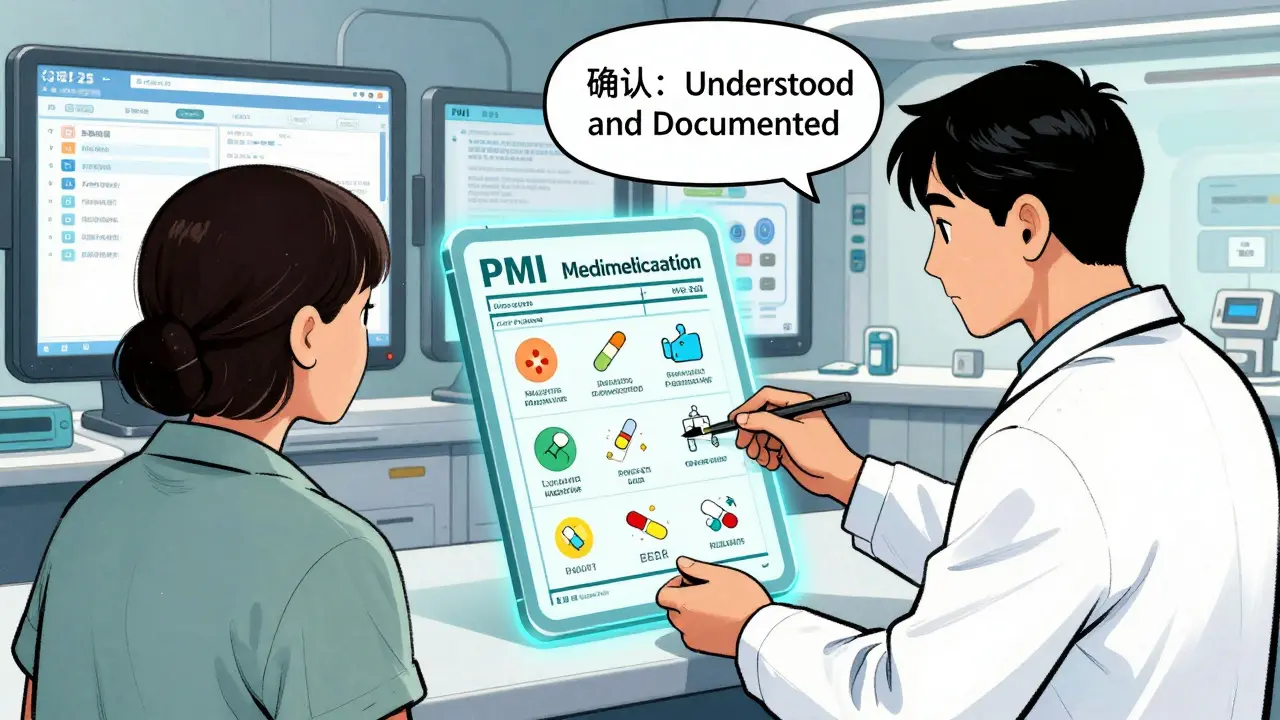
The FDA is pushing a new rule: every prescription will come with a one-page, standardized Patient Medication Information (PMI) sheet. Think of it like a nutrition label for drugs-clear, simple, and mandatory. This will help patients, but it also means providers need to confirm the patient received and understood it. That conversation? It needs to be documented.
Also, more patients are accessing their records through portals. If your documentation says "take once daily," but the portal says "take twice daily," who do they believe? The system. So accuracy isn’t optional anymore.
Best Practices for Patients Too
You don’t have to wait for a provider to document it. You can take charge:
- Ask: "Can you write that down?"
- Keep a personal list: medication name, dose, reason, side effects, and refill status. Update it after every visit.
- Use your patient portal. Check that your meds list matches what your provider told you.
- Take a photo of your prescription label. Store it in your phone.
- Ask for a printed summary after every visit. Most clinics will give it to you.
Patients who keep their own records have 30% fewer medication errors, according to the Agency for Healthcare Research and Quality (AHRQ). You’re not just a patient-you’re part of the care team.
Final Reminder
Documentation isn’t busywork. It’s part of your care. Every time you write down a medication instruction, you’re building a safety net-for yourself, for your provider, and for anyone else who might need to help you later. Don’t assume it’s been recorded. Don’t assume it’s accurate. Double-check. Ask. Write it down. Your future self will thank you.
What if I forget what my provider told me about my meds?
Don’t rely on memory. Ask for a written summary at the end of your visit. Most clinics provide a printed or digital copy. If not, request one. You can also use your patient portal to check your medication list and ask your provider to correct any errors. If you’re unsure, call the pharmacy-they often have the most up-to-date prescription details.
Can I document my own medication advice?
Yes, and you should. Keep a personal log with the medication name, dose, reason, side effects, and refill status. Update it after every appointment or phone call. This personal record helps you stay consistent and gives you something to show your provider if there’s a mismatch in the official record. It’s not a replacement for clinical documentation, but it’s a powerful backup.
Is it okay to use templates or macros in electronic records?
Templates are helpful, but they’re not enough. If you use a template that says "medication list updated," without typing in the actual names and doses, it’s incomplete-and potentially dangerous. Every entry must include patient-specific details. The UCOP Legal Medical Record Standards say using macros without personalization is insufficient documentation and can lead to legal issues.
What should I do if I notice a mistake in my medical record?
Contact your provider’s office immediately. Ask them to correct the record. Most clinics have a process for this-you may need to submit a written request. Don’t wait. An incorrect medication list can lead to dangerous interactions, missed refills, or unnecessary tests. Under federal law, you have the right to request corrections to your health record.
How long should medication records be kept?
Most healthcare providers keep records for 7 to 10 years after the last visit, as required by state laws. For chronic conditions or pediatric records, retention may be longer. If you’re switching providers, ask for a copy of your medication history. You can also request that your current provider send it to your new provider-this ensures continuity and reduces errors.
Emily Hager
March 17, 2026 AT 17:43While I appreciate the thoroughness of this piece, I must insist that the entire premise is fundamentally flawed. Documentation, as currently practiced, is not a safety net-it’s a bureaucratic cage. The notion that a patient’s life hinges on a checkbox in an EHR is a grotesque misrepresentation of clinical reality. Providers are drowning in administrative tasks, and patients are being treated as data points, not human beings. The Joint Commission, the FDA, the CDC-all these entities are complicit in a system that prioritizes compliance over compassion. I’ve seen patients die because a nurse failed to document a refill, yes-but I’ve also seen patients die because they were denied care due to a missing signature on a form they didn’t understand. This isn’t about documentation. It’s about systemic dehumanization.
Melissa Starks
March 18, 2026 AT 08:41ok so i just wanna say this article made me cry?? like i’ve been managing 7 meds for 12 years and i’ve had 3 ER visits bc something got lost in the system and honestly? i started keeping my own list on my phone after my last hospital stay and it changed everything. i even took a pic of my pill organizer every morning and saved it. my pharmacist noticed and said ‘you’re the only one who does this’ and i was like… yeah. bc no one else is gonna. i know it sounds silly but i feel so much safer now. also i started asking for printed summaries and they’re like ‘uh we don’t do that’ and i said ‘well i’m gonna keep asking until you do’ and now they just hand it to me. so yeah. if you’re scared or overwhelmed? start small. write one thing down. you’re not just a patient-you’re your own best advocate. and that’s powerful. 💪❤️
Paul Ratliff
March 19, 2026 AT 02:43Yeah this is solid. I’m a pharmacist and I see this every day. People forget names, doses, why they’re even taking something. I’ve had patients come in with 10 bottles and say ‘I think this one’s for my heart?’ No. Just no. Write it down. Take a pic. Use your portal. It’s not hard. Your life’s not a meme. Do the thing.
Andrew Mamone
March 19, 2026 AT 20:07Just wanted to say thank you for this. I’ve been documenting everything since my dad had that stroke because of a med interaction no one knew about. Now I have a Google Sheet with color-coded meds, dates, side effects, and even screenshots of prescription labels. My PCP asked if I’m a nurse. I said no, I’m just someone who refuses to get ghosted by the system. 🙌
Kendrick Heyward
March 21, 2026 AT 16:15Of course you’re telling people to document everything. Because the real problem isn’t that the system is broken-it’s that patients are too lazy to fix it themselves. You think your little sticky note is gonna stop a hospital from misreading your chart? Please. The system is designed to fail you. And now you’re just handing them more paperwork to bury you under. Wake up. This isn’t empowerment-it’s surveillance with extra steps.
lawanna major
March 23, 2026 AT 11:48There’s a deeper philosophical layer here that deserves attention. Documentation isn’t merely a tool-it’s an act of self-assertion in a world that treats the body as a black box. When we write down our medications, we are refusing to be erased. We are saying: ‘I am here. I have a history. I have a voice.’ This isn’t just about safety; it’s about dignity. In a medical-industrial complex that commodifies suffering, the act of recording becomes resistance. The patient who documents is not just managing a regimen-they are reclaiming agency. And that, more than any algorithm or template, is what truly prevents harm.
Ryan Voeltner
March 25, 2026 AT 03:23Linda Olsson
March 26, 2026 AT 19:12Let’s be real. The entire push for documentation is just another way for Big Pharma and the EHR monopolies to extract more data. Who owns your medication log? Who’s selling it? Who’s using it to deny you coverage later? You think your Google Sheet is private? It’s being scraped, analyzed, and sold to insurers before you even hit save. This isn’t safety-it’s a Trojan horse. And you’re all happily handing over your biometrics like it’s a loyalty card.