
Yohimbe and Blood Pressure Medications: The Hidden Danger of Herbal Supplements
 Mar, 20 2026
Yohimbe Blood Pressure Interaction Calculator
This tool estimates potential blood pressure spikes when taking yohimbe with blood pressure medications based on clinical data. Important: This is for informational purposes only. Never use yohimbe if you're on blood pressure medication.
When you’re trying to improve your energy, lose weight, or boost performance, it’s easy to reach for a supplement that promises quick results. Yohimbe is one of those products-marketed as a natural fat burner or male enhancement aid-but what most people don’t realize is that it can trigger life-threatening spikes in blood pressure, especially if you’re already taking medication for hypertension.
Yohimbe comes from the bark of a tree in West Africa and contains yohimbine, a compound that blocks certain receptors in your nervous system. This causes your body to release more norepinephrine, a hormone that raises your heart rate and blood pressure. Sounds harmless? Maybe. But when you mix it with common blood pressure meds, the result isn’t just unpredictable-it’s dangerous.
How Yohimbe Disrupts Blood Pressure Control
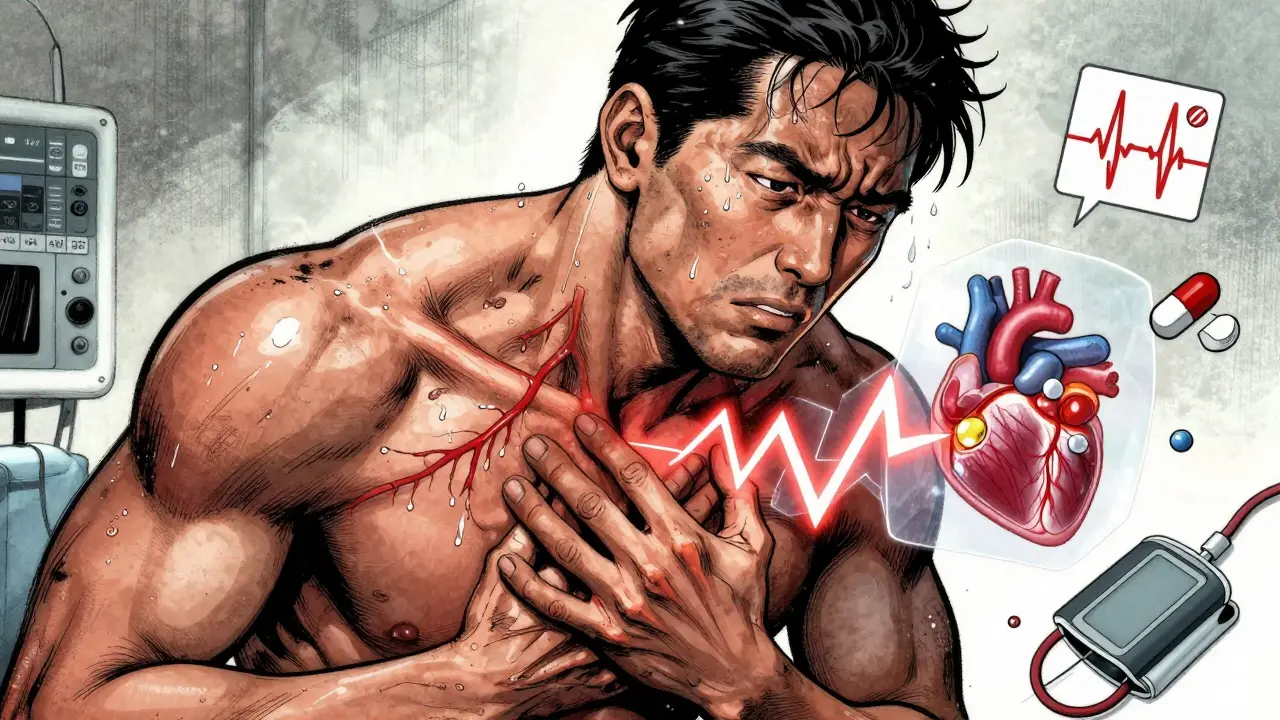
Yohimbine doesn’t just nudge your blood pressure up-it can slam it into dangerous territory. Studies show that even a single dose of 5 mg can cause systolic blood pressure to spike by 20 to 30 mmHg in people with existing hypertension. That’s not a minor fluctuation. That’s the kind of jump that can lead to a hypertensive crisis: headaches, chest pain, blurred vision, or even stroke.
Here’s the scary part: this isn’t just theoretical. Between 2015 and 2021, the American Heart Association documented 43 cases of severe blood pressure surges directly linked to yohimbe use in people on antihypertensive drugs. In 2021, the FDA reported 19 hospitalizations from hypertensive crises tied to yohimbe supplements. One patient, a 42-year-old man on lisinopril, saw his blood pressure climb to 210/110 after taking a yohimbe capsule labeled as 5 mg. He ended up in the ER with a pounding headache and chest tightness. Turns out, the capsule contained 17 mg of yohimbine-more than three times what was listed.
Why Your Blood Pressure Meds Can’t Keep Up
Most blood pressure medications work by relaxing blood vessels, slowing heart rate, or helping your body get rid of excess fluid. But yohimbine fights back. It doesn’t just add stress-it actively cancels out the effects of your meds.
Take clonidine (Catapres), for example. It’s an alpha-2 agonist that tells your body to lower blood pressure. Yohimbine? It’s an alpha-2 antagonist. It blocks that signal. When taken together, research shows blood pressure can spike 30 to 50 mmHg higher than normal. The same goes for guanabenz and guanfacine-both used for hypertension and ADHD. Yohimbine doesn’t just make them less effective; it turns them into a ticking time bomb.
And it’s not just one class of drugs. The Mayo Clinic’s 2025 drug database lists 12 major blood pressure medication categories with dangerous interactions, including:
- Beta-blockers (metoprolol, atenolol): Yohimbe overpowers their ability to slow heart rate.
- ACE inhibitors (lisinopril, enalapril): The body’s natural pressure-lowering response is overridden.
- Calcium channel blockers (amlodipine, diltiazem): Vascular relaxation is countered by intense vasoconstriction.
- Diuretics (hydrochlorothiazide): Fluid loss from the diuretic is undone by fluid retention triggered by yohimbine.
Even worse, yohimbe doesn’t play well with antidepressants. SNRIs like venlafaxine and tricyclics like amitriptyline increase norepinephrine levels too. Combine them with yohimbine, and you’re stacking fuel on a fire. A 2022 study in the Journal of Clinical Hypertension recorded 17 cases where patients developed systolic pressures over 180 mmHg-enough to trigger a stroke or heart attack.
The Wild West of Supplement Labeling
Here’s what makes yohimbe even more dangerous: you never know how much you’re getting.
A 2015 analysis of 49 U.S. yohimbe supplements found yohimbine content ranged from undetectable to 6.1 mg per serving. Thirty percent didn’t even contain natural yohimbine-they used synthetic versions, which are even more potent. ConsumerLab.com’s 2022 testing showed 68% of products failed to accurately label their yohimbine content. Some had 200% less than advertised. Others had 400% more.
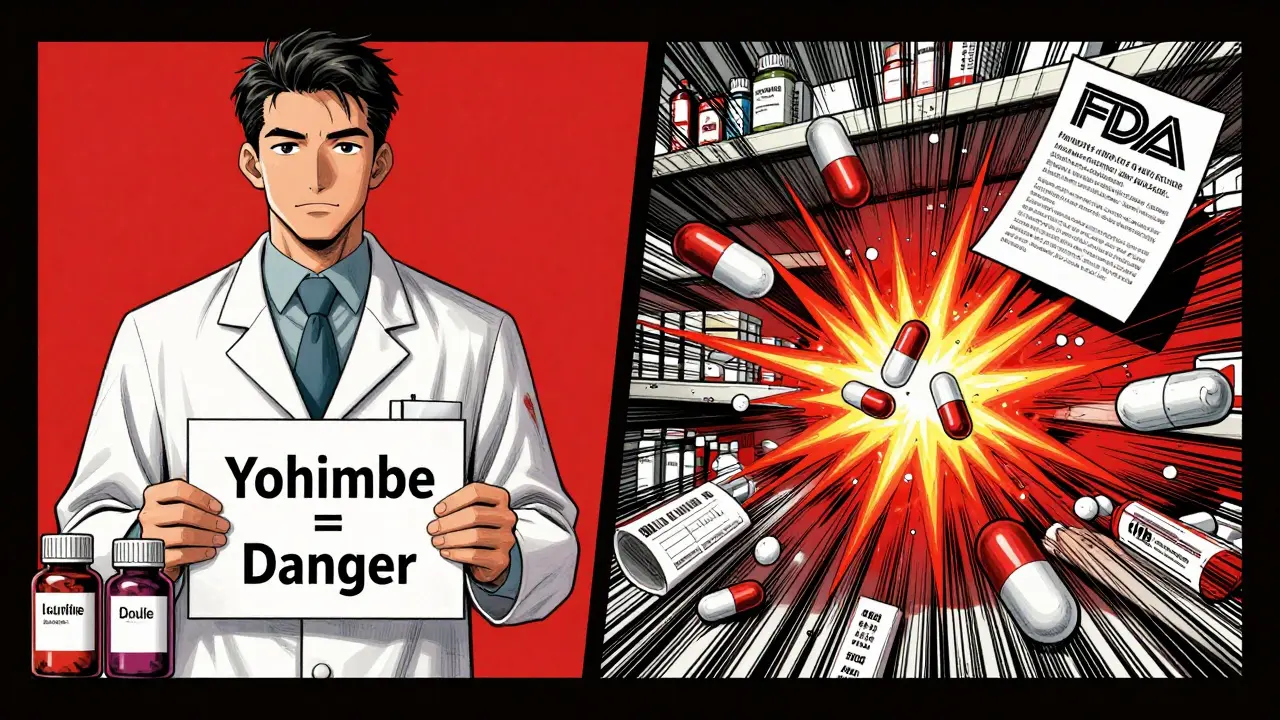
One brand labeled as "5 mg per capsule" was found to contain 28.7 mg. That’s over five times the dose considered safe. The FDA had to issue a mandatory recall of 17 brands in January 2023 after discovering this inconsistency. But these products are still out there-sold online, in gas stations, and health food stores with no warning labels.
Who’s at Risk? The Data Doesn’t Lie
You might think, "I’m young and healthy. I’ll be fine." But the numbers say otherwise.
The California Poison Control System tracked yohimbe-related calls from 2000 to 2007. The average age of patients needing emergency care? 37. That’s younger than the typical hypertension patient. Nearly 78% of these cases required medical intervention-far higher than the 42% average for other supplements.
On WebMD, 87% of 214 reviews from people with hypertension reported negative effects. Over 60 of them described "dangerous blood pressure spikes." On Reddit’s r/HighBloodPressure, a single thread titled "Yohimbe nearly killed me while on lisinopril" had 147 comments. Thirty-two people shared similar stories-some with readings above 200 mmHg systolic.
And it’s not just about blood pressure. Yohimbine also increases heart rate. In 67% of documented cases, patients developed tachycardia-heart rates over 100 bpm. Combine that with existing heart conditions, and you’re looking at arrhythmias, heart attacks, or sudden cardiac events.
Global Warnings, Local Risks
It’s not just U.S. regulators sounding the alarm. Canada banned yohimbe supplements in 2020. The European Medicines Agency pulled them off shelves in 2018. Australia followed suit. These countries didn’t act out of caution-they acted because people were dying.
Meanwhile, in the U.S., yohimbe supplements still make $38.7 million a year. Most are marketed for "male enhancement" or "fat loss." But the science doesn’t support those claims. The National Center for Complementary and Integrative Health (NCCIH) says there’s little evidence yohimbe works for weight loss or athletic performance. What it does have evidence for? Severe cardiovascular risk.
The FDA’s 2023-2025 enforcement priorities list yohimbe as a "high-risk supplement." Draft guidance now requires warning labels like: "WARNING: May cause dangerous increases in blood pressure, especially when taken with blood pressure medications. Not for use by persons with heart disease or hypertension."
What You Should Do
If you’re on any blood pressure medication-whether it’s a daily pill or a once-a-week dose-yohimbe is not worth the risk. There is no safe dose when combined with antihypertensives. Even if you feel fine after taking it once, that doesn’t mean it’s safe. The effects are cumulative and unpredictable.
Here’s what to do:
- Stop using yohimbe immediately if you’re on any blood pressure, heart, or antidepressant medication.
- Check your supplement labels. If it says "yohimbe," "yohimbine," or "Pausinystalia yohimbe," throw it out.
- Talk to your doctor. Tell them you’ve used yohimbe-even if it was months ago. They need to monitor your blood pressure and heart rate.
- Ask for alternatives. If you’re using yohimbe for weight loss or libido, there are safer, science-backed options. Lifestyle changes, FDA-approved medications, and proven supplements like L-citrulline or beetroot powder carry far less risk.
Pharmacists across the U.S. report a 27% rise in yohimbe-related emergency interventions since 2020. You don’t have to be one of them. Your blood pressure doesn’t need another enemy. And your heart certainly doesn’t need a gamble.
Frequently Asked Questions
Can I take yohimbe if I have high blood pressure but don’t take medication?
No. Even if you’re not on medication, having high blood pressure means your cardiovascular system is already under stress. Yohimbine can spike your blood pressure by 20-30 mmHg, which can trigger a hypertensive crisis, stroke, or heart attack. The Memorial Sloan Kettering Cancer Center and the American Heart Association both state that yohimbe is contraindicated in anyone with hypertension, regardless of whether they’re on medication.
How long does yohimbe stay in your system?
Yohimbine has a half-life of 0.5 to 1.5 hours, meaning half of it leaves your bloodstream within that time. But its effects can last longer-up to 4-6 hours. Peak levels hit around 1 hour after ingestion, which is why most adverse events occur within the first few hours. However, because yohimbe supplements often contain inconsistent doses, the duration and intensity of effects are unpredictable.
Are there any safe herbal alternatives to yohimbe for weight loss or libido?
Yes. For libido, L-citrulline and beetroot powder have shown modest benefits in improving blood flow without affecting blood pressure. For weight loss, green tea extract (in moderate doses) and fiber-rich diets are more effective and far safer. Avoid anything labeled as a "natural stimulant"-many contain hidden yohimbine or similar compounds. Always check third-party lab test results (like from ConsumerLab or USP) before trying any supplement.
What should I do if I accidentally took yohimbe with my blood pressure meds?
Monitor for symptoms: pounding headache, chest pain, rapid heartbeat, dizziness, or blurred vision. If you experience any of these, seek emergency care immediately. Even if you feel fine, call your doctor. They may want to check your blood pressure and heart rate, especially if you’ve taken more than one dose. Don’t wait for symptoms to worsen-yohimbine’s effects can escalate quickly.
Why is yohimbe still sold in the U.S. if it’s banned elsewhere?
The U.S. regulates supplements differently than drugs. The FDA can only act after harm is documented, not prevent it upfront. That’s why yohimbe is still on shelves despite bans in Canada, Australia, and the EU. The FDA has issued warnings and recalls, but without a full ban, manufacturers continue selling it. The 2023 draft guidance may change that, but until then, the burden is on consumers to avoid it.
Natali Shevchenko
March 21, 2026 AT 09:11It's wild how we treat supplements like they're harmless candy, right? Like, you wouldn't just grab a random pill from a gas station and swallow it without knowing what's in it-but somehow, yohimbe gets a free pass because it's "natural."
But nature doesn't care about our convenience. Poison ivy is natural. Botulinum toxin is natural. Yohimbine? It's a potent alkaloid that evolved to mess with animal nervous systems, not to be dosed like a morning coffee booster.
And honestly, the labeling chaos is the real crime here. You're not just risking your health-you're gambling with a product that might contain 5mg or 28mg of the same compound. That's not negligence. That's predatory.
I get it. We want quick fixes. We're tired. We're stressed. We want to feel better, look better, perform better. But this isn't about willpower or discipline. It's about systemic failure. The market rewards hype, not science. And people are paying the price with their blood pressure, their hearts, their lives.
We need regulation that doesn't wait for bodies to drop before acting. Until then, I'm just gonna keep saying it: if it sounds too good to be true, and it comes in a capsule with no FDA approval? Walk away.
Nicole James
March 22, 2026 AT 11:33Let’s be real-this isn’t about supplements… it’s about control. The pharmaceutical industry hates natural alternatives… they don’t make money off them… so they let them stay on the shelves… until someone dies… then they panic… and issue a recall… but only after the damage is done…
And don’t tell me the FDA is doing its job… they’re reactive… not proactive… they wait for bodies… then blame the consumer…
Meanwhile… the same companies that sell these supplements… also fund "research" that says they’re safe…
It’s a rigged system… and yohimbe is just the tip of the iceberg…
Next up… kava… kratom… DMHA…
They’re all next…
And you… you’ll be the one who ignored the warnings… until it’s too late…
Nishan Basnet
March 23, 2026 AT 05:10As someone who’s seen friends struggle with hypertension and then try "natural" fixes, I can say this with certainty: the real danger isn’t just yohimbe-it’s the myth that "natural" means "safe."
Medicine doesn’t care if something comes from a tree or a lab. It cares about chemistry, dosage, and interaction. Yohimbine is a pharmacologically active compound-no different than a prescription drug in how it behaves in the body.
And yet, we treat it like herbal tea. That’s not just naive-it’s reckless.
What frustrates me most is how easily people dismiss warnings as "pharma propaganda." But the data isn’t from Big Pharma. It’s from the AHA, the FDA, the Mayo Clinic. These are institutions that have zero incentive to scare people off supplements. They’re supposed to protect public health.
If you’re on blood pressure meds, you’re already managing a delicate system. Adding a chemical that directly counters your medication isn’t bold-it’s dangerous. And it’s not worth risking your life for a few extra pounds lost or a fleeting sense of energy.
There are better ways. Safer ways. And they don’t require a gamble.
Allison Priole
March 24, 2026 AT 03:15ok so i just wanna say i tried yohimbe once bc my friend was like "bro this thing is insane for fat loss" and i was like cool
it was like… 2am and i felt like my heart was gonna burst outta my chest and i had this weird dizzy headache and i just laid there for an hour thinking i was dying
turned out the bottle said 5mg but i think it was 12mg or something
i threw it out and now i just do walks and sleep more
and honestly? i feel better
no magic pill
just… life
also my doc said "thank you for telling me" so… yeah
you’re not weak for not taking it
you’re smart
and you’re not alone
Casey Tenney
March 25, 2026 AT 12:58You’re not a hero for taking yohimbe. You’re a liability.
Stop. Just stop.
It’s not "natural"-it’s poison with a marketing team.
And if you think you’re "fine" after one dose? You’re the reason people die.
Wake up.
Sandy Wells
March 26, 2026 AT 03:35It's unfortunate that people treat supplements like they're exempt from medical scrutiny. The FDA's hands are tied by outdated laws. But that doesn't mean consumers should be allowed to act as guinea pigs. Yohimbe has no place in a modern pharmacy. Period. The fact that it's still sold as a "fat burner" while being banned in Europe and Canada is a national embarrassment. People need to stop being so gullible. There is no shortcut to health. And if you're looking for one, you're already on the wrong path.
Bryan Woody
March 26, 2026 AT 17:20Oh honey. You think this is bad? Wait till you hear about the guy who took yohimbe with his ADHD meds and ended up in the ER with a BP of 230/120.
He was 28. He thought he was "boosting focus."
Turns out yohimbine doesn’t just boost focus-it boosts your heart into overdrive.
And the worst part? The label said "5mg." The lab found 21mg.
So yeah. You wanna be a lab rat? Go ahead.
But don’t come crying when your ticker starts singing opera.
And if you’re still reading this? You’re probably one of them. So go throw that bottle away.
Now.
Before your next coffee.
Timothy Olcott
March 28, 2026 AT 01:54Y’all act like this is some conspiracy… but the truth is… we’re just dumb…
WE LIVE IN A COUNTRY WHERE YOU CAN BUY A GUN EASIER THAN YOU CAN BUY A DRUG THAT’S BEEN TESTED…
AND YET WE’RE SHOCKED WHEN SOMEONE DIES FROM A SUPPLEMENT?!
THEY’RE NOT EVEN REGULATED LIKE FOOD… THEY’RE NOT EVEN REGULATED LIKE COSMETICS…
IT’S A FREE FOR ALL… AND WE’RE THE ONES WHO KEEP BUYING IT…
STOP BLAMING THE SYSTEM…
YOU’RE THE SYSTEM…
😂😂😂
Desiree LaPointe
March 28, 2026 AT 10:29How quaint. You think the FDA is going to save you? Please. The agency is underfunded, overworked, and politically neutered. The fact that yohimbe is still sold under the guise of "male enhancement" is a testament to how deeply American capitalism has rotting the notion of public health.
And yet, here we are-consumers, proudly ignorant, buying into the myth that "natural" equals "safe," while ignoring that the word "supplement" legally means "unregulated substance with no proven efficacy."
Meanwhile, in Europe, they banned it because people were dying. In the U.S., we’re still waiting for the death toll to rise before we act.
It’s not ignorance. It’s willful stupidity. And you’re all complicit.
trudale hampton
March 30, 2026 AT 09:04I used to think supplements were harmless until my uncle had a stroke after taking something called "Jungle Fuel"-turned out it had yohimbine. He was 52. Didn’t even have high blood pressure.
Now I check every label. I talk to pharmacists. I Google everything.
It’s not paranoia. It’s responsibility.
And honestly? If you’re using yohimbe for weight loss… you’re doing it wrong. Real progress comes from sleep, movement, and food-not a capsule from a gas station.
Just saying. You’ve got this.
Solomon Kindie
March 30, 2026 AT 18:27So let me get this straight… you’re saying that a plant extract that’s been used for centuries in Africa is now dangerous because it’s sold in America with bad labeling?
That’s not the supplement’s fault. That’s corporate greed.
And yet… you blame the herb?
What about the synthetic versions? The 200% overdoses? The lack of testing?
This isn’t about yohimbe.
This is about capitalism.
And we’re all just collateral damage.
But hey… at least we got a 5-star review on Amazon.
Johny Prayogi
April 1, 2026 AT 14:27Just wanted to say I stopped using yohimbe after reading this and switched to beetroot powder… and honestly? My energy’s better, my BP’s stable, and I don’t feel like I’m gonna die every time I stand up.
Also… my wife said I stopped looking like a nervous raccoon.
So… yeah.
Try it.
Life’s too short for sketchy capsules.
❤️
Jackie Tucker
April 1, 2026 AT 22:07Oh how delightful. Another post about how people are too dumb to survive capitalism. How original.
Let me guess-you also believe in vaccines, sunscreen, and the concept of "calories in, calories out"?
How quaint. The real tragedy isn’t yohimbe-it’s that we’ve reduced human agency to a series of warnings and labels.
Maybe, just maybe, people should stop being so lazy and learn basic pharmacology.
But no. Let’s just ban everything. That’s easier than thinking.
Meanwhile, I’ll be over here… reading the actual studies.
Not the headlines.
Thomas Jensen
April 2, 2026 AT 02:36Y’all don’t get it. This isn’t about yohimbe.
This is about the fact that the entire supplement industry is built on lies.
They don’t test it.
They don’t label it.
They don’t care.
And the FDA? They’re waiting for someone to die before they act.
So now you’re telling me I should trust a company that sold me "5mg" but gave me 28mg?
And you wonder why I think the government’s lying?
It’s not paranoia.
It’s history.
And you’re next.
Just saying.
💀
shannon kozee
April 3, 2026 AT 14:53My mom’s on lisinopril. I showed her this. She threw out her yohimbe capsule. Said she didn’t even know it had it.
Just… check your labels.
And if you’re unsure? Ask your pharmacist.
They’re not here to sell you anything.
They’re here to keep you alive.
Bryan Woody
April 4, 2026 AT 15:29Wait. So you’re telling me that a guy took a "fat burner" with his blood pressure meds… and then blamed the supplement?
Bro.
You don’t mix unregulated stimulants with prescription meds.
That’s not a "risk."
That’s basic biology.
And if you’re surprised when your heart explodes? You’re not a victim.
You’re just… bad at life.