
Generic Price Transparency: Tools to Find the Best Price for Prescription Drugs
 Mar, 13 2026
Ever picked up a prescription and been shocked by the price? You’re not alone. In 2025, Americans spent over $600 billion on prescription drugs - and many paid far more than they should have because they had no idea what the real cost was. The good news? Tools now exist to show you exactly what you’ll pay before you even leave the doctor’s office. The bad news? Not all of them work the same way, and some still hide the truth.
What Is Generic Price Transparency?
Generic price transparency means showing patients the actual out-of-pocket cost of a medication - not the list price, not the manufacturer’s sticker price, but what you’ll pay at the pharmacy after insurance, rebates, and discounts. This matters because the so-called "list price" of a generic drug like metformin or lisinopril can be $50, but the real price you pay might be $4. Or $15. Or even $40, depending on your plan, pharmacy, and whether your insurer got a rebate.The push for transparency started with federal rules like the 2020 Prescription Drug File requirement, which forced insurers to report negotiated prices. Then came the 2021 Consolidated Appropriations Act, which made it mandatory for health plans to disclose how much they’re really paying for drugs - including rebates. States jumped in too. By April 2025, 23 states had passed laws requiring drugmakers to report price hikes, and 12 created affordability boards to review costs.
But here’s the catch: transparency doesn’t always mean truth. Most tools only show the wholesale acquisition cost (WAC) - the price pharmacies pay before rebates. The real price you pay? That’s hidden behind layers of contracts between insurers, pharmacy benefit managers (PBMs), and drugmakers. You might see a $3 price on an app, then get billed $18 at the counter. That’s not transparency. That’s confusion.
Real-Time Benefit Tools: The Clinician’s Secret Weapon
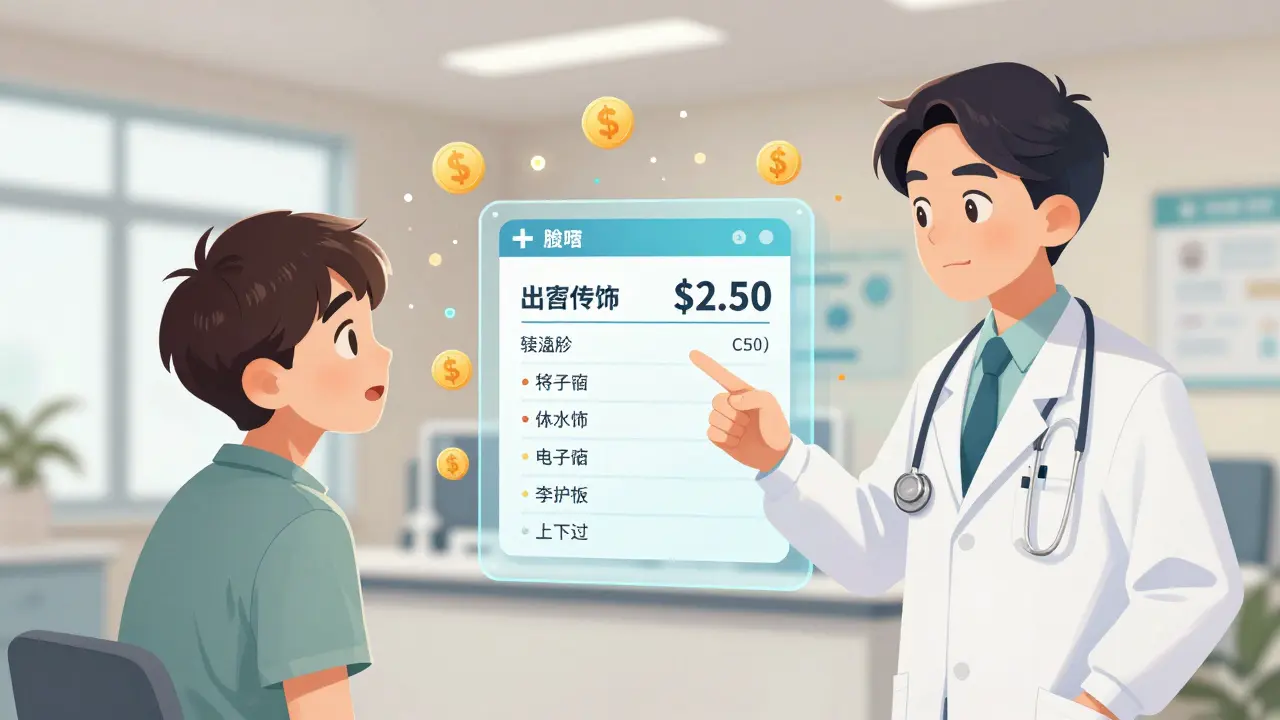
If you’re a patient, you might not have heard of Real-Time Benefit Tools (RTBTs). But if you’ve seen your doctor pull up a screen during your appointment and say, "This generic will cost you $2.50 today," that’s an RTBT in action.These tools connect directly to your insurance plan through your doctor’s electronic health record (EHR). When your doctor types in a prescription, the system checks your coverage in real time - not just what’s on the formulary, but what you’ll pay out of pocket. It also shows cheaper alternatives, even if they’re not the one prescribed.
Platforms like CoverMyMeds and Surescripts power most RTBTs. As of 2025, 42% of U.S. physician practices use them - up from just 15% in 2022. Why? Because they work. A 2025 study found that when RTBTs were used, patients switched to lower-cost generics 8.2% more often. One doctor in Ohio reported cutting patients’ out-of-pocket costs by 37% just by using the tool.
RTBTs aren’t perfect. They need integration with Epic, Cerner, or Allscripts. Setup takes weeks. Some plans don’t feed accurate data. But for patients with complex coverage, they’re the most reliable way to avoid surprise bills.
Consumer Apps: GoodRx, SingleCare, and the Reality Check
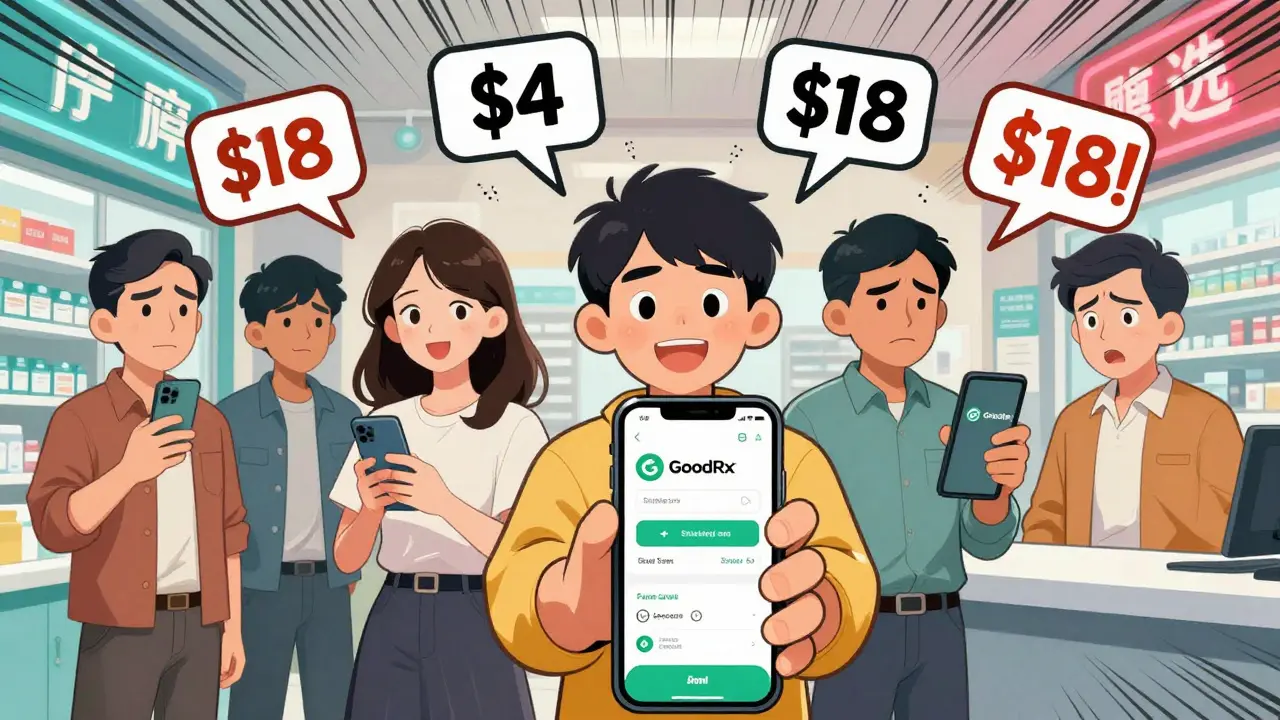
You’ve probably seen ads for GoodRx or SingleCare. They promise $4 prescriptions. And sometimes, they deliver.These apps compare cash prices across pharmacies. They’re great for people without insurance, or those with high-deductible plans. In 2024, 43% of U.S. pharmacies accepted GoodRx discounts. That’s millions of transactions.
But here’s what they don’t tell you: the price on the app isn’t your insurance price. It’s the cash price. If you’re on Medicare or private insurance, using the coupon might actually cost you more. Why? Because when you pay cash, you’re not counting toward your deductible. And some pharmacies don’t even honor the advertised price.
A Trustpilot review from March 2025 summed it up: "The app showed $4. I drove 20 miles. The pharmacy said $15. They said the app was outdated." That’s not rare. In fact, 68% of users who tried GoodRx reported discrepancies between the app and the pharmacy’s system.
Use these apps - but only if you’re paying cash. And always call ahead.
State Laws and Local Tools: Where Transparency Actually Works
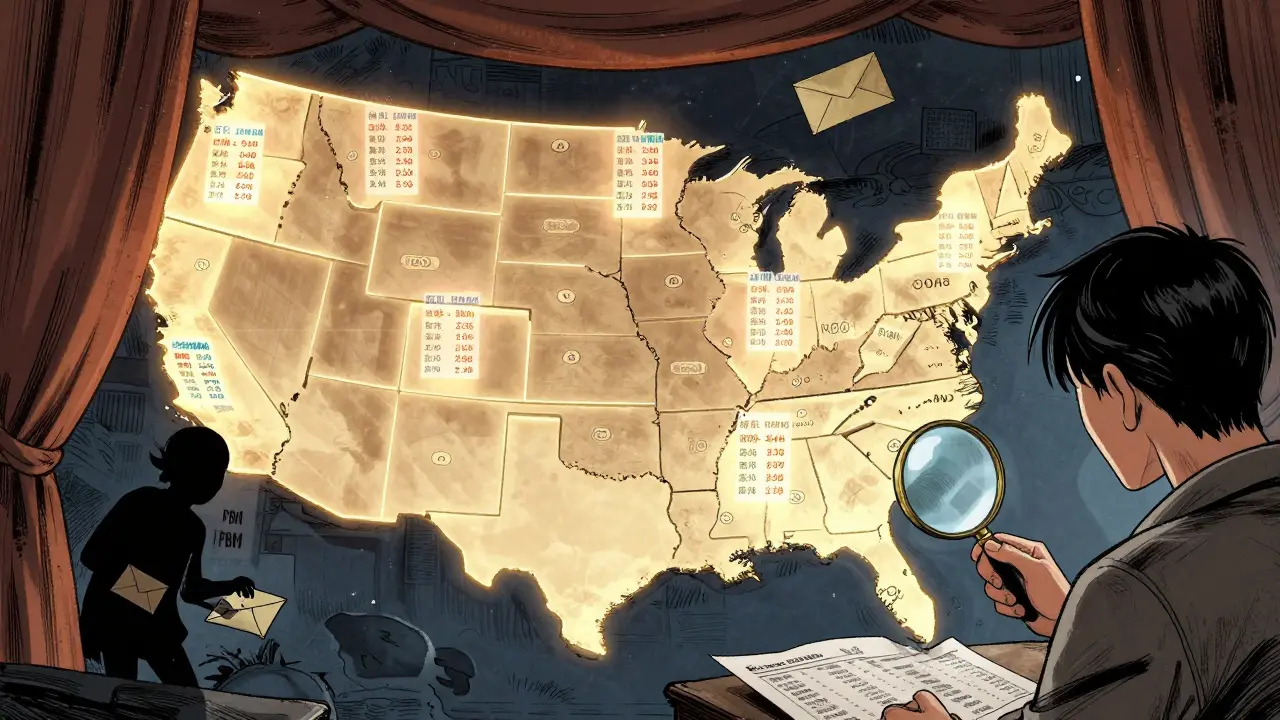
Some states are cutting through the noise. Minnesota, California, and New York have created public price transparency portals where you can search for the exact cost of a generic drug at any pharmacy in the state.Take Minnesota’s tool: in 2025, a patient discovered a 92% price difference for the same generic medication between two pharmacies just five miles apart. She saved $287 a year. That’s the power of real, public data.
California requires drugmakers to report any price increase over 16% in two years. New York’s law forces PBMs to disclose rebates to the state - which means the public can eventually see who’s really getting paid.
These tools are free. They’re accurate. And they’re often overlooked. If you live in one of these states, use them before you fill any prescription.
What’s Missing: The Hidden Rebate System
No matter how many tools you use, you’ll never see the full picture - because the real pricing game happens behind closed doors.Drugmakers offer huge rebates to PBMs to get their drugs on insurance formularies. The higher the rebate, the more likely the drug gets covered. But you never see that money. The rebate lowers the insurer’s cost - but not necessarily yours.
That’s why a drug with a $100 list price might cost you $20 - because your insurer got a $70 rebate. But if the rebate disappears next year? Your price jumps. And you won’t know why.
Experts like Dr. Dan Arnold from Avalere Health say this system is broken. "Transparency without addressing rebates is like showing you the menu but not the bill," he said in 2025. "You still don’t know what you’ll pay."
How to Use These Tools Right
Here’s how to actually save money in 2026:- If you have insurance: Ask your doctor to use a Real-Time Benefit Tool. Don’t assume your prescription is the cheapest option.
- If you’re paying cash: Use GoodRx or SingleCare - but call the pharmacy first. Ask: "Is this price honored at your location?"
- If you live in a transparency state: Use your state’s public portal. It’s more accurate than any app.
- Always ask about patient assistance programs: Organizations like RxAssist help 1.2 million people a year get free or low-cost meds. The application is messy - but worth it.
- Don’t trust list prices: The $500 price you see online? It’s not your price. It’s the manufacturer’s sticker price.
The Future: What’s Coming in 2026
In January 2025, the U.S. Senate introduced the Drug-price Transparency for Consumers Act (S.229). If passed, it would require drug ads on TV and online to show the wholesale cost of a 30-day supply. That’s a big deal - because right now, those ads say "As low as $4" without context.Meanwhile, the Medicare Two Dollar Drug List Model was canceled in March 2025 - a major setback for federal price control. But state laws are growing. By 2026, more states will likely require PBMs to disclose rebate amounts.
The market for price transparency tools is booming. It’s expected to hit $4.89 billion by 2029. But growth doesn’t equal fairness. Until the rebate system is opened up, the tools will keep showing you half the story.
Bottom Line: You Have Power - Use It
You don’t have to accept whatever price you’re handed. You have more tools than ever to find the best price - if you know where to look.Use your doctor’s EHR system. Check your state’s transparency portal. Call pharmacies before you go. Ask about patient assistance. And never, ever assume the price on the screen is the final one.
Price transparency isn’t magic. But it’s the closest thing we have to a fair system right now. And it’s only getting better.
Why do drug prices vary so much between pharmacies?
Drug prices vary because pharmacies negotiate different contracts with pharmacy benefit managers (PBMs). Some pharmacies get better deals on generics, especially if they’re part of a large chain or use a discount program like GoodRx. Others charge higher prices to cover overhead or because their PBM didn’t secure a rebate. The same generic drug can cost $3 at one store and $25 at another - even in the same city.
Can I use GoodRx even if I have insurance?
Yes, but it’s not always better. GoodRx shows cash prices, not your insurance price. If your insurance copay is lower than the GoodRx price, use your insurance. If the GoodRx price is lower, you can choose to pay cash instead - but you won’t count that toward your deductible. Always compare both options at the pharmacy counter.
What’s the difference between list price and net price?
The list price is what the drugmaker charges before any discounts - it’s often inflated and rarely what anyone pays. The net price is what the insurer or pharmacy actually pays after rebates and discounts. Patients usually see neither. RTBTs and state transparency tools try to show the net price you’ll pay, but many still only show the wholesale cost, which is not the same.
Why don’t all pharmacies honor GoodRx prices?
Some pharmacies don’t honor GoodRx because they’re not contracted with the discount network, or their PBM doesn’t allow it. Others say the price is outdated because it hasn’t updated in real time. The system isn’t unified - pharmacies, PBMs, and discount services operate on different platforms. Always verify with the pharmacy before you go.
Are generic drugs always cheaper than brand-name drugs?
Usually, yes - but not always. Some generics are priced higher because the manufacturer has little competition, or the drug is hard to produce. In rare cases, a brand-name drug might be cheaper than its generic due to manufacturer coupons or insurance deals. Always check both prices with your tool of choice.
How do I know if a drug is covered by my insurance?
Ask your doctor to use a Real-Time Benefit Tool during your visit - it will show you exactly what’s covered and what your copay will be. You can also log into your insurer’s member portal or call customer service. But don’t rely on general formulary lists - they’re often outdated. Real-time tools are the only way to get accurate, personalized info.
What if I can’t afford my medication even with transparency tools?
You have options. Patient assistance programs from drug manufacturers offer free or low-cost meds to qualifying patients. Organizations like RxAssist, NeedyMeds, and the Partnership for Prescription Assistance can help you apply. Many programs require income verification, but they’re free to use. Don’t skip your meds - ask your pharmacist or doctor for help finding support.
For more information on how to navigate drug costs, explore resources like RxAssist.org, NeedyMeds.org, and your state’s prescription drug affordability board website. Knowledge is your best tool.
Amisha Patel
March 14, 2026 AT 02:26Really appreciate this breakdown. I’ve been using GoodRx for my dad’s meds in India, and the price differences between pharmacies here are wild. One time, I saved 70% just by switching from a chain to a local pharmacy. No app is perfect, but knowing to call ahead? Game changer.
Elsa Rodriguez
March 14, 2026 AT 16:52Ugh. I hate how we’re supposed to be ‘proactive’ about our own healthcare like it’s some DIY project. My doctor’s ‘RTBT’ took 17 minutes to load. I just want my pills, not a PhD in insurance jargon.
Kandace Bennett
March 16, 2026 AT 11:14OMG YES!!! 🇺🇸 Finally, someone gets it! The rebate system is a SCAM. I work in pharma, and let me tell you - PBMs are the real villains. They get millions in kickbacks, and we’re left paying $18 for a $4 drug. Why isn’t Congress doing anything? 🤦♀️ #DrugPriceScam
Tim Schulz
March 17, 2026 AT 10:13Oh wow. So we’re supposed to be grateful that we have 17 different apps telling us we’re being ripped off? Congrats, America. You turned healthcare into a game of Whack-a-Mole with your wallet. 🤖💸 I’ve seen the same $4 metformin price on 3 apps - all wrong. I’m just gonna keep paying $40 and pretending I’m not mad.
Sally Lloyd
March 17, 2026 AT 20:37Did you know the FDA doesn’t require drugmakers to disclose rebate amounts to patients? I’ve been researching this for years. It’s not a market failure - it’s intentional. The entire system is designed to confuse people so they don’t ask questions. The ‘transparency tools’? Just PR theater. The real cost is hidden in corporate contracts. You’re not being sold medicine. You’re being sold a numbers game.
Emma Deasy
March 18, 2026 AT 23:03It is, without a doubt, a profound and deeply troubling systemic failure that patients are expected to navigate a labyrinthine, opaque, and intentionally obfuscated pharmaceutical pricing architecture - replete with rebate structures, PBM middlemen, and wildly inconsistent pharmacy contracts - in order to obtain basic, life-sustaining therapeutics. One cannot help but wonder: Is this a market? Or a moral collapse?
tamilan Nadar
March 19, 2026 AT 16:48Back home in Tamil Nadu, generics cost less than a cup of chai. Here in the US, people fight over $5 differences. I get it - insurance is complicated. But why can’t we just fix the system? It’s not about being rich or poor. It’s about dignity.
Adam M
March 20, 2026 AT 14:01Stop using GoodRx if you have insurance. It’s not a discount. It’s a trap.
Rosemary Chude-Sokei
March 20, 2026 AT 22:19Thank you for this thoughtful, well-researched overview. I especially appreciate the emphasis on state-level tools - Minnesota’s portal saved me over $300 last year. I’ve shared it with my elderly neighbors. Knowledge truly is power - and it’s our responsibility to pass it on. Let’s keep pushing for real transparency, not just marketing slogans.