
Stability Testing Guide: Ensuring Long-Term Drug Quality Post-Manufacture
 Apr, 10 2026
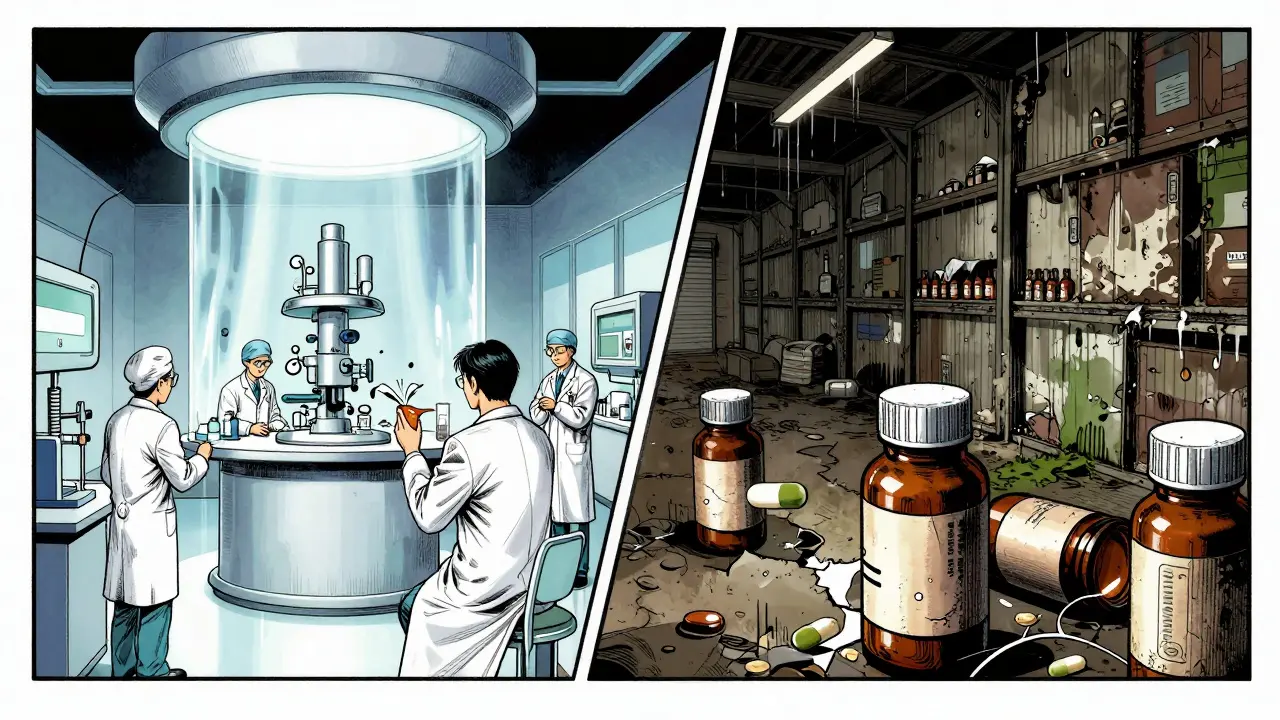
Imagine spending millions of dollars and years of research on a new drug, only to find out six months after launch that the active ingredient breaks down when stored in a humid warehouse. This isn't just a business failure; it's a patient safety crisis. In the pharmaceutical world, a product isn't "finished" just because it left the assembly line. The real test begins once it's packaged and exposed to the world.
That's where Stability Testing is the systematic process of collecting data on a drug product over time under specific environmental conditions to ensure the Active Pharmaceutical Ingredient (API) remains effective and safe. It's the only way manufacturers can legally and scientifically prove how long a drug lasts and how it needs to be stored. Without it, the expiration date on your medicine bottle would be nothing more than a guess.
| Goal | Why it Matters | Key Outcome |
|---|---|---|
| Shelf Life Determination | Prevents use of degraded drugs | Accurate Expiration Date |
| Storage Guidance | Prevents heat/moisture damage | "Store in a cool, dry place" labels |
| Safety Monitoring | Detects toxic degradation products | Reduced product recalls |
The Regulatory Framework: Why ICH Guidelines Rule the Lab
You won't find pharmaceutical companies just winging their stability tests. Everything is governed by the International Council for Harmonisation of Technical Requirements for Pharmaceuticals for Human Use or ICH, a global body that aligns regulatory standards between Europe, Japan, and the US. Specifically, the ICH Q1A(R2) guidelines act as the playbook for stability testing.
Following these rules isn't optional. If you're filing a New Drug Application (NDA) with the FDA, you need comprehensive stability data. The stakes are incredibly high. In 2021, roughly 17.3% of all drug recalls were tied directly to stability failures, such as potency loss. When a drug loses its strength or develops harmful impurities, it's no longer the medicine the doctor prescribed-it's a liability.
Setting the Stage: Stability Chambers and Conditions
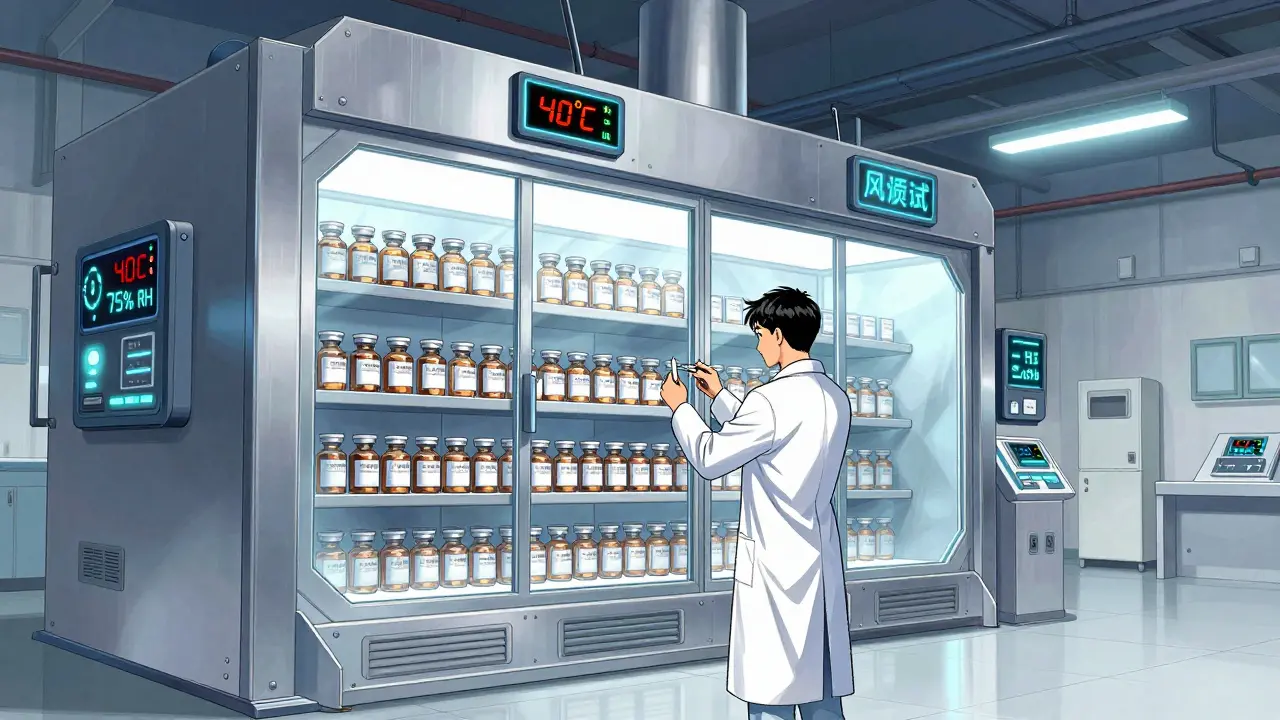
To simulate the real world, manufacturers use Stability Chambers highly controlled environmental rooms that maintain precise temperature and humidity levels 24/7. They don't just set it to "room temperature" and hope for the best; they use specific tiers based on the target market's climate.
- Long-term testing: For temperate zones, they use 25°C (± 2°C) and 60% relative humidity (± 5% RH). For hotter, more humid regions, they bump this to 30°C and 65% RH.
- Accelerated testing: This is the "stress test." By pushing conditions to 40°C and 75% RH for six months, scientists can predict potential failures much faster.
- Photostability: Per ICH Q1B, drugs are exposed to intense UV and visible light to see if the medicine is light-sensitive, which determines if the drug needs amber-colored bottles.
Testing isn't a one-time event. For new molecules, samples are pulled and analyzed at intervals: 0, 3, 6, 9, 12, 18, 24, and 36 months. If a temperature excursion happens-like a power outage that warms the chamber-it triggers a formal Out-of-Specification (OOS) investigation. A simple glitch can delay a market launch by months and cost millions in lost revenue.
What Exactly Are Scientists Looking For?
Stability testing isn't just checking if the pill still looks white. It's a deep dive into the chemical and physical soul of the product. They focus on four primary areas:
- Physical Attributes: Changes in color, pH levels, or the hardness of a tablet.
- Chemical Properties: Using HPLC High-Performance Liquid Chromatography, a technique used to separate and quantify components in a mixture to check the assay (potency) and identify degradation products.
- Microbiological Characteristics: Ensuring that sterility is maintained and no bioburden (bacteria/fungi) has grown over time.
- Therapeutic Efficacy: Running dissolution profiles to make sure the drug still dissolves and absorbs into the bloodstream at the correct rate.
For complex products like biologics, the process is even more intense. Biologics are fragile and can degrade through multifactorial pathways, meaning a tiny change in temperature can cause the entire protein structure to unfold, rendering the drug useless.
The Business of Stability: In-House vs. Outsourcing
Maintaining a compliant stability program is expensive. A typical company might spend between $500,000 and $2 million annually on infrastructure alone. Each individual product study can cost between $50,000 and $150,000. Because of this, many firms turn to Contract Research Organizations CROs are specialized companies that provide outsourced research and technical services to the pharmaceutical industry like SGS or Eurofins.
Roughly 72% of pharmaceutical companies outsource at least some of this work. Why? Because the technical hurdles are steep. You need experts in analytical chemistry, statistical software like JMP or Minitab, and a rigorous quality assurance team to handle the mountain of documentation required by 21 CFR 211.192.
However, the trend is shifting toward efficiency. Many are adopting Quality by Design (QbD), which integrates stability knowledge early in the development phase. This approach can reduce the amount of required testing by up to 35% for well-characterized products, saving both time and money.

Future Trends: AI and Continuous Manufacturing
We are moving away from the "batch and wait" model. The FDA and ICH (via guideline Q13) are now focusing on continuous manufacturing. Instead of testing a batch every few months, the goal is real-time stability monitoring throughout the entire production process.
Even more exciting is the role of Artificial Intelligence. By 2027, predictive modeling is expected to slash stability testing timelines by 30-40%. Instead of waiting three years for real-time data, AI can analyze degradation pathways and predict the shelf life with startling accuracy, provided the initial data is robust.
What is the difference between accelerated and long-term stability testing?
Accelerated testing uses high heat and humidity (40°C/75% RH) to force degradation quickly, providing a "preview" of the drug's stability over 6 months. Long-term testing occurs at conditions mimicking actual storage (e.g., 25°C/60% RH) and lasts for years to provide the definitive data needed for the official expiration date.
What happens if a stability test result is "Out of Specification" (OOS)?
An OOS result triggers a formal investigation to determine if the failure was due to a lab error or an actual product defect. If the product is failing, the manufacturer may need to shorten the shelf life, change the packaging, or recall existing batches from the market.
Why is humidity so important in stability testing?
Many drugs are hygroscopic, meaning they absorb moisture from the air. This can lead to chemical hydrolysis (breaking down of molecules) or physical changes, such as tablets softening or capsules sticking together, which ruins the drug's efficacy.
How does stability testing affect the cost of medicine?
It adds significant overhead. Between the cost of specialized chambers, long-term storage, and high-end analytical equipment like HPLC, stability testing accounts for roughly 15-20% of total quality control expenditures in pharmaceutical manufacturing.
Can AI completely replace real-time stability studies?
Not entirely. While AI and machine learning can predict outcomes and reduce the number of samples needed, regulatory bodies like the FDA still require a baseline of real-time data to verify those predictions before a drug is approved for public use.
Next Steps for Quality Managers
If you're managing a stability program, start by auditing your chamber calibration. Quarter-yearly temperature mapping (per USP Chapter 1079) is a common pain point but is non-negotiable for compliance. If you're still using paper logs, consider switching to an electronic data management system; industry data shows this can cut your data review time by over 50%.
For those in the development phase, look into the ICH Q12 principles for lifecycle management. By defining a more flexible post-approval change protocol, you can often reduce your stability sample sizes without risking your regulatory standing.