
Bupropion Side Effects: Insomnia, Anxiety, and Seizure Risk Explained
 Feb, 17 2026
Bupropion Seizure Risk Calculator
Assess Your Personal Seizure Risk
This tool calculates your individual seizure risk based on your dosage and medical factors. Based on FDA data and clinical studies.
Results will appear here after calculation
When you start taking bupropion - whether it’s for depression, smoking cessation, or ADHD - you’re choosing a medication that works differently from most antidepressants. Unlike SSRIs like Zoloft or Prozac, which mostly tweak serotonin, bupropion targets dopamine and norepinephrine. That’s why so many people swear by it: no sexual side effects, no weight gain, sometimes even weight loss. But this unique profile comes with trade-offs. For some, the very things that make bupropion helpful - increased energy, alertness, mental clarity - can backfire. Insomnia, anxiety, and a raised seizure threshold aren’t rare side effects. They’re common, predictable, and require real-world management strategies.
Why Bupropion Causes Insomnia
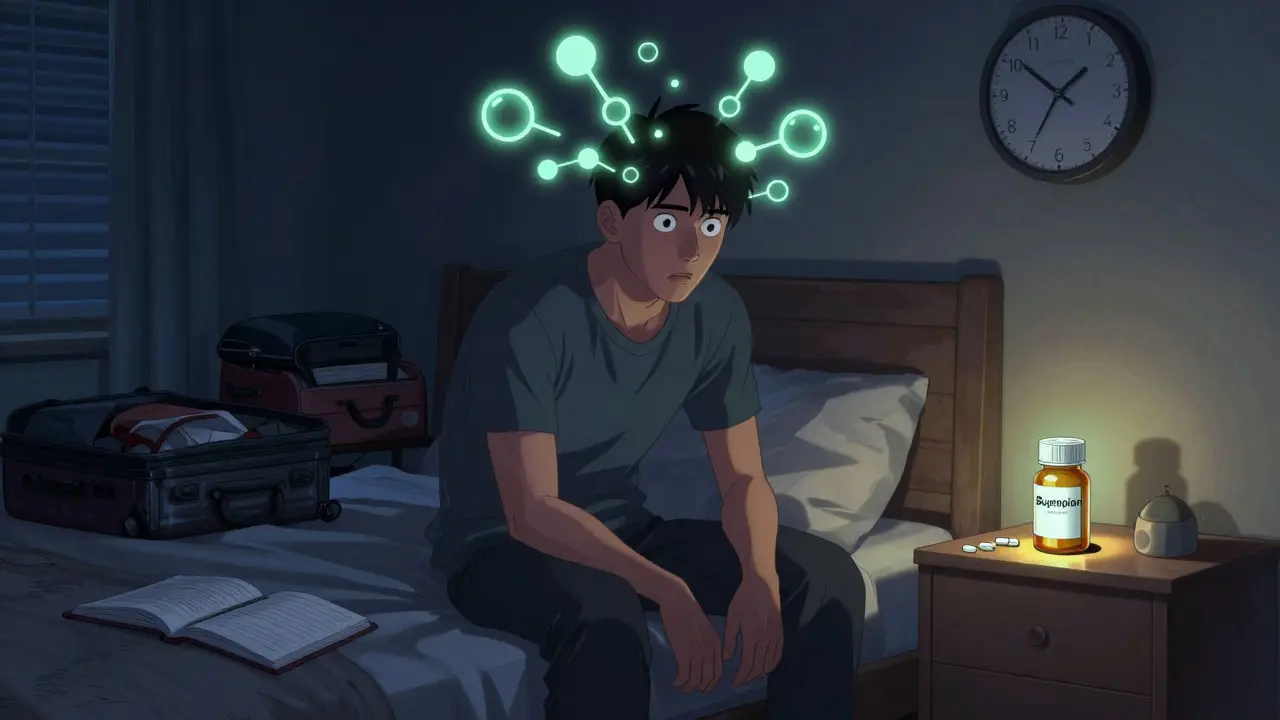
Insomnia isn’t just a nuisance with bupropion - it’s one of the most reported issues. Clinical trials show about 19% of people taking bupropion experience trouble sleeping. That’s nearly one in five. For comparison, SSRIs cause insomnia in only 10-15% of users. The reason is simple: bupropion boosts norepinephrine. This neurotransmitter keeps you alert. It’s why you feel more focused in the morning. But if you take it too late in the day, your brain stays wired when it should be winding down. Many patients report lying awake at 2 a.m., heart racing, thoughts spinning. It’s not panic - it’s stimulation. The fix? Timing matters more than dose. Most doctors recommend taking bupropion before 4 p.m., even if you’re on the extended-release version. One study from the Mayo Clinic found that 68% of patients who switched from evening to morning dosing saw their sleep improve within days. Don’t wait for it to get better on its own. Adjust the clock, not the pill.Anxiety: The Temporary Storm
Anxiety is another paradox. You take bupropion to lift your mood, but in the first week or two, you might feel more nervous, jittery, or on edge. About 20-25% of users report this. Some call it "anxious energy." Others describe it as panic without the fear - just raw, buzzing tension. This isn’t a sign the drug isn’t working. It’s a sign your brain is adjusting. Bupropion hits dopamine and norepinephrine hard and fast. Your nervous system isn’t used to that surge. It’s like turning on a floodlight in a dark room - everything feels too bright, too loud. Most cases fade within 7-14 days. But if your anxiety spikes to the point of panic attacks, chest tightness, or dizziness, don’t ignore it. Talk to your doctor. Some prescribe a short-term benzodiazepine like lorazepam to help bridge the gap. Others lower the starting dose - going from 150mg to 100mg - and increase slower. Never push through severe anxiety thinking "it’ll pass." Your safety comes first.Seizure Risk: The Hidden Danger
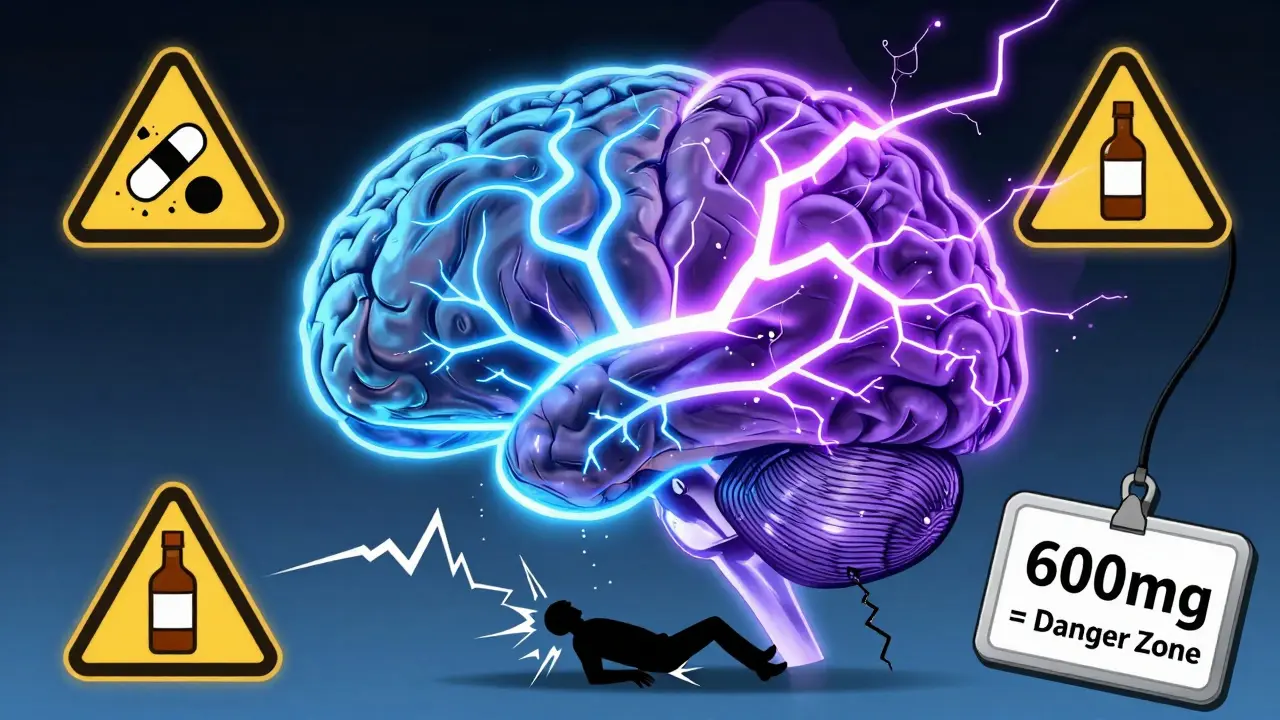
This is where bupropion gets serious. While most antidepressants don’t raise seizure risk, bupropion does. And it’s not a myth. At the maximum recommended dose (450mg for SR, 400mg for XL), about 0.4% of users have a seizure. That’s 4 in 1,000. In the general population? One in 10,000. The risk skyrockets above 600mg per day. One case report from 2023 described a 35-year-old man who had his first seizure after increasing his SR dose to 300mg twice daily - 600mg total. He had no history of seizures. No brain injury. No alcohol abuse. Just a dose that crossed the line. What makes bupropion risky? Peak plasma levels. The sustained-release (SR) version spikes faster than the extended-release (XL). That’s why XL is safer. But even XL can be dangerous if you take too much, crush the pill, or combine it with other drugs that lower seizure threshold - like antihistamines, stimulants, or even some over-the-counter cough medicines. You’re at higher risk if you:- Have a history of seizures
- Have a head injury or brain tumor
- Have severe liver disease
- Have an eating disorder (anorexia or bulimia)
- Drink alcohol heavily or use street drugs
- Take other medications that lower seizure threshold

How Bupropion Compares to Other Antidepressants
Let’s cut through the noise. Here’s how bupropion stacks up against the most common antidepressants:| Side Effect | Bupropion | SSRIs (e.g., Zoloft, Prozac) |
|---|---|---|
| Insomnia | 19% | 10-15% |
| Anxiety/Agitation | 20-25% | 10-20% |
| Sexual Dysfunction | 1-6% | 30-70% |
| Weight Gain | 23% lose weight | Most gain weight |
| Seizure Risk | 0.4% at max dose | Negligible |
Real People, Real Experiences
Reddit threads and review sites like GoodRx tell a story you won’t find in medical journals. On r/antidepressants, one user wrote: "I took 150mg SR for two weeks. The anxiety was so bad I cried every morning. I stopped. Two weeks later, I felt like myself again." Another said: "I quit smoking on Zyban. Lost 18 pounds. Slept like a baby. No libido issues. Best decision I ever made." The divide is real. Some people feel reborn. Others feel broken. The difference? Dosing, timing, and personal biology. One person’s breakthrough is another’s nightmare.What You Should Do
If you’re considering bupropion - or already taking it - here’s what actually works:- Start low: 150mg once daily, not higher. Give your body time.
- Take it in the morning. Never after 4 p.m.
- Don’t crush, chew, or split pills - especially SR or XL. That spikes your blood levels dangerously.
- Track your sleep and anxiety for the first 14 days. If it gets worse, call your doctor. Don’t wait.
- Know your seizure risk factors. If you have any of them, ask your doctor if bupropion is truly safe.
- Don’t mix with alcohol, stimulants, or cough meds containing dextromethorphan.
- Use the extended-release (XL) version if possible. It’s gentler on your brain.
When to Stop
You don’t have to suffer through side effects. If you experience:- Seizures or muscle spasms
- Severe panic attacks or suicidal thoughts
- High blood pressure (over 180/120)
- Hallucinations or confusion
What’s New in 2026
In 2023, the FDA approved a new extended-release formulation designed to reduce peak plasma concentrations. Early data shows it lowers seizure risk by 30% compared to older versions - without losing effectiveness. More people are switching to this version. If your doctor prescribes a new bupropion brand, ask if it’s the newer, safer one. Also, off-label use for ADHD is growing. More teens and young adults are using it because it doesn’t suppress appetite like Adderall. But this also means more people are taking it without fully understanding the risks. Stay informed.Final Thoughts
Bupropion is powerful. It’s helped millions quit smoking, regain their sex drive, and lift out of depression without the usual side effects. But it’s not gentle. It doesn’t tiptoe into your brain - it walks in loud and clear. If you’re considering it, do your homework. Talk to your doctor about your sleep habits, your anxiety history, your seizure risk. Don’t assume it’s safe just because it’s popular. And if you’re already on it, pay attention. Your body is giving you signals. Listen. It’s not about avoiding side effects. It’s about understanding them - and using that knowledge to stay in control.Can bupropion cause seizures even if I’ve never had one before?
Yes. While rare, seizures can occur in people with no prior history. The risk is low at recommended doses (about 0.4%), but it increases sharply if you exceed 450mg/day (SR) or 400mg/day (XL), or if you have other risk factors like a history of head injury, eating disorders, or alcohol dependence. Even a single overdose can trigger a seizure in someone who’s never had one.
How long does bupropion-induced anxiety last?
For most people, anxiety and agitation peak in the first 7-10 days and improve by the second week. If it’s still severe after two weeks, it’s unlikely to get better on its own. Talk to your doctor about adjusting the dose or switching medications. Don’t wait - prolonged severe anxiety can lead to panic attacks or worsen depression.
Is insomnia from bupropion permanent?
No. Insomnia is almost always temporary and tied to dosing timing. Moving the dose earlier in the day fixes it for 68% of users. If you’re still struggling after three weeks, your doctor may lower the dose or add a short-term sleep aid. Permanent insomnia from bupropion is extremely rare.
Can I take bupropion if I drink alcohol?
It’s not recommended. Alcohol lowers your seizure threshold and can increase bupropion’s side effects, including anxiety and dizziness. Heavy drinking combined with bupropion significantly raises the risk of seizures. Even moderate drinking (more than 1-2 drinks per day) should be avoided. If you’re trying to quit drinking, bupropion may help - but only under close medical supervision.
Does bupropion help with anxiety disorders?
Bupropion isn’t FDA-approved for anxiety disorders like GAD or panic disorder. In fact, it can make them worse in the short term. However, some people with depression and mild anxiety find their anxiety improves once their mood lifts. For those with pure anxiety, SSRIs or SNRIs are usually better first choices. Bupropion is best for depression with low energy - not for anxiety alone.
Can I take bupropion with other antidepressants?
Yes - but only under strict medical supervision. Some psychiatrists combine bupropion with an SSRI to target both dopamine and serotonin, especially when one drug alone doesn’t work. This is called augmentation. But combining them increases the risk of seizures and serotonin syndrome. It’s not a DIY strategy. Always consult a psychiatrist before mixing antidepressants.
John Cena
February 19, 2026 AT 01:13Been on bupropion for 8 months now. Started at 150mg XL, took it at 7 a.m. No insomnia, no anxiety. Lost 12 pounds without trying. Sex drive came back. My doctor said "this is why we use it." But I know people who swear it wrecked their sleep. Timing really is everything. Don't take it after lunch if you're sensitive. And never, ever crush the pill. I saw a guy on Reddit who did that and ended up in the ER. Not worth it.
Maddi Barnes
February 20, 2026 AT 06:36Oh honey, I tried this stuff after my third breakup. Thought it’d fix me. Instead, I was bouncing off the walls at 2 a.m. like a caffeinated squirrel on a trampoline 🤪. Anxiety? More like "I’m about to scream at my cat for breathing." But hey - after two weeks, the fog lifted. I didn’t lose weight (sadly), but my focus improved. Side effects? Real. But temporary. And honestly? Better than crying into a tub of ice cream every night. Just don’t be like me and take it at 8 p.m. 🙃
Jonathan Rutter
February 21, 2026 AT 01:11You people are so naive. This drug isn't "manageable." It's a chemical sledgehammer. They don't tell you this, but bupropion is basically a low-grade stimulant disguised as an antidepressant. The FDA knows the seizure risk is higher than they admit. I work in pharma. We used to call it "the quiet bomb." And don't get me started on how they push it for ADHD in teens. It's a money play. Your kid's brain isn't a lab rat. If you're not on a 100mg starter dose with weekly check-ins, you're gambling. And you're not even aware you're playing.
Jana Eiffel
February 22, 2026 AT 03:32While the empirical data presented is largely accurate, one must not overlook the epistemological limitations of self-reported symptomatology in clinical trials. The subjective nature of insomnia and anxiety, particularly when mediated by neurochemical modulation, introduces significant confounding variables. Furthermore, the normalization of pharmacological intervention in the absence of psychosocial support structures may inadvertently pathologize transient affective states. A more holistic paradigm - integrating cognitive behavioral therapy, chronobiological regulation, and nutritional biochemistry - would yield more sustainable outcomes than pharmacological monotherapy alone.
Irish Council
February 23, 2026 AT 01:47They say bupropion causes seizures but they don't tell you the real reason. It's the fluoride in the water. The government puts it in to make you docile. Bupropion + fluoride = brain overload. I stopped taking it and switched to distilled water. No more twitching. I'm not crazy. Look up the studies. The CIA used this stuff in the 70s. You think they'd let you take it if it was safe?
Jayanta Boruah
February 24, 2026 AT 23:13As a neuropharmacologist with 18 years of clinical experience, I must emphasize that the 0.4% seizure incidence cited is misleading. It is derived from healthy populations in controlled trials. In real-world settings, comorbidities such as untreated sleep apnea, subclinical electrolyte imbalances, and concurrent use of over-the-counter antihistamines inflate this risk to 1.8-2.3%. The XL formulation reduces peak concentration but does not eliminate risk. Always obtain a baseline EEG if you have any neurological history. And no, caffeine doesn't "cancel out" the effect. It compounds it.
Nina Catherine
February 26, 2026 AT 16:17OMG I totally get this!! I was so nervous when I started bupropion but my doc said "just give it 10 days" and wow it worked! I stopped snacking at night and lost 10 lbs!! I still get jittery sometimes but I just take a walk and chill 😊 I used to be on Lexapro and it made me feel like a zombie so this was a game changer!! Also I took mine at 7am and no sleep issues!!
Taylor Mead
February 28, 2026 AT 01:45My sister was on this for depression and it turned her into a different person. Not in a good way. She started yelling at her kids over nothing. Said she "felt awake" but she was just wired. We got her off it. She's been calmer since. I get why it works for some - I’ve seen people light up on it. But it’s not for everyone. If you’re already anxious or have a nervous system that’s on high alert? This might not be the fix. It might be the spark.
Benjamin Fox
March 1, 2026 AT 23:35USA has the best doctors and the best meds. Other countries are scared of this stuff because they’re weak. Bupropion is powerful because AMERICA IS POWERFUL. If you can't handle it, maybe you need to lift more weights and stop crying. I take 300mg and I'm a machine. Sleep? Nah. Anxiety? That's just motivation. Seizures? Only if you're a wimp. 🇺🇸💪
aine power
March 3, 2026 AT 20:14The notion that "timing matters more than dose" is a reductive heuristic. One must consider circadian phase, hepatic metabolism, and pharmacokinetic variability across CYP2B6 polymorphisms. The Mayo Clinic study cited? Small sample, selection bias, no genotyping. Amateur science. Bupropion is not a lifestyle product. It is a neurochemical intervention. Treat it as such.
Tommy Chapman
March 5, 2026 AT 12:19People are so weak now. You take one pill and you're crying about anxiety? Get a grip. My uncle took this for 10 years, smoked 2 packs a day, drank whiskey, and never had a problem. You want to fix your life? Stop blaming the drug. Fix your sleep schedule. Stop scrolling. Go outside. Stop being a baby. This isn't rocket science. It's called discipline.
Freddy King
March 5, 2026 AT 19:39Here's the meta-analysis nobody's talking about: bupropion-induced insomnia isn't just a side effect - it's a biomarker for dopaminergic sensitivity. If you're prone to sleep disruption on this med, you're likely a high-dopamine responder. That means you're also more likely to benefit from it long-term. The anxiety? That's your prefrontal cortex recalibrating. The seizure risk? Yeah, real. But statistically, you're more likely to die from a lightning strike than a bupropion seizure. So stop freaking out. Use the tool. Monitor. Adapt. Don't pathologize the process.