
Insomnia: Why Cognitive-Behavioral Therapy Beats Sleep Medications Long-Term
 Mar, 6 2026
Most people with insomnia reach for a pill first. It’s quick, easy, and promises instant relief. But what if the real solution doesn’t come in a bottle? What if the cure isn’t something you take, but something you learn?
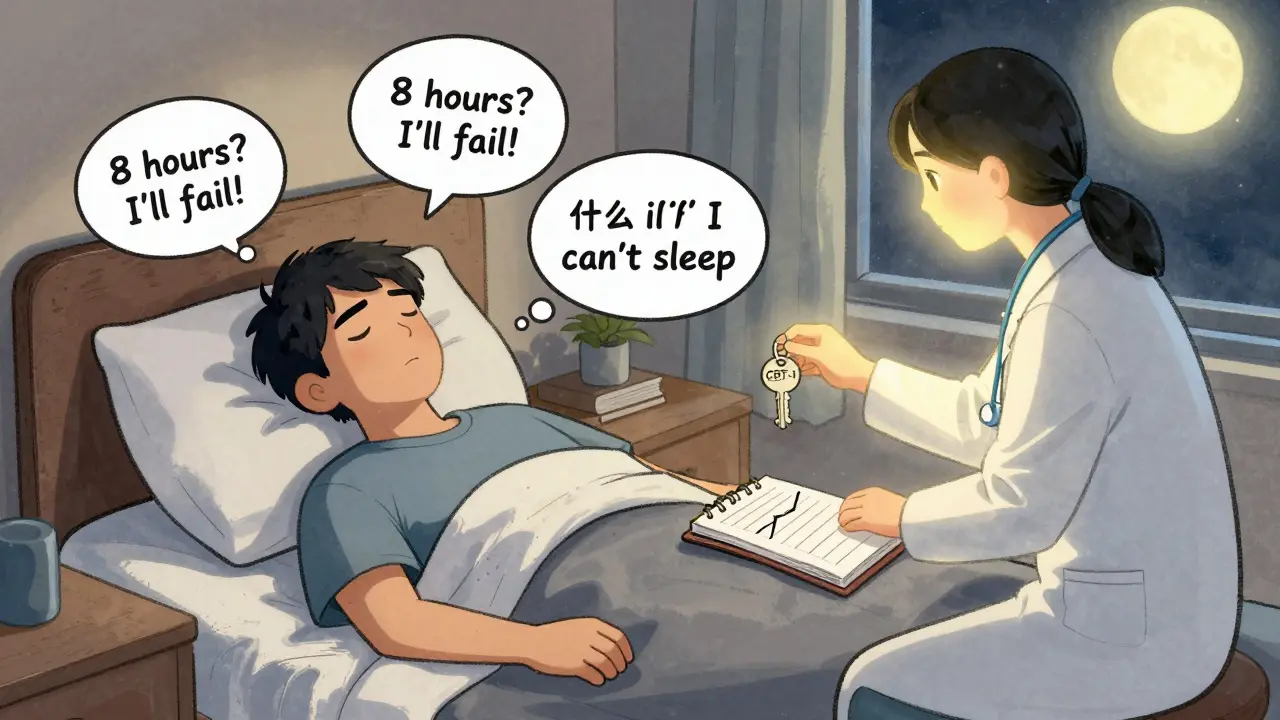
For over 40 years, researchers have been studying how people sleep - and what keeps them from sleeping. The answer isn’t just about chemicals in the brain. It’s about habits, thoughts, and routines that quietly sabotage rest, even after the original stress is gone. That’s where Cognitive Behavioral Therapy for Insomnia, or CBT-I, comes in. It’s not a miracle cure. It’s not magic. But it works better than any sleep pill over time - and without the hangover, the dependency, or the risks.
What Is CBT-I, Really?
CBT-I isn’t a single trick. It’s a full system built from five proven parts, each targeting a different piece of the insomnia puzzle. It was developed in the 1980s, tested in more than 100 clinical trials, and is now the official first-line treatment recommended by the American College of Physicians and the American Academy of Sleep Medicine.
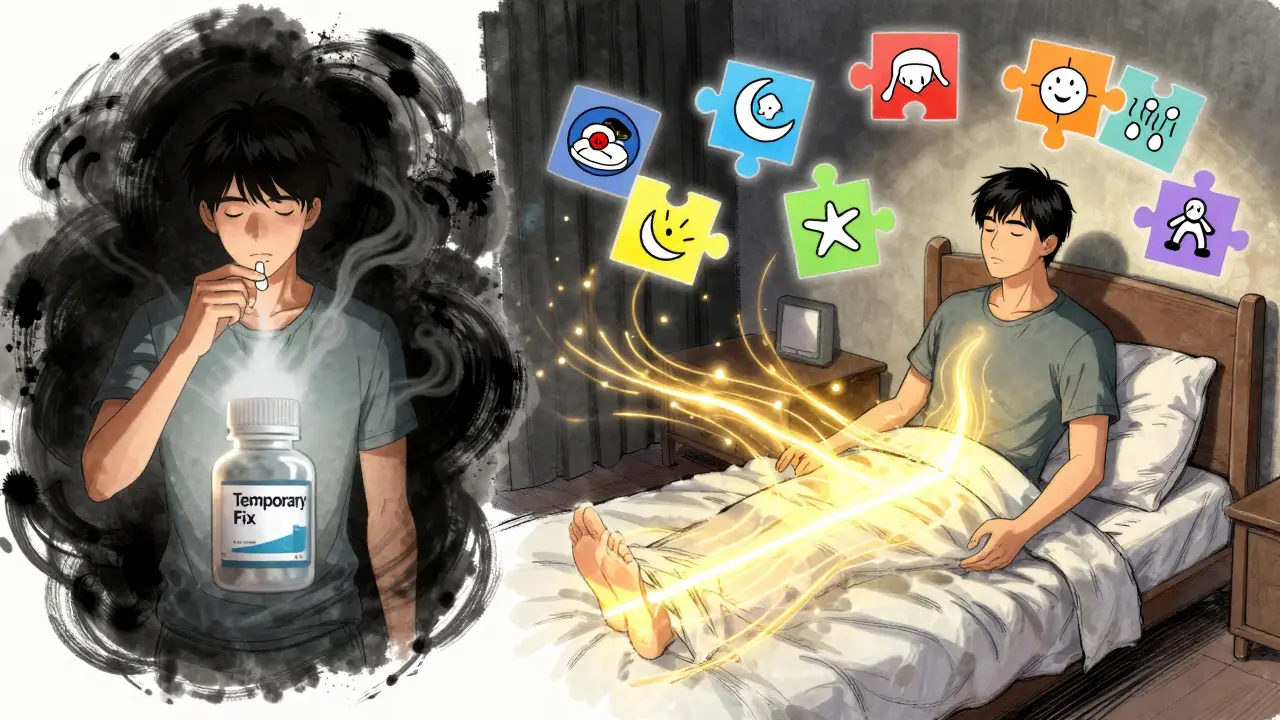
Think of it like fixing a leaky roof. Sleeping pills are like putting a bucket under the drip - they catch the water, but the roof stays broken. CBT-I is about repairing the shingles. It changes the way you think about sleep, how you use your bed, and how your body learns to relax.
The Five Core Tools of CBT-I
- Sleep Restriction Therapy (SRT): This sounds crazy: you’re told to spend less time in bed. If you only sleep 5 hours a night, you’re told to stay in bed for just 5 hours - no more. At first, you’ll feel exhausted. But over weeks, your body learns to fall asleep faster and stay asleep longer. Studies show this one piece alone makes up about 40% of CBT-I’s success. It’s not about forcing sleep - it’s about building sleep pressure so strong, your brain can’t ignore it.
- Stimulus Control Therapy (SCT): Your bed should be for sleep and sex only. No reading. No scrolling. No working. If you’re awake for more than 20 minutes, you get up. You go to another room. You sit in a dim chair. You don’t look at the clock. You come back only when you’re sleepy. This trains your brain to associate the bed with sleep, not stress.
- Cognitive Restructuring: This is where your thoughts get challenged. Do you believe you need 8 hours of sleep to function? What if you get 6? Do you panic? CBT-I helps you test those beliefs. One study found patients who completed 80% of these cognitive exercises saw a 62% greater drop in insomnia severity than those who didn’t. It’s not about being positive - it’s about being accurate.
- Relaxation Techniques: Breathing exercises, progressive muscle relaxation, mindfulness - these aren’t just for yoga studios. They lower your body’s stress response. Polysomnography data shows just 6 weeks of daily 15-minute relaxation cuts physiological hyperarousal by 27%. Your body can’t sleep if it’s stuck in fight-or-flight mode.
- Sleep Compression: Once your sleep efficiency hits 85% (meaning you’re asleep 85% of the time you’re in bed), you slowly add 15-30 minutes back to your sleep window. It’s a gentle, data-driven way to rebuild your natural rhythm without falling back into old patterns.
How Does CBT-I Compare to Sleep Medications?
Let’s talk about zolpidem - the most common sleep pill in the U.S. It works fast. You take it, you fall asleep. But here’s what no one tells you: 42% of users develop tolerance within 8 weeks. That means the same dose stops working. Then you take more. Then you get side effects: dizziness, memory lapses, next-day grogginess, even falls in older adults.
A 2023 study of over 4,000 people found that while pills and CBT-I looked similar at the 6-week mark, the gap widened fast. At 6 months, CBT-I users had a 3.2-point greater improvement on the Insomnia Severity Index. At 12 months, 68% of CBT-I patients still had lasting results. Only 32% of pill users did.
And here’s the kicker: combination therapy - CBT-I plus medication - works best for some. But only if the medication is used as a temporary bridge. The goal isn’t to stay on pills. It’s to use them briefly while you retrain your brain. Then, you let go.
Why Don’t More People Do CBT-I?
It’s not because it doesn’t work. It’s because it’s hard - and hard to find.
CBT-I takes time. You need to keep a sleep diary. You need to wake up at the same time every day - even on weekends. You need to sit in a dim room for 20 minutes when you can’t sleep. It’s uncomfortable. And most people quit between weeks 2 and 3 - when sleep restriction hits hardest.
There’s also a supply problem. Only 15% of U.S. primary care doctors feel trained to deliver CBT-I. Insurance often covers a $15 pill but charges $120 per therapy session. That’s why digital platforms like Sleepio and Somryst are changing the game. They’re FDA-cleared, accessible, and cost less than a single doctor visit. A 2024 study found 82% of adults over 65 completed digital CBT-I with minimal help. The hardest part? Learning to use the app.
Real People, Real Results
On Reddit, one user wrote: “After 6 weeks of sleep restriction, my sleep efficiency jumped from 68% to 92%. The hardest part? Getting up at 6 a.m. on Saturday.” Another said: “I haven’t taken a pill in 18 months. I still wake up sometimes. But now I know it’s okay.”
A survey of 3,112 CBT-I users found that 89% said they didn’t feel groggy in the morning anymore. 83% said the results lasted. And 72% said they’d recommend it to a friend.
Even teenagers - often dismissed as “just late-night scrollers” - show dramatic improvement. One study found CBT-I improved their time to fall asleep by nearly 30 minutes and added 45 minutes of total sleep. Sleep meds? No lasting benefit.

What’s Next for CBT-I?
AI is now tailoring CBT-I programs to individuals. For older adults, personalized sleep schedules based on activity levels and health conditions improved response rates by 37%. Medicare started covering digital CBT-I in 2022. Over 142,000 claims were processed in 2023 alone.
And the long-term data? Even more powerful. A 2023 study tracked people 10 years after CBT-I. Their insomnia severity scores were still 56% lower than before treatment. That’s not temporary relief. That’s a permanent reset.
There’s no pill that does that. No supplement. No wearable. No herbal tea.
So What Should You Do?
If you’ve had insomnia for more than a few weeks, stop reaching for the pill. Start with a sleep diary. Track your bedtime, wake time, and how long it took to fall asleep. Then, look for digital CBT-I programs - many are covered by insurance now. Talk to your doctor about referrals. If you’re not ready for the full program, start with one piece: sleep restriction. Set a fixed wake time. Don’t get up later, even if you’re tired. See what happens.
CBT-I isn’t a quick fix. But it’s the only fix that lasts. And after decades of research, it’s clear: if you want to sleep well for years, not just nights, this is the path.
Patrick Jackson
March 7, 2026 AT 16:17Pranay Roy
March 8, 2026 AT 20:27Joe Prism
March 9, 2026 AT 11:59Susan Purney Mark
March 11, 2026 AT 02:54Ian Kiplagat
March 12, 2026 AT 16:25Amina Aminkhuslen
March 13, 2026 AT 21:58amber carrillo
March 15, 2026 AT 03:00Tim Hnatko
March 15, 2026 AT 20:53Aaron Pace
March 16, 2026 AT 11:16Joey Pearson
March 17, 2026 AT 08:07Roland Silber
March 17, 2026 AT 16:27Adebayo Muhammad
March 18, 2026 AT 09:33Bridget Verwey
March 19, 2026 AT 06:48