
Managing Mycophenolate GI Side Effects: Tips for Nausea and Diarrhea
 Apr, 13 2026
Mycophenolate GI Side Effect Guide
Disclaimer: This tool is for educational purposes based on the article content. Never change your dose or stop your medication without consulting your healthcare provider.
What symptoms are you experiencing?
Nausea / Queasiness
Feeling sick to your stomach or upper GI irritation.
Diarrhea / Urgency
Frequent loose stools or abdominal cramping.
Management Options for Nausea
Timing Adjustment
While empty stomach is standard, try taking the med with a small amount of bland food (e.g., applesauce or toast) to bridge the gap.
Formulation Switch
Ask your doctor about switching from Mofetil (CellCept) to Sodium (Myfortic). The enteric coating bypasses the stomach, helping about 65% of patients.
Pro Tip for your next Appointment:
Keep a 3-day log of what you ate, when you took your dose, and when symptoms occurred. This data helps your doctor make the most accurate adjustment to your treatment.
Dealing with a transplant or an autoimmune condition is already a heavy lift. When you add Mycophenolate GI side effects to the mix, like constant nausea or sudden bouts of diarrhea, it can feel like the treatment is as hard to handle as the disease itself. In fact, stomach issues are the leading reason why people struggle to stick with this medication, which can unfortunately lead to a higher risk of organ rejection if not managed correctly.
The good news is that these symptoms aren't inevitable for everyone, and for those who do experience them, there are concrete ways to make the ride smoother. Whether you're taking the standard version or an enteric-coated one, understanding how this drug interacts with your gut is the first step toward feeling better.
Quick Summary of GI Management
- Dose Adjustments: Reducing the dose by about 33% often stops moderate diarrhea without losing effectiveness.
- Formulation Switch: Moving from mofetil to the sodium (enteric-coated) version helps about 65% of patients.
- Timing: Taking the med on an empty stomach is standard, but a small amount of food can help some people manage nausea.
- Red Flags: Bloody stools or severe cramping require a colonoscopy to rule out colitis or infection.
What Exactly is Mycophenolate?
To understand why your stomach is reacting, it helps to know what the drug is doing. Mycophenolate is an immunosuppressive medication that stops lymphocytes (a type of white blood cell) from multiplying. By slowing down these cells, it prevents your body from attacking a transplanted organ or your own tissues in the case of autoimmune diseases.
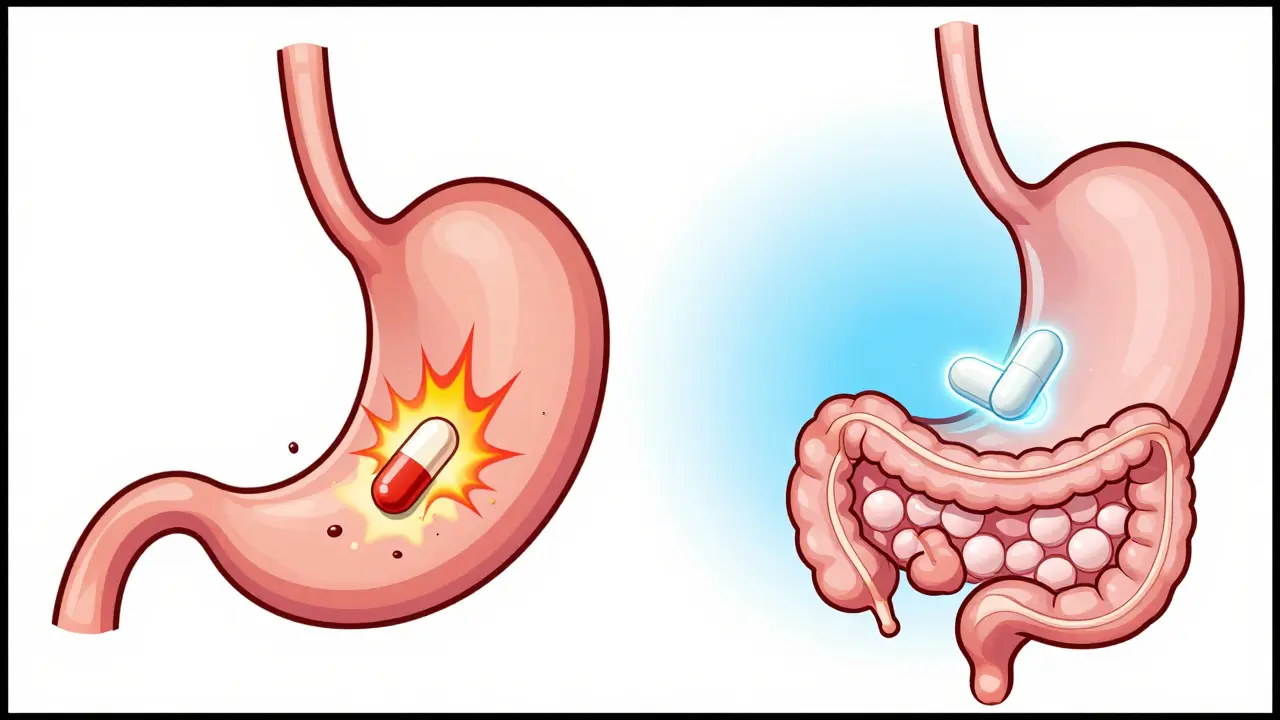
You'll usually see this in two main forms: Mycophenolate Mofetil (often known by the brand name CellCept), and Mycophenolate Sodium (known as Myfortic). While both do the same job, the sodium version has an enteric coating. This means it doesn't dissolve until it hits the small intestine, which is specifically designed to reduce the irritation in the upper GI tract that causes nausea.
Common Gut Issues and How They Feel
Not all GI side effects are the same. Some people feel a general "queasiness," while others deal with urgent trips to the bathroom. According to clinical data, nausea hits about 31% of patients, while diarrhea affects roughly 30%. Abdominal pain and vomiting are also common, though slightly less frequent.
Most of these issues are dose-dependent. This means the higher the concentration of the drug in your blood, the more likely your gut is to react. If your levels get too high-specifically above 3.5 μg/mL-the odds of dealing with diarrhea increase significantly. This is why your doctor might occasionally check your blood levels to make sure you're in the "sweet spot" where the drug works but doesn't make you miserable.
Step-by-Step Management for Nausea and Diarrhea
If you're struggling, don't just push through it. There is a standard hierarchy of how to handle these symptoms, starting from simple timing changes to medication switches.
- Adjust Your Timing: The official guidelines suggest taking the medication on an empty stomach (1 hour before or 2 hours after eating) for best absorption. However, if nausea is your primary problem, try taking it with a very small amount of food. Some patients find that a bit of applesauce helps bridge the gap.
- Talk About a Formulation Change: If you're on the mofetil (CellCept) version and the nausea is unbearable, ask your doctor about switching to the sodium (Myfortic) version. Because of that enteric coating we mentioned, it bypasses the stomach, and research shows it helps about 65% of people who struggle with the original version.
- Request a Dose Taper: In some cases, a slight reduction in dose can make a world of difference. Some clinics have seen success by reducing the dose by 33% (for example, moving from 1,000 mg twice a day to 667 mg), which often resolves diarrhea within a few days while still keeping the immune system suppressed.
- Explore New Options: Newer extended-release formulations (MPA-ER) have shown a 37% lower rate of diarrhea in recent trials, providing a modern alternative for those who can't tolerate the immediate-release versions.
| Feature | Mycophenolate Mofetil (CellCept) | Mycophenolate Sodium (Myfortic) |
|---|---|---|
| Coating | Immediate Release | Enteric-Coated |
| Primary GI Risk | Higher Upper GI Irritation | Lower Upper GI Irritation |
| Absorption | Fast / High Bioavailability | Similar efficacy, different profile |
| Common Use | First-line standard therapy | Alternative for GI-sensitive patients |
When It's More Than Just a "Side Effect"
While nausea and mild diarrhea are common, there is a more serious condition called mycophenolate-induced colitis. This isn't just an upset stomach; it's an inflammation of the colon lining. You'll know this is happening if you see blood in your stool or experience severe, sharp abdominal cramping.
The tricky part is that these symptoms look a lot like an infection, such as C. diff or CMV (Cytomegalovirus), which are also risks for people on immunosuppressants. Because the treatments for an infection are completely different from the treatment for drug toxicity, doctors usually won't guess. If diarrhea lasts more than a week or becomes severe, a colonoscopy with a biopsy is the gold standard to see if the drug is causing the damage or if a bug is the culprit.

Real-World Patient Strategies
While doctors provide the clinical guidelines, patients often find their own "hacks" to get through the day. In community forums and patient groups, several common strategies pop up:
- Probiotics: Some users report that Lactobacillus GG helps stabilize their gut, though you should always check with your transplant team before adding supplements, as they can interfere with other meds.
- Dose Splitting: Instead of two large doses, some patients work with their doctors to split the medication into smaller, more frequent doses throughout the day to avoid "spiking" the stomach.
- Dietary Tweaks: Avoiding high-fiber or greasy foods during the first few weeks of treatment can sometimes reduce the severity of the diarrhea.
Is it safe to stop taking mycophenolate if the diarrhea is too bad?
No, never stop this medication abruptly. Doing so can lead to acute organ rejection or a flare-up of your autoimmune condition. Always contact your healthcare provider first to discuss a dose reduction or a switch to a different formulation.
Does taking it with food help with the nausea?
While the official recommendation is to take it on an empty stomach for maximum absorption, many patients find that a small amount of bland food (like a piece of toast or applesauce) significantly reduces nausea without ruining the drug's effectiveness.
How long do these side effects usually last?
For many, GI symptoms are most intense during the first 3 to 6 months of treatment. As your body adjusts, the symptoms may fade. However, if they persist or worsen, it usually indicates a need for a dose adjustment or a change in formulation.
Can I take anti-diarrheal medication like Imodium?
You may be able to, but you must ask your doctor first. Some anti-diarrheals can affect how other medications are absorbed in the gut, and it's important to make sure the diarrhea isn't actually caused by a dangerous infection that needs antibiotics.
What is the difference between CellCept and Myfortic?
CellCept is the mofetil version and is absorbed quickly in the stomach. Myfortic is the sodium version and is enteric-coated, meaning it passes through the stomach and dissolves in the intestines, which typically makes it easier on the stomach.
Next Steps for Relief
If you are currently struggling with these symptoms, your first move should be to keep a simple log for three days: what you ate, when you took your dose, and exactly when the nausea or diarrhea hit. This data is incredibly valuable for your doctor.
For Transplant Patients: Prioritize your communication with your transplant coordinator. Even a slight dip in adherence due to GI issues can increase the risk of late acute rejection. Be honest about how bad the side effects are-they would rather lower your dose slightly than have you stop the drug entirely.
For Autoimmune Patients: If you're taking mycophenolate for lupus or RA, discuss the balance of symptom control versus disease activity with your rheumatologist. If the GI distress is impacting your quality of life, ask about alternative antimetabolites or the newer extended-release options.