
Dangerous Hyperkalemia from Medications: Cardiac Risks and How to Treat It
 Nov, 13 2025
Hyperkalemia Risk Assessment Tool
Answer the following questions to calculate your risk of hyperkalemia from medications. This tool is based on clinical guidelines for patients taking heart and kidney medications.
Your Risk Assessment
What Is Hyperkalemia and Why Should You Care?
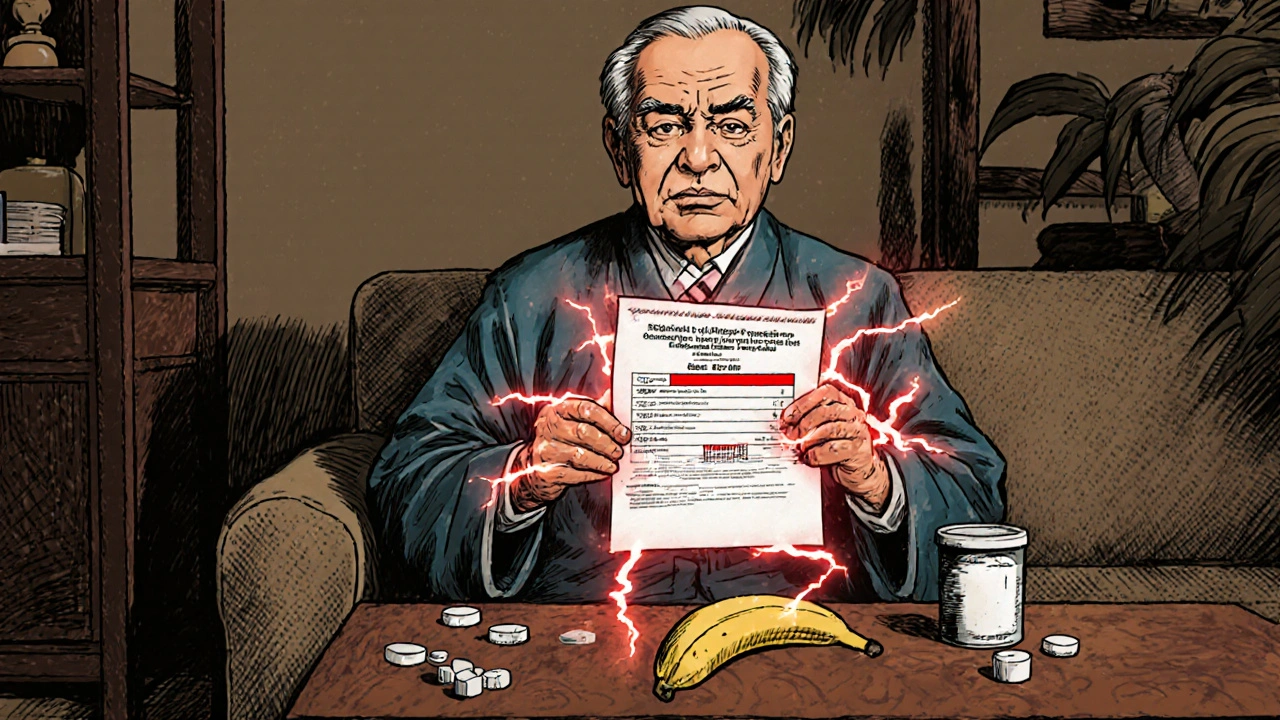
Hyperkalemia means your blood potassium levels are too high-above 5.5 mEq/L. It sounds simple, but this isn’t just a lab number. When potassium climbs past 6.5 mEq/L, your heart can start misfiring. You might not feel anything at first. No chest pain. No sweating. Just a quiet, creeping danger that can lead to cardiac arrest without warning.
This isn’t rare. About 1 in 5 people taking common heart and kidney medications develop it. These include ACE inhibitors like lisinopril, ARBs like losartan, and diuretics like spironolactone. They save lives by lowering blood pressure and protecting kidneys. But they also block the body’s natural way of flushing out potassium. The result? Potassium builds up. Slowly. Until it doesn’t.
And here’s the twist: many patients don’t know they’re at risk. No symptoms. No warning. That’s why regular blood tests matter-especially if you’re on these meds and have kidney disease, diabetes, or are over 65.
How Medications Trigger a Silent Heart Threat
The problem isn’t the meds themselves. It’s how they interact with your body. Drugs like lisinopril and spironolactone stop your kidneys from excreting potassium. That’s their job-they help control blood pressure and reduce fluid buildup. But when your kidneys are already weak (from diabetes or aging), they can’t keep up. Potassium piles up like traffic on a highway with no exits.
Some combinations are especially dangerous. Taking spironolactone with an ACE inhibitor and an antibiotic like trimethoprim-sulfamethoxazole? That raises your risk of sudden death by more than five times. Even a common cold medicine can push you over the edge if you’re already on heart meds.
It’s not just about pills. Dehydration makes it worse. Skipping meals. Sweating too much. Not drinking enough water. All of these reduce blood flow to the kidneys, making them less able to clear potassium. And if you’re eating a lot of bananas, spinach, or salt substitutes (which are full of potassium chloride), you’re adding fuel to the fire.
What Happens to Your Heart When Potassium Gets Too High
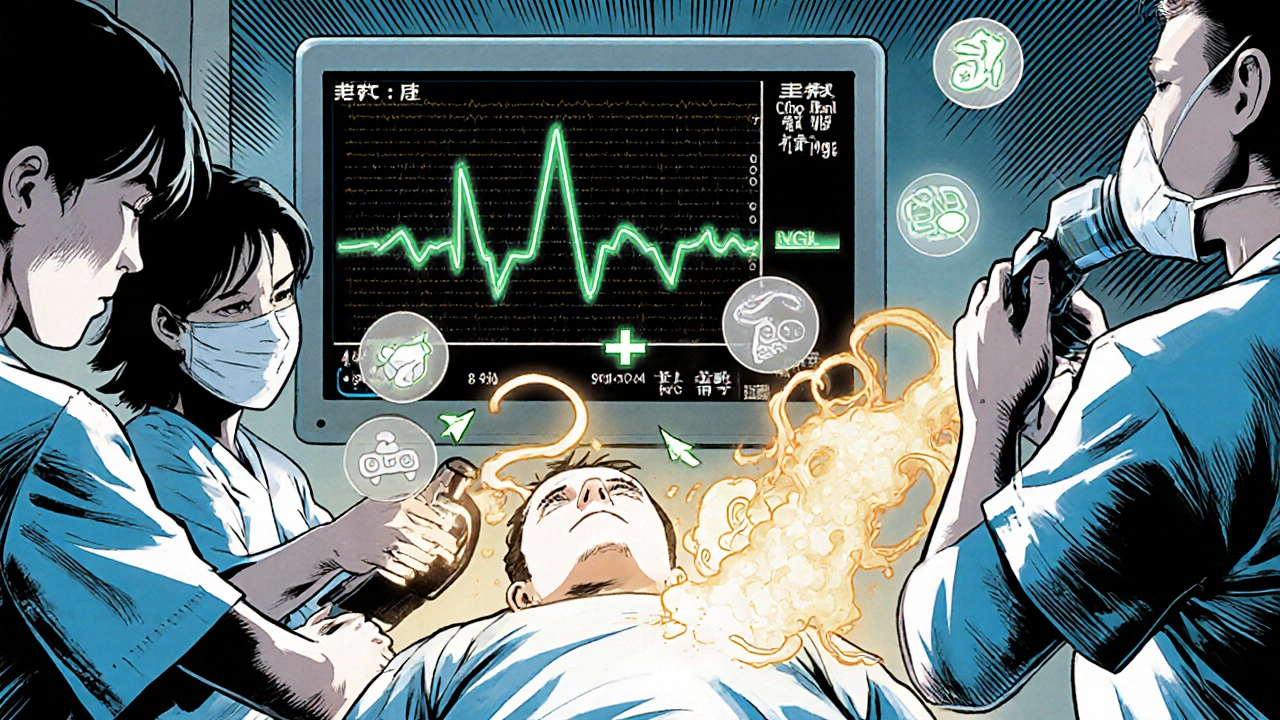
Your heart beats because of tiny electrical signals. Potassium helps control those signals. Too much potassium messes with the rhythm. At first, you might see changes on an ECG: tall, pointy T-waves. That’s the earliest red flag. Then your PR interval stretches out. Your QRS complex widens. These aren’t just numbers on a screen-they’re signs your heart muscle is struggling to reset between beats.
At levels above 7.0 mEq/L, the ECG starts looking like a sine wave. That’s not a pattern you want to see. It means your heart is about to go into ventricular fibrillation-a chaotic, uncoordinated quivering that stops blood flow. No pulse. No breathing. Death in minutes if not treated.
And here’s the cruel part: you might feel nothing. No fluttering. No dizziness. Just a quiet, invisible countdown. That’s why monitoring isn’t optional. It’s life-saving.
Immediate Treatment: Stopping the Heart From Failing
If your potassium is above 6.5 mEq/L or your ECG shows changes, time is measured in minutes. The first step? Calcium gluconate. Given through an IV, it doesn’t lower potassium. It protects your heart. It stabilizes the electrical membrane so your heart doesn’t go haywire. Effects start in under three minutes.
Next, you need to move potassium out of the blood and into your cells. That’s done with insulin and glucose. Ten units of insulin with 25 grams of glucose (usually 50 mL of 50% dextrose) drives potassium into muscle and liver cells. This lowers levels by 0.5 to 1.5 mEq/L in 15 to 30 minutes.
Another quick option: albuterol. A nebulizer treatment with 10-20 mg of albuterol pushes potassium into cells too. It’s fast, safe, and works even if you don’t have asthma.
These steps don’t fix the root problem. They buy you time. Now you need to get potassium out of your body.
Long-Term Management: Keeping Your Heart Safe Without Stopping Your Meds
Stopping your blood pressure or heart failure meds because of high potassium used to be the default. But that’s outdated. Those drugs reduce heart attacks, strokes, and kidney failure. Giving them up increases your risk of death more than hyperkalemia does.
Now, doctors use potassium binders. Two main ones: patiromer (Veltassa) and sodium zirconium cyclosilicate (Lokelma). These aren’t laxatives. They’re specialized resins that trap potassium in your gut and flush it out in your stool. Patiromer works over hours. Lokelma starts working in under an hour.
Studies show that when patients use these binders, 86% stay on their life-saving heart meds. Without them, nearly 40% had to cut their dose or quit entirely. That’s a huge difference in long-term survival.
Both binders have side effects-constipation is common, diarrhea less so. But they’re far safer than letting your potassium climb or stopping your meds.

What You Can Do Right Now
- Know your numbers. If you’re on ACE inhibitors, ARBs, or spironolactone, get your potassium checked every 1 to 4 weeks, especially after a dose change or illness.
- Check your diet. Avoid salt substitutes. Limit bananas, oranges, potatoes, tomatoes, spinach, and avocados. Aim for under 3,000 mg of potassium per day.
- Stay hydrated. Drink water, especially if you’re sick, sweating, or on diuretics.
- Talk to your doctor before starting new meds. Even over-the-counter drugs like NSAIDs (ibuprofen, naproxen) can worsen hyperkalemia.
- Don’t ignore ECG changes. If you’ve had an ECG and your doctor says your T-waves are peaked, don’t brush it off. Ask what it means.
The Bigger Picture: Why This Matters
Hyperkalemia isn’t a side effect you can ignore. It’s a signal that your treatment plan needs fine-tuning-not quitting. The goal isn’t to avoid high potassium at all costs. It’s to keep your heart and kidneys protected without putting your life at risk.
Thanks to new binders, we now have tools to do both. Patients who use them stay on their meds longer, have fewer hospital stays, and live longer. This isn’t theory. It’s proven in clinical trials and real-world use.
But none of it works if you don’t know you’re at risk. If you’re on heart or kidney meds, ask your doctor: "Could my potassium be too high? When was my last test?" That simple question could save your life.
Can high potassium from meds cause a heart attack?
Yes. High potassium disrupts the heart’s electrical system, leading to dangerous arrhythmias like ventricular fibrillation, which can cause sudden cardiac arrest. This isn’t a slow process-it can happen quickly when potassium levels rise above 6.5 mEq/L, especially in people with existing heart disease.
What medications cause hyperkalemia the most?
The top culprits are ACE inhibitors (like lisinopril), ARBs (like losartan), mineralocorticoid receptor antagonists (like spironolactone), and potassium-sparing diuretics (like amiloride). Combining any two of these, especially with antibiotics like trimethoprim-sulfamethoxazole, greatly increases risk.
Do I need to stop my blood pressure medicine if I have high potassium?
Not necessarily. In the past, doctors would stop these meds. Now, potassium binders like Veltassa and Lokelma let you keep taking them safely. Stopping your heart or kidney meds increases your risk of death more than high potassium does in most cases. Talk to your doctor about binders instead of quitting your meds.
How often should I get my potassium checked?
If you’re on high-risk meds like ACE inhibitors, ARBs, or spironolactone, check every 1 to 4 weeks, especially after starting the drug, changing the dose, or having an illness like diarrhea or dehydration. Once stable, every 3 to 6 months is usually enough.
Can diet alone fix high potassium from meds?
No. While limiting potassium-rich foods helps, diet alone won’t fix medication-induced hyperkalemia. The problem is your kidneys can’t clear potassium because of the drugs you’re taking. You need medical intervention-either potassium binders or adjustments to your meds-plus dietary changes as support.
Are potassium binders safe for long-term use?
Yes. Both patiromer (Veltassa) and sodium zirconium cyclosilicate (Lokelma) are FDA-approved for long-term use. Side effects like constipation or diarrhea are usually mild and manageable. The benefits-keeping you on life-saving heart and kidney meds-far outweigh the risks for most patients.
Ryan Anderson
November 13, 2025 AT 06:41Eleanora Keene
November 14, 2025 AT 17:39Joe Goodrow
November 15, 2025 AT 13:40Don Ablett
November 16, 2025 AT 19:05Peter Aultman
November 18, 2025 AT 16:22Nathan Hsu
November 19, 2025 AT 10:48Ashley Durance
November 19, 2025 AT 23:41Scott Saleska
November 20, 2025 AT 18:42Hrudananda Rath
November 20, 2025 AT 22:34Brian Bell
November 21, 2025 AT 04:20Sean Evans
November 21, 2025 AT 17:00