
Antitrust Issues in Generic Substitution: How Big Pharma Blocks Cheaper Drugs
 Jan, 10 2026
When you fill a prescription for a brand-name drug, you might expect your pharmacist to hand you a cheaper generic version-especially if your state law allows it. But what if the drug company made it impossible for that to happen? That’s not a glitch in the system. It’s a deliberate strategy called product hopping, and it’s costing Americans billions every year.
How Generic Substitution Is Supposed to Work
In the U.S., state laws let pharmacists swap a brand-name drug for a generic version if it’s bioequivalent-meaning it works the same way in your body. This system was designed to save money. Once a brand-name drug’s patent expires, generics can enter the market at 80% less cost. In most cases, they quickly take over 80-90% of prescriptions. That’s how competition is supposed to lower prices. But something’s broken. Instead of letting generics compete on price, some big drug companies have figured out how to shut them out before they even get started.Product Hopping: The Hidden Trick
Product hopping isn’t innovation. It’s a legal loophole exploited to delay competition. Here’s how it works:- A drug company sees its patent expiring in six months.
- It releases a slightly modified version-say, a pill that dissolves slowly instead of quickly, or a new flavor, or a different coating.
- Then, it pulls the original version off the market.
- Doctors can’t prescribe the old drug anymore. Pharmacists can’t substitute the generic because the original isn’t available to match against.
When Courts Say ‘No’-And When They Say ‘Yes’
Not all product hopping cases are treated the same. In 2009, a court dismissed a case against AstraZeneca for switching patients from Prilosec to Nexium. Why? Because Prilosec was still available. Courts have been split: if the old drug stays on shelves, they see it as adding a new option. If it’s pulled, they start seeing it as sabotage. The FTC’s 2022 report found that courts often ignore the role of state substitution laws. One judge even suggested generics could fight back by spending more on advertising. But that’s not realistic. Generic companies don’t have the marketing budgets of Big Pharma. Their only real advantage is price. If you take away the ability to substitute, you take away their only path to market. The Suboxone case was a turning point. Reckitt Benckiser pushed patients from Suboxone tablets to a film strip by spreading false claims that the tablets were unsafe. The FTC and state attorneys general won a settlement in 2019, proving that manipulating safety concerns to force a switch is illegal.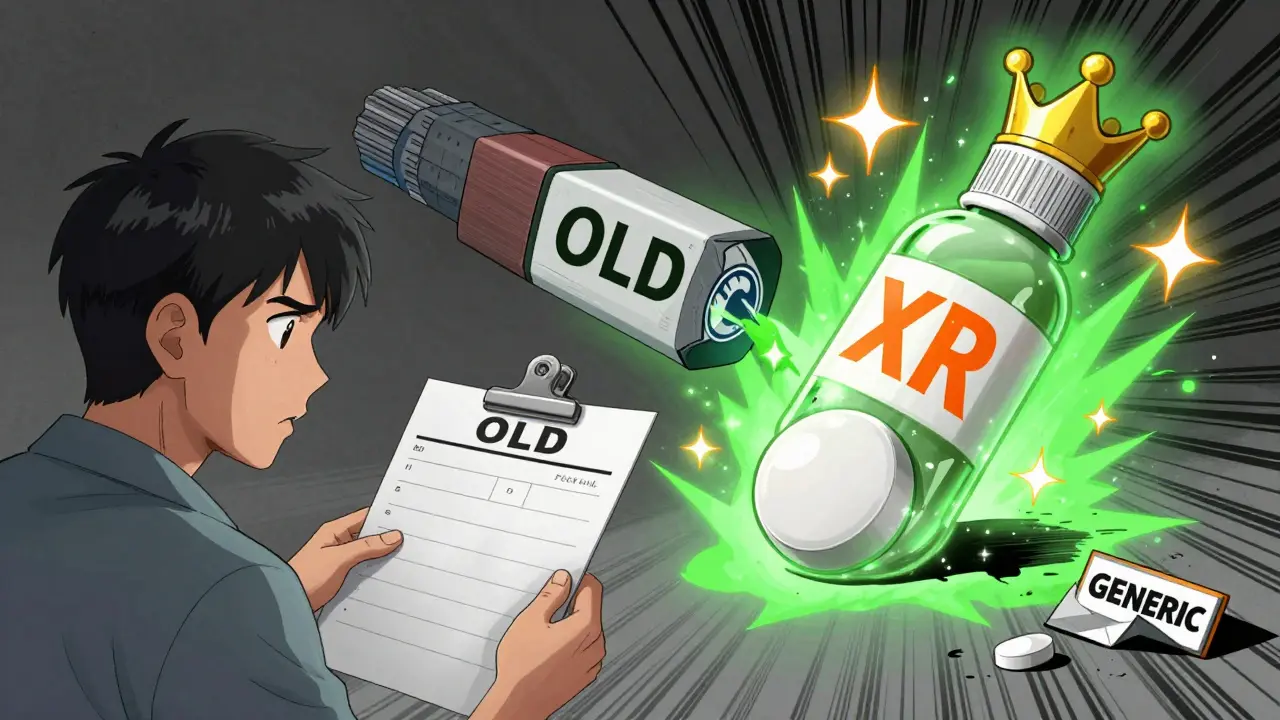
REMS Abuse: Blocking Generic Access at the Source
Another tactic? Denying generic manufacturers the samples they need to test their drugs. The FDA requires brand-name companies to share samples for bioequivalence testing through something called a Risk Evaluation and Mitigation Strategy (REMS). But many companies use REMS as a weapon. More than 100 generic manufacturers have reported being blocked from getting samples. In one study of 40 drugs with restricted access, researchers found this tactic was delaying generic entry by years-and costing over $5 billion a year in lost savings. The FTC called this a textbook case of monopolization. Why? Because the behavior makes no economic sense unless it’s meant to hurt competitors.Who’s Paying the Price?
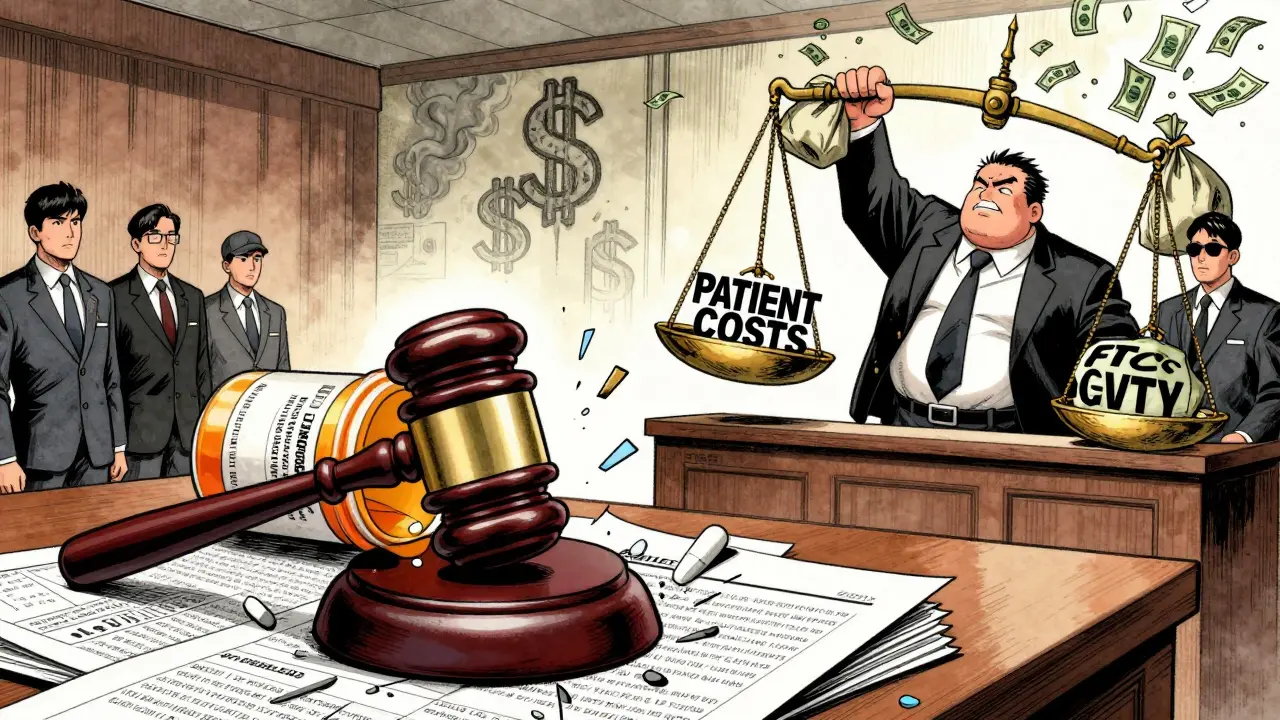
The numbers are staggering:- Revlimid’s price jumped from $6,000 to $24,000 per month over 20 years.
- Humira, Keytruda, and Revlimid alone cost U.S. payers an estimated $167 billion more than they would have in Europe, where generics enter faster.
- In the Ovcon case, a manufacturer introduced a chewable version and pulled the original, cutting generic market share from 80% to under 20%.
Enforcement Is Happening-But It’s Uneven
The FTC and Department of Justice have started taking action. After the Namenda case, the FTC won a court order forcing Actavis to keep selling the original version for 30 days after generic entry. In the Suboxone case, Reckitt and Indivior paid millions in settlements. The DOJ also went after generic manufacturers-for price-fixing. Teva paid a $225 million criminal penalty, the largest ever for a domestic antitrust cartel. That’s a reminder: this isn’t just about big pharma blocking generics. Sometimes, generics collude too. But the bigger threat remains the brands that game the system to protect their monopolies. State attorneys general have stepped in too. New York sued Actavis in 2014 and won an injunction. Other states are watching closely.Why This Matters to You
If you take a chronic medication-diabetes, high blood pressure, depression, arthritis-you’ve likely felt the pain of high drug prices. You might think generics are the solution. But if the original drug is pulled before generics can enter, you’re stuck paying full price. Even if you don’t take brand-name drugs now, you pay for it through higher insurance premiums, higher taxes for Medicare and Medicaid, and higher out-of-pocket costs. This isn’t about innovation. It’s about profit. Companies aren’t inventing better drugs. They’re inventing ways to avoid competition.What’s Next?
In 2023, the FTC and DOJ held joint hearings on barriers to generic and biosimilar competition. Congress is paying attention. The House Committee on Appropriations directed the FTC to address these issues. Experts predict new legislation is coming-possibly to ban the withdrawal of original drugs before generic entry, or to force REMS access. Until then, the fight is in the courts and state legislatures. Some states are strengthening their substitution laws to close loopholes. Others are tracking drug switching patterns to flag suspicious behavior. The bottom line? Generic substitution isn’t just a pharmacy rule. It’s a critical tool for keeping drug prices down. When companies manipulate it, they’re not just breaking the spirit of the law-they’re breaking the trust of patients and taxpayers.If you’ve ever wondered why your prescription cost so much even after the patent expired-this is why.
Cassie Widders
January 10, 2026 AT 13:03So basically Big Pharma just cheats by changing the pill color and calling it a new drug? Wild.
Konika Choudhury
January 11, 2026 AT 22:09This is why India makes generic drugs for the whole world and the US still lets corporations rob patients
Stop pretending this is about innovation its just greed wrapped in a lab coat
Darryl Perry
January 12, 2026 AT 09:28The legal framework is fundamentally broken. Courts are applying antitrust law inconsistently, creating regulatory arbitrage opportunities for pharmaceutical firms.
There is no rational economic justification for withdrawing a branded product prior to generic entry.
This constitutes a per se violation of Section 2 of the Sherman Antitrust Act.
Windie Wilson
January 14, 2026 AT 05:13Oh so now the pharmaceutical industry is doing the same thing as the soda companies did with diet drinks
‘Here’s a slightly different version that’s exactly the same but costs 5x more’
And we’re supposed to clap?
👏👏👏
Thanks for the scam, guys
Daniel Pate
January 15, 2026 AT 22:50What’s the moral weight of a patent expiration? Is it a social contract or a legal technicality?
If a drug’s chemical function is identical, why should the form of delivery-tablet versus film-dictate access?
Is this capitalism or just rent-seeking dressed in white coats?
The system rewards manipulation over medicine.
And we call this progress?
Jose Mecanico
January 17, 2026 AT 01:00It’s wild how much this affects real people. My mom’s on a drug that just went generic but they pulled the old version so she had to switch to the new one and her insurance didn’t cover it at first.
She ended up paying $400 out of pocket for a month.
It’s not just corporate greed-it’s everyday suffering.
Monica Puglia
January 17, 2026 AT 20:08My grandma took Namenda for years and they switched her to XR without telling her she could’ve had the generic
She cried because she couldn’t swallow the new pill
And now she’s paying triple
😭
Rinky Tandon
January 18, 2026 AT 06:14Product hopping is a textbook example of regulatory capture and monopolistic rent extraction
REMS abuse is an anticompetitive chokehold on bioequivalence testing
These are not market failures-they are engineered failures
The FTC’s 2022 report confirms systemic collusion between brand manufacturers and complicit judiciary interpretations
Until Congress enacts the Generic Drug Competition Act of 2024, this will persist
Ben Kono
January 18, 2026 AT 07:47My pharmacist told me the same thing happened with my ADHD med
They pulled the old one and said the new one was ‘better’
Turned out it was just the same pill with a sticker on it
And my copay went from $10 to $85
Thanks for nothing