
Contact Allergy: Patch Testing for Metals and Fragrances
 Feb, 2 2026
For years, you’ve dealt with itchy, red, flaky skin that won’t go away. You’ve switched soaps, tried hypoallergenic lotions, avoided new perfumes - but nothing helps. Then you realize: it’s not dry skin. It’s not stress. It’s your skin reacting to something you touch every day. That’s where patch testing comes in.
What Is Patch Testing?
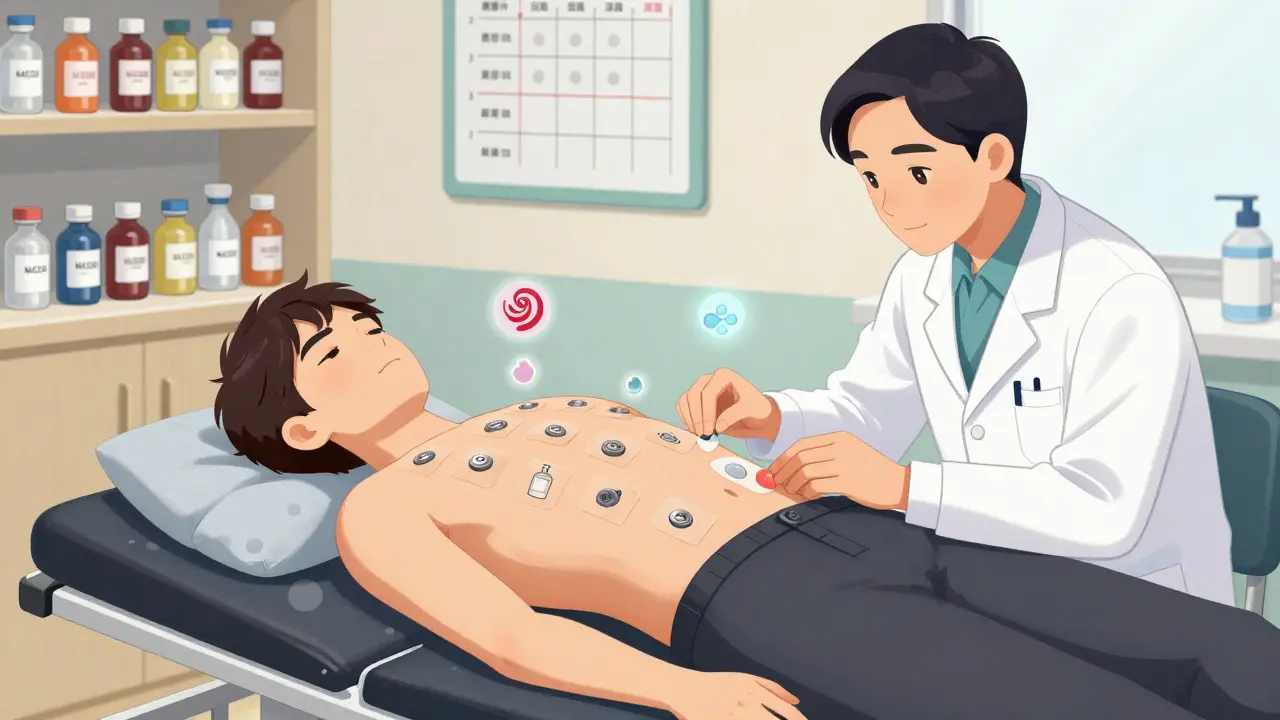
Patch testing isn’t like a skin prick test or a blood test. It’s a slow, quiet process designed to catch allergies that don’t show up right away. These are called delayed-type hypersensitivity reactions, and they’re caused by your immune system’s T cells, not IgE antibodies. That’s why you don’t break out immediately after touching nickel or perfume - it takes 48 hours or more. The test uses tiny amounts of common allergens applied to your back, held in place with special tape. You wear them for two full days without getting them wet. Then, over the next few days, your dermatologist checks for reactions. A red, raised, blistered patch? That’s a positive result. It means your skin has been sensitized to that substance. This isn’t new. The method was developed in the 1930s by German dermatologist Josef Jadassohn. But today’s version is far more precise. The North American Contact Dermatitis Group (NACDG) uses a standard panel of 80 allergens. The European version includes even more, especially for fragrances. And it’s not just about nickel anymore.Why Metals Like Nickel and Cobalt Are the Top Culprits
Nickel is everywhere. It’s in your jeans buttons, watch straps, earrings, phone cases, and even kitchen utensils. About 18.5% of people tested for contact dermatitis turn out to be allergic to it - making it the single most common metal allergen in North America. Cobalt and chromium are close behind. Cobalt shows up in makeup, dental implants, and even some paints. Chromium is in leather, cement, and tools. If you’re a nurse, mechanic, or construction worker, your risk goes up. One nurse in Cleveland traced her chronic hand eczema to nickel in surgical instruments. After switching to nickel-free tools, her skin cleared up completely. Patch testing uses standardized concentrations: 5% nickel sulfate, 1% cobalt chloride, and 0.5% potassium dichromate. These levels are carefully chosen to trigger an allergic reaction without causing irritation. If you react strongly, your dermatologist will give you a list of everyday items to avoid - and alternatives that won’t set off your skin.Fragrance Allergy Is More Common Than You Think
You might think fragrances are just about smell. But for 8-15% of people with chronic skin rashes, they’re the hidden cause. Fragrance isn’t one thing - it’s a mix of dozens of chemicals. Even “unscented” products can contain masking fragrances to cover up other smells. The problem? Standard fragrance testing isn’t enough. Most clinics test for two mixes: Fragrance Mix I (FM I) and Fragrance Mix II (FM II). But together, they only catch about 70-80% of fragrance allergies. That’s why the 2023 NACDG guidelines now recommend testing for at least 15 individual fragrance chemicals - like Myroxylon pereirae (balsam of Peru), cinnamic aldehyde, lyral, and hydroxycitronellal. One study showed that 18.3% of patients with fragrance allergies would’ve been missed if only the mixes were used. That’s why experts say testing only the mixes is like checking half the locks on your house. You’re leaving the rest wide open. In the EU, 26 fragrance allergens must be listed on product labels if they’re above a certain concentration. But in the U.S., labeling isn’t required. So you’re left guessing. Patch testing cuts through the noise. It tells you exactly which chemical is the problem - whether it’s in your shampoo, laundry detergent, or hand cream.
The Patch Test Process: What to Expect
The test takes three visits over a week. Day 1 (Monday): Your back is cleaned, and 30-40 small patches are applied. Each contains a different allergen. The whole process takes 30-45 minutes. You’ll get instructions: no showering, no sweating, no scratching. You’ll wear loose cotton shirts to avoid rubbing. Day 3 (Wednesday): The patches come off. Your dermatologist checks for early reactions. A faint pink spot? That’s a doubtful result. A red, swollen bump? That’s a clear positive. Day 5 (Friday): The final reading. Some reactions take up to 96 hours to show up. A blistered, weeping patch? That’s a strong positive. You’ll get your results - and a clear list of what to avoid. It’s not comfortable. You can’t shower normally for two days. You can’t exercise. You might feel itchy. But 87% of people who’ve had the test say it was worth it. One Reddit user wrote: “I avoided fragrance in my laundry detergent for a month after the test. My hand eczema vanished.”What Patch Testing Can’t Do
It’s powerful - but not perfect. There are tens of thousands of chemicals in consumer products. Patch testing only checks 80-150 of them. If your reaction comes from something not on the panel, you’ll get a false negative. Irritant reactions can also mimic allergies. A strong soap or scrub might cause redness that looks like an allergic reaction. That’s why testing must be done by a dermatologist trained in patch testing. Misreading a result can lead to unnecessary avoidance - or missed triggers. Blood tests like lymphocyte transformation tests (LTT) are sometimes offered, but they’re not reliable for fragrance allergies. They’re less sensitive, not standardized, and not widely accepted. Patch testing remains the gold standard.What Happens After the Test?
Getting a positive result isn’t the end - it’s the beginning. You’ll need to learn how to avoid your allergens. For nickel: switch to stainless steel or titanium jewelry. Use plastic or ceramic buttons. Check labels on electronics and tools. Some companies now offer “nickel-free” certified products. For fragrance: read ingredient lists. Avoid anything with “fragrance,” “parfum,” or “essential oils.” Use fragrance-free detergents and lotions. Brands like CeraVe, Vanicream, and Free & Clear are often safe, but always test new products on a small patch of skin first. About 60-80% of patients see their skin clear up completely once they avoid the allergens. But 15% of people remove their patches early because of itching - which ruins the test. Don’t do it. The itch is temporary. The relief is permanent.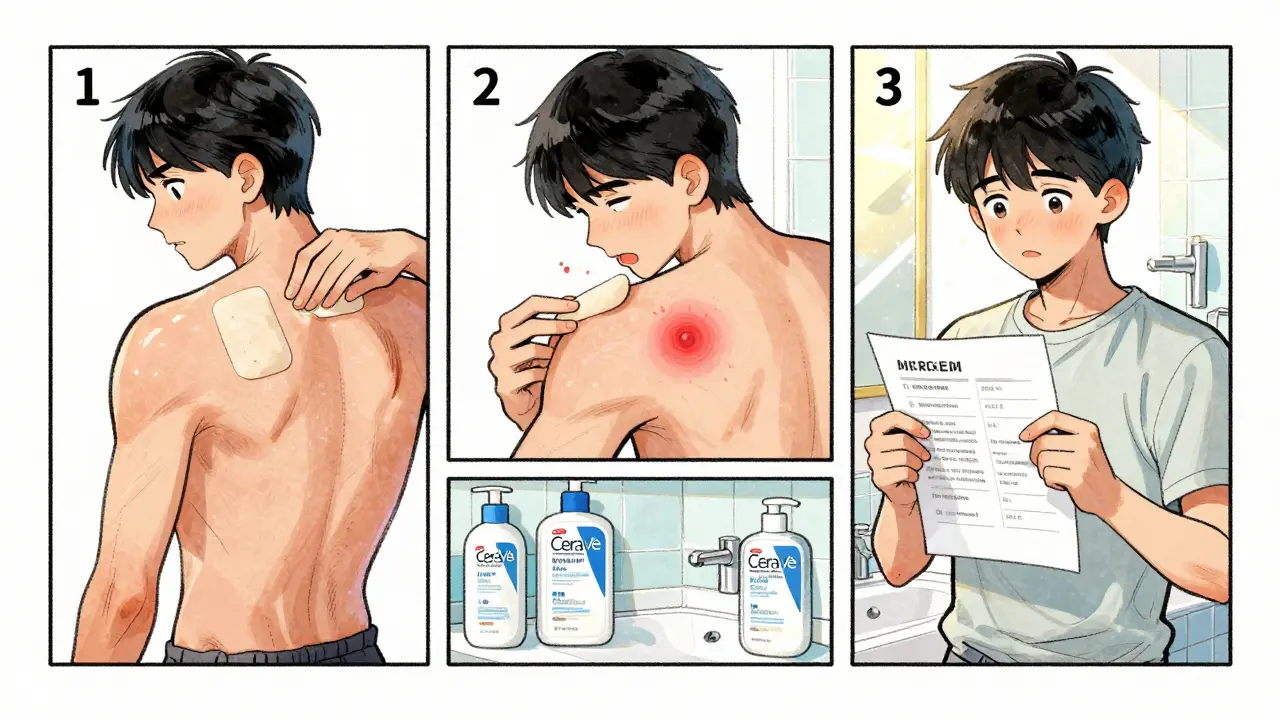
Who Should Get Tested?
If you’ve had persistent eczema, especially on your hands, face, or neck - and nothing’s worked - you should consider patch testing. It’s especially helpful if:- Your rash keeps coming back after treatment
- You react to multiple products
- You work with metals, cleaners, or cosmetics
- You’ve tried “hypoallergenic” products and still break out
- Your doctor says it’s “chronic dermatitis” without a clear cause
The Future of Patch Testing
The field is evolving. In 2023, the NACDG added eight new fragrance allergens to their panel - including citral and farnesol - because they’re appearing more often in consumer products. The European series now includes 32 fragrance markers. Researchers are also exploring peptide-based tests for metal allergies, which could offer faster, less invasive options in the future. But for now, patch testing is still the only way to know for sure what’s causing your skin to react. And as products get more complex - with hidden fragrances, synthetic preservatives, and “clean” labels that hide irritants - the need for accurate testing is growing. The contact dermatitis diagnostic market is now worth $1.2 billion globally, and demand is rising by over 6% a year.Final Thoughts
If your skin has been screaming for answers, patch testing might be the key. It’s not glamorous. It’s not quick. But it’s the most reliable way to find out what’s really causing your rash. And once you know, you can finally take control. Don’t keep guessing. Don’t keep buying new products that don’t work. Talk to a dermatologist trained in patch testing. Bring your list of products you use daily. Be ready to follow through. Your skin has been telling you something. Patch testing is the only test that listens.How long does a patch test take?
The full process takes about a week, with three visits: application on Day 1, first reading on Day 3, and final reading on Day 5. The patches stay on your back for 48 hours without getting wet. Each visit lasts 15-45 minutes, depending on the number of allergens tested.
Is patch testing painful?
No, it’s not painful. The patches are applied with a gentle adhesive and don’t involve needles. You might feel mild itching or burning if you react to an allergen, but the test itself doesn’t hurt. The discomfort comes from not being able to shower or sweat for two days.
Can I shower during patch testing?
No. You must keep the test area completely dry for 48 hours. That means no showers, baths, swimming, or heavy sweating. Most clinics recommend sponge baths only, avoiding the back. If patches fall off, the test is invalid.
What if I get a positive result?
You’ll get a detailed list of the allergens you’re sensitive to, along with common sources to avoid. Your dermatologist will help you find safer alternatives for skincare, clothing, and household products. Many patients see their skin clear up completely once they avoid the triggers.
Are patch test results always accurate?
Patch testing has 95-98% specificity and 85-90% sensitivity, making it the most accurate method for contact allergies. However, false positives can happen due to irritation, and false negatives can occur if the allergen isn’t in the panel or if patches were removed early. Testing by a trained dermatologist reduces these risks.
Can I do patch testing at home?
No. Patch testing requires standardized allergens, controlled application, and expert interpretation. Home tests or DIY methods using products you suspect are unreliable and can cause severe irritation or false results. Always see a board-certified dermatologist.
How common is fragrance allergy?
Fragrance allergy affects 8-15% of people with chronic contact dermatitis. In North America, it accounts for 10-12% of positive patch test results. Many people don’t realize they’re reacting to fragrance because it’s hidden in products labeled as “unscented” or “hypoallergenic.”
Why do I need to test both fragrance mixes and individual chemicals?
Fragrance Mix I and II together cover only about 70-80% of fragrance allergies. About 10-15% of cases are missed if you don’t test individual chemicals like lyral, hydroxycitronellal, or Myroxylon pereirae. Experts agree that comprehensive testing requires both mixes and individual allergens for full accuracy.
Wendy Lamb
February 3, 2026 AT 03:56I used to think my eczema was just dry skin until I got patch tested. Turns out, nickel in my phone case was the culprit. Switched to a silicone case and my hands haven’t broken out in months. Seriously, if you’ve tried everything else, do this test.
Antwonette Robinson
February 4, 2026 AT 14:58Oh great, another article telling us to spend $500 on a test so we can avoid ‘fragrance’-which, by the way, is just a fancy word for ‘everything that smells nice.’ I’m sure the dermatologists are thrilled to make bank off our paranoia.
Justin Fauth
February 6, 2026 AT 10:36They’re testing for nickel? In America? That’s just a joke. We’ve got Chinese junk everywhere-phones, buttons, zippers. If you’re allergic to nickel, you’re basically allergic to modern life. Time to move to Canada or something.
Meenal Khurana
February 6, 2026 AT 23:12My mother had this issue for years. Patch test changed her life. Now she uses only plain soap and cotton clothes. Simple, but it works.
Jesse Naidoo
February 7, 2026 AT 11:10I’ve been avoiding everything for years and still break out. I’m starting to think it’s not the stuff I touch-it’s the air I breathe. Or maybe the government is poisoning us through our laundry detergent. Who even knows anymore?
Sherman Lee
February 8, 2026 AT 03:56They’re testing for 15 fragrance chemicals? 😏 You know what’s NOT on that list? Glyphosate. And 5G. And the fluoride in your water. They’re hiding the real triggers. Patch testing is just a distraction. The real enemy is Big Pharma selling you more creams while they poison your tap water. 🤫👁️
Lorena Druetta
February 9, 2026 AT 23:04Thank you for sharing this vital information. I believe that understanding the root cause of chronic skin conditions empowers individuals to make informed, compassionate choices for their well-being. This is a deeply important step toward holistic health.
Zachary French
February 11, 2026 AT 16:03So lemme get this straight-after 48 hours of no shower, no sweat, no fun, you get a red dot and they say ‘oh, it’s lyral in your shampoo’? Bro. That’s wild. I’ve been using the same shampoo since 2018. Maybe I’m just allergic to adulthood. 🤡
Kunal Kaushik
February 11, 2026 AT 18:32My cousin got tested in Mumbai. Found out she was allergic to cobalt in her cheap earrings. She switched to gold and now she’s fine. Sometimes the answer is just… simpler than we think.
Nathan King
February 11, 2026 AT 19:49The methodological rigor of contemporary patch testing protocols, as elucidated herein, reflects a commendable evolution in clinical dermatology. One cannot overstate the significance of standardized allergen panels in mitigating diagnostic ambiguity.
Roshan Gudhe
February 13, 2026 AT 11:35It’s funny how we spend so much time trying to avoid chemicals, yet we live in a world built on them. Maybe the real question isn’t ‘what’s in the product?’ but ‘why are we exposed to so many things our bodies weren’t meant to handle?’ Patch testing doesn’t fix the system-it just helps us survive it.
Rachel Kipps
February 13, 2026 AT 11:48I didn’t know you couldn’t shower during the test… I washed my back on day 2 and the patches fell off. Now I have to wait another 6 weeks. 😭
Joy Johnston
February 13, 2026 AT 16:33Just got my results last week-positive for Myroxylon pereirae. Turns out my ‘natural’ essential oil diffuser was the problem. Switched to unscented candles and my face stopped looking like a tomato. If you’re struggling, trust me-get tested. It’s worth every minute of the itch.