
Heavy Menstrual Bleeding on Blood Thinners: What Works and What to Ask Your Doctor
 Dec, 26 2025
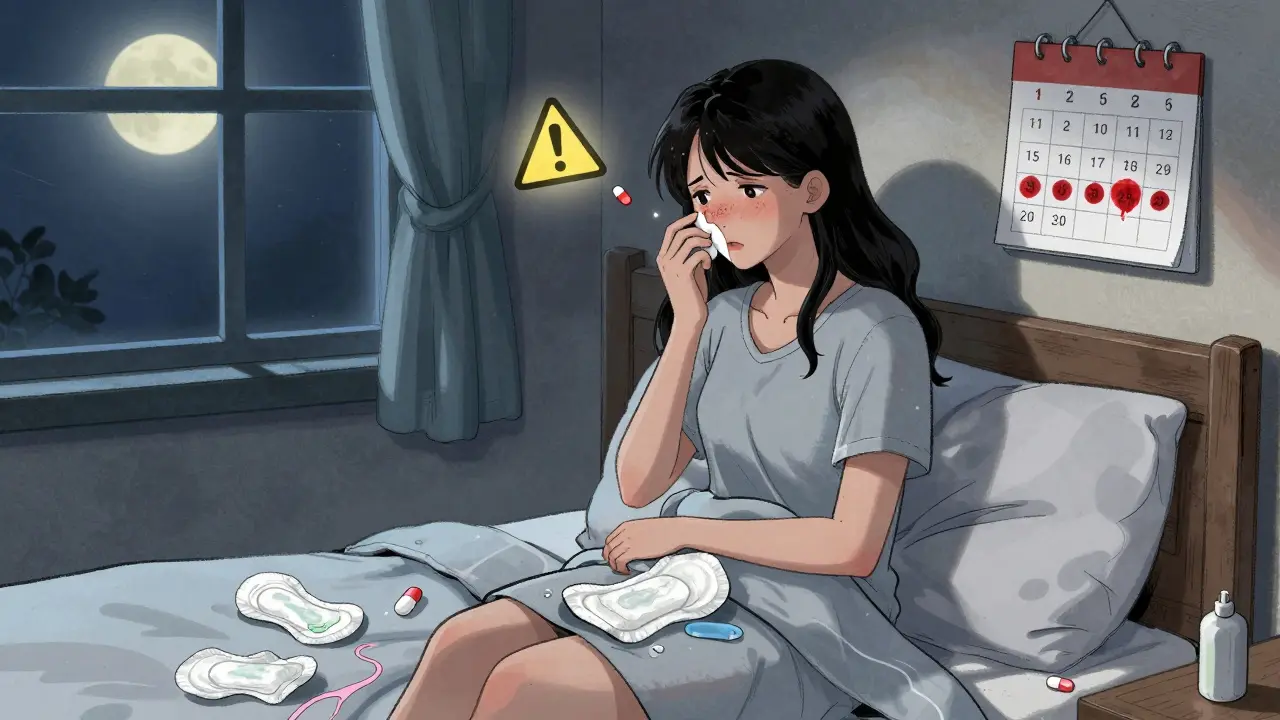
When you start taking blood thinners - whether for a blood clot, atrial fibrillation, or another condition - you’re told the risks: bruising, nosebleeds, maybe a bit more bleeding when you cut yourself. But few warn you about what happens to your period. If you’re a woman of reproductive age, heavy menstrual bleeding (HMB) isn’t just a nuisance - it can be life-disrupting, and it’s far more common than you think. Heavy menstrual bleeding affects up to 70% of women on oral anticoagulants, according to research from the American Society of Hematology. That’s not a side effect you can ignore. It’s a clinical reality that gets overlooked in doctor’s offices across the country.
Why Blood Thinners Make Periods Heavier
Blood thinners, also called anticoagulants, work by slowing down your body’s ability to form clots. That’s great when you’re trying to prevent a stroke or pulmonary embolism. But your uterus is made of tissue that bleeds every month - and when your blood can’t clot easily, that bleeding doesn’t stop as quickly. The result? Soaking through pads or tampons every hour, needing to change at night, leaking onto clothes, or waking up soaked. This isn’t just "a heavy period." This is abnormal uterine bleeding caused by medication. Studies show that two out of three women who start blood thinners see a sharp increase in bleeding within months. The problem hits hardest for women who’ve never had heavy periods before. Suddenly, you’re avoiding social events, missing work, or carrying emergency changes in your bag. A 2024 survey by the National Blood Clot Alliance found that 54% of women on anticoagulants had to adjust their daily lives because of bleeding. And 68% said their hematologist never asked about it.Which Blood Thinners Are Least Likely to Cause Heavy Periods?
Not all blood thinners are the same when it comes to menstrual bleeding. Research published in Blood Advances and supported by experts like Dr. Bethany Samuelson Bannow shows that the risk varies by drug.- Rivaroxaban - Highest risk of heavy bleeding
- Apixaban - Lower risk
- Dabigatran - Lower risk
- Warfarin - Moderate risk, but harder to manage due to diet and drug interactions
First-Line Treatments: Hormones That Work Without Stopping Your Blood Thinners
The good news? You don’t have to choose between preventing clots and having a decent quality of life. There are safe, effective treatments you can use alongside your blood thinner. The top recommendation from the American Society of Hematology and ACOG is the levonorgestrel intrauterine system - better known as the Mirena or Kyleena IUD. It’s a small device placed in your uterus that releases a low dose of progesterone directly where it’s needed. Studies show it reduces menstrual bleeding by 70-90% within 3-6 months. Many women report their periods becoming light or stopping altogether. One woman on Eliquis described it this way: "After Mirena, my periods went from ER visits to nearly nonexistent." Other hormonal options include:- Progestin implants (like Nexplanon) - inserted under the skin of the arm
- Oral progestins - such as norethisterone, taken at high doses (5 mg three times daily for 21 days) during your period
- Combined hormonal contraceptives - pills, patches, or rings containing estrogen and progestin. These are safe to use with most anticoagulants and can regulate bleeding
Tranexamic Acid: A Non-Hormonal Option
If you don’t want hormones, or can’t use them, tranexamic acid is another proven choice. It’s a prescription pill that helps your blood clot - right where it’s needed, in your uterus. You take it only during your period, usually four times a day for up to five days. Clinical trials show it cuts menstrual blood loss by 30-50%. It’s not a long-term fix like the IUD, but it’s a great tool for women who want to keep their options open or are trying to conceive. The key is timing - you need to start it when your period begins. Don’t wait until you’re soaked through. Important: Don’t take tranexamic acid with NSAIDs like ibuprofen or aspirin. Both can increase bleeding risk, and combining them with anticoagulants can be dangerous. Always check with your doctor before mixing meds.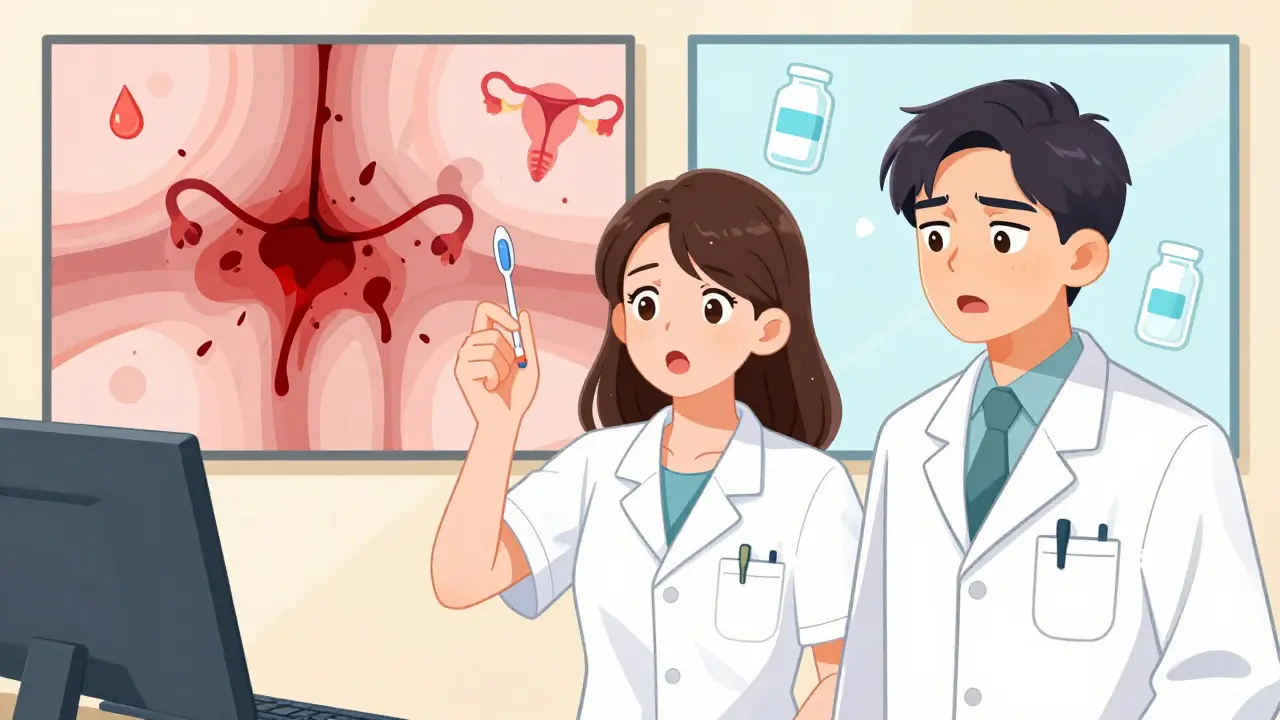
What About NSAIDs Like Ibuprofen?
You might think, "I’ll just take Advil to reduce my bleeding." It sounds logical. And yes, NSAIDs like ibuprofen can reduce menstrual flow by 20-40% in some women. But here’s the catch: they also thin your blood. When you’re already on anticoagulants, adding NSAIDs can push you into dangerous territory. The Cleveland Clinic warns that combining NSAIDs with blood thinners increases the risk of serious bleeding - including gastrointestinal and uterine bleeding. If you need pain relief, acetaminophen (Tylenol) is safer. But don’t use NSAIDs as a bleeding control method unless your doctor specifically approves it and monitors you closely.When Surgery Might Be Needed - And When to Avoid It
For women who’ve tried everything and still bleed heavily, endometrial ablation - a procedure that destroys the lining of the uterus - can be effective. It works for 80-90% of women in the general population. But if you’re on blood thinners, it’s risky. The procedure itself can cause dangerous bleeding, and you can’t stop your anticoagulant without risking a clot. Even if you switch to heparin for a "bridge," the risk is still high. Most experts now consider ablation a last resort for anticoagulated patients. Also, you must be certain you don’t want children in the future. Pregnancy after ablation is extremely dangerous. If you’re still planning to have kids, skip it.Iron Deficiency Is a Silent Threat
Heavy bleeding doesn’t just mess with your schedule - it drains your iron. Many women on blood thinners develop iron deficiency anemia without realizing it. Fatigue, dizziness, shortness of breath, pale skin - these aren’t just "being tired." They’re signs your body is running low on oxygen-carrying red blood cells. The National Blood Clot Alliance recommends all menstruating women on anticoagulants get tested for iron levels at least once a year. If you’re low, your doctor may prescribe iron supplements. Don’t wait for symptoms to get worse. Low iron can make you feel worse than the bleeding itself.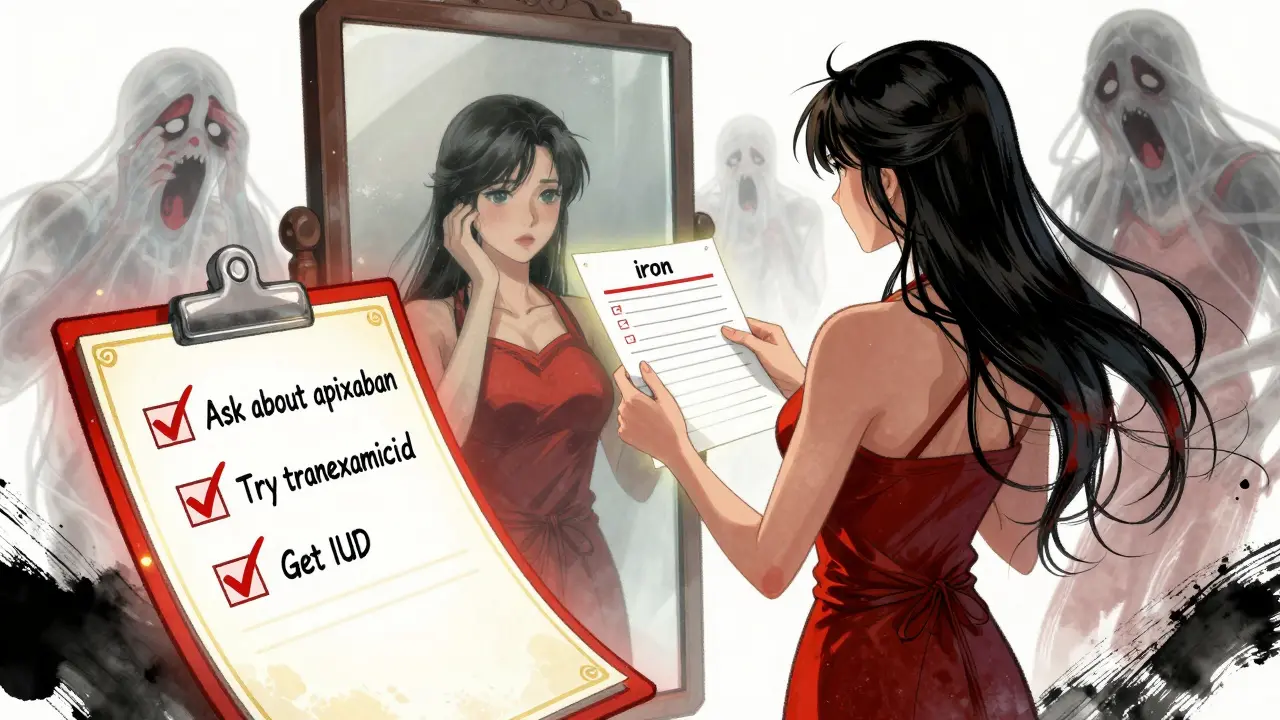
What to Ask Your Doctor - A Quick Checklist
Most women don’t bring up heavy periods because they assume it’s normal. It’s not. Here’s what to say at your next appointment:- "I’ve noticed my periods are much heavier since I started [medication name]. Is this common?"
- "Are there blood thinners with lower bleeding risk that might work for me?"
- "Can we try the levonorgestrel IUD while I stay on my current anticoagulant?"
- "Should I be tested for iron deficiency?"
- "If I need surgery for my bleeding, how will you manage my blood thinner?"
Caitlin Foster
December 27, 2025 AT 13:34This is the kind of post that makes me want to hug every woman who’s ever had to carry a spare change of pants in her purse just to go to the grocery store. Seriously. Why is this still not standard of care? Why do we treat period bleeding like it’s some embarrassing secret instead of a medical emergency? I’ve seen so many women just... give up. Don’t give up. Ask for the IUD. Ask for tranexamic acid. Ask for your life back. You’re not being dramatic. You’re being a survivor.
Kylie Robson
December 28, 2025 AT 14:57From a hematologic perspective, the pharmacokinetic profiles of DOACs significantly modulate endometrial vascular permeability via differential inhibition of Factor Xa and thrombin. Apixaban’s lower bioavailability and higher selectivity for FXa over thrombin correlates with reduced endometrial hemorrhagic burden, as evidenced by the 2023 meta-analysis in Blood Advances. Dabigatran’s direct thrombin inhibition may paradoxically preserve local hemostatic plug formation due to its limited tissue penetration-unlike rivaroxaban, which exhibits higher extracellular diffusion and prolonged endometrial exposure. Clinically, this translates to a 37% lower incidence of HMB in apixaban users versus rivaroxaban cohorts (p<0.01).
That said, hormonal co-therapy remains the gold standard. The LNG-IUS achieves >85% reduction in menstrual blood loss by inducing endometrial atrophy via localized progestin delivery, circumventing systemic anticoagulant interference entirely. If your provider dismisses this, escalate to a hematologic gynecologist. This isn’t opinion-it’s evidence-based protocol.
Satyakki Bhattacharjee
December 28, 2025 AT 23:43People these days think medicine is just about popping pills. But your body is not a machine. You can’t just swap one drug for another and expect everything to be fine. You have to listen. You have to respect your body’s signals. Heavy bleeding? That’s your body screaming. And doctors? They’re too busy checking boxes to hear it.
Why do we treat women’s pain like it’s optional? Because we’ve been taught to. Because we’ve been told to be quiet. But silence doesn’t heal. Asking does.
Nicola George
December 29, 2025 AT 15:14So let me get this straight: we have a drug that prevents strokes, but it turns your period into a horror movie-and the medical system’s answer is ‘buy more pads’? Wow. Just wow. I’m not even mad. I’m just impressed at how efficiently we’ve turned women’s suffering into a passive-aggressive inconvenience.
Also, I’m stealing ‘ask for your life back’ from Caitlin. That’s going on my fridge.
Todd Scott
December 31, 2025 AT 05:18As someone who’s lived in both the U.S. and Nigeria, I’ve seen how differently women’s health is treated across cultures. In the U.S., there’s a lot of talk about options, but often it’s buried under bureaucracy. In Nigeria, women might not even have access to anticoagulants at all, let alone the IUDs or tranexamic acid. So while this post is incredibly important for those with resources, we can’t ignore the global gap.
What’s needed isn’t just better guidelines-it’s better access. The fact that 68% of women say their hematologist never asked about bleeding? That’s not just negligence. It’s a failure of empathy. And empathy doesn’t come from a protocol. It comes from seeing the person behind the patient file.
Also, I want to add-iron deficiency doesn’t just make you tired. It makes you forgetful, cold, and emotionally drained. I’ve seen women think they’re ‘just depressed’ when really, their hemoglobin is at 7. That’s not normal. That’s a warning sign screaming to be heard.
Gerald Tardif
December 31, 2025 AT 16:18Just wanted to say-this post saved me. I was on rivaroxaban, bleeding through everything, terrified to leave the house. My doctor said ‘it’s just your body adjusting.’ I cried in the parking lot. Then I found this. Switched to apixaban, got the Kyleena, started tranexamic acid on heavy days. Three months later, I went to a concert. No emergency bag. No panic. Just music. I’m not ‘fixed.’ But I’m alive again. Thank you.
James Bowers
January 2, 2026 AT 14:36It is imperative that individuals under anticoagulant therapy adhere strictly to evidence-based medical protocols, and it is both irresponsible and potentially hazardous to suggest that medication switches or adjunctive hormonal therapies be pursued without rigorous clinical evaluation and laboratory monitoring. The decision to alter anticoagulation regimens must be predicated upon individualized risk-benefit analyses, not anecdotal preference or emotional distress. Furthermore, the indiscriminate use of tranexamic acid in conjunction with anticoagulants constitutes a contraindicated practice that may precipitate thromboembolic events. Medical decisions must be guided by data-not desperation.
Monika Naumann
January 4, 2026 AT 07:28As an Indian woman, I find it deeply troubling that Western medicine continues to treat menstrual health as a secondary concern. In our tradition, women’s cycles were sacred, observed, and respected. Now, we are told to ‘take more pads’ and ‘be grateful you’re alive.’ This is not progress. This is erasure. And yet, here in the U.S., even the word ‘period’ is whispered like a curse. Shame on us for letting capitalism dictate how women’s bodies are managed. We must demand more. We deserve more.
Chris Garcia
January 4, 2026 AT 16:21Let me tell you something about power: it’s not in the pill you take. It’s in the question you dare to ask. You don’t need permission to demand better care. You don’t need a doctor’s approval to know your body is screaming. You just need to open your mouth and say: ‘This isn’t normal.’
They’ll tell you it’s ‘just a side effect.’ They’ll tell you to ‘live with it.’ They’ll tell you it’s ‘not their specialty.’ But here’s the truth-they don’t know how to fix it because they’ve never been asked to try.
So ask. Again. And again. And again. Write it down. Bring it to your appointment. Send an email. Call the office. Text your nurse. Post it on Reddit. Make them see you. Make them hear you. Make them uncomfortable.
Because your bleeding isn’t a footnote in a medical chart. It’s the headline of your life. And you? You’re the author.