
How to Keep Time-Sensitive Medications on Schedule When Flying
 Feb, 23 2026
When you’re flying across multiple time zones, your body doesn’t just adjust overnight - neither should your medication. For people taking time-sensitive medications, missing a dose by even an hour can lead to serious consequences. Think insulin spikes, seizures from missed anti-epileptic drugs, or dangerous blood clotting from warfarin. Air travel doesn’t make this easier. Jet lag, delayed flights, security lines, and unfamiliar time zones turn a simple daily routine into a high-stakes puzzle.
What Makes a Medication Time-Sensitive?
Not all pills need perfect timing. But for some, the difference between safe and dangerous is minutes. These are medications with narrow therapeutic windows - meaning the amount that helps you is very close to the amount that harms you. The CDC’s 2024 Yellow Book lists several key categories:- Insulin - Especially rapid-acting types. A missed or delayed dose can trigger hypoglycemia during flight, especially with reduced physical activity and altered meal times.
- Anti-epileptic drugs - Missing even one dose can trigger a seizure within 12-24 hours.
- Immunosuppressants - Used after transplants. Even small deviations can cause organ rejection.
- Anticoagulants like warfarin - INR levels fluctuate quickly when dosing shifts. A 2024 Reddit thread with 147 comments showed 68% of travelers experienced abnormal INR readings after crossing multiple time zones.
- Oral chemotherapy drugs - ASCO’s 2024 guidelines warn that 4-hour delays can reduce treatment effectiveness by up to 35%.
These drugs often have short half-lives - less than 8 hours - meaning your body clears them fast. If you don’t replace them on time, levels drop below the therapeutic range.
How Time Zones Change Your Schedule
Flying east means you lose hours. Flying west means you gain them. But your body doesn’t know that. Your medication schedule doesn’t care about your flight number - it cares about your internal clock.The CDC and American Pharmacists Association agree: Don’t try to adjust everything immediately. For medications with half-lives under 8 hours (like insulin or most anti-seizure drugs), experts recommend sticking to your home time zone schedule for the first 48-72 hours after landing. This gives your body time to adapt. After that, shift your doses gradually - one hour per day - until you match the local time.
For drugs with longer half-lives (like some blood pressure meds), you can switch to local time right away. But if you’re unsure, don’t guess. Talk to your pharmacist.
Here’s a simple rule: If you take your pill twice a day, 12 hours apart, and you’re crossing more than three time zones, keep your original timing for the first two days. Then adjust slowly.
What the TSA and FAA Say About Medications
The TSA allows you to carry all necessary medications through security - no limits on quantity for pills. Liquids over 3.4 ounces are permitted if they’re for medical use. You don’t need a doctor’s note, but having one helps. Bring your meds in their original bottles. It reduces delays and confusion.The FAA has strict rules too - but they’re aimed at pilots, not passengers. Still, their warnings apply to everyone. Never fly after taking a new medication for the first time. Wait at least 48 hours to make sure you don’t have side effects like drowsiness or dizziness. And if you’re taking sedating antihistamines like diphenhydramine (Benadryl), you must wait 60 hours before flying. That’s two and a half days. These drugs linger in your system longer than you think.
Storage Matters - Especially for Insulin and Biologics
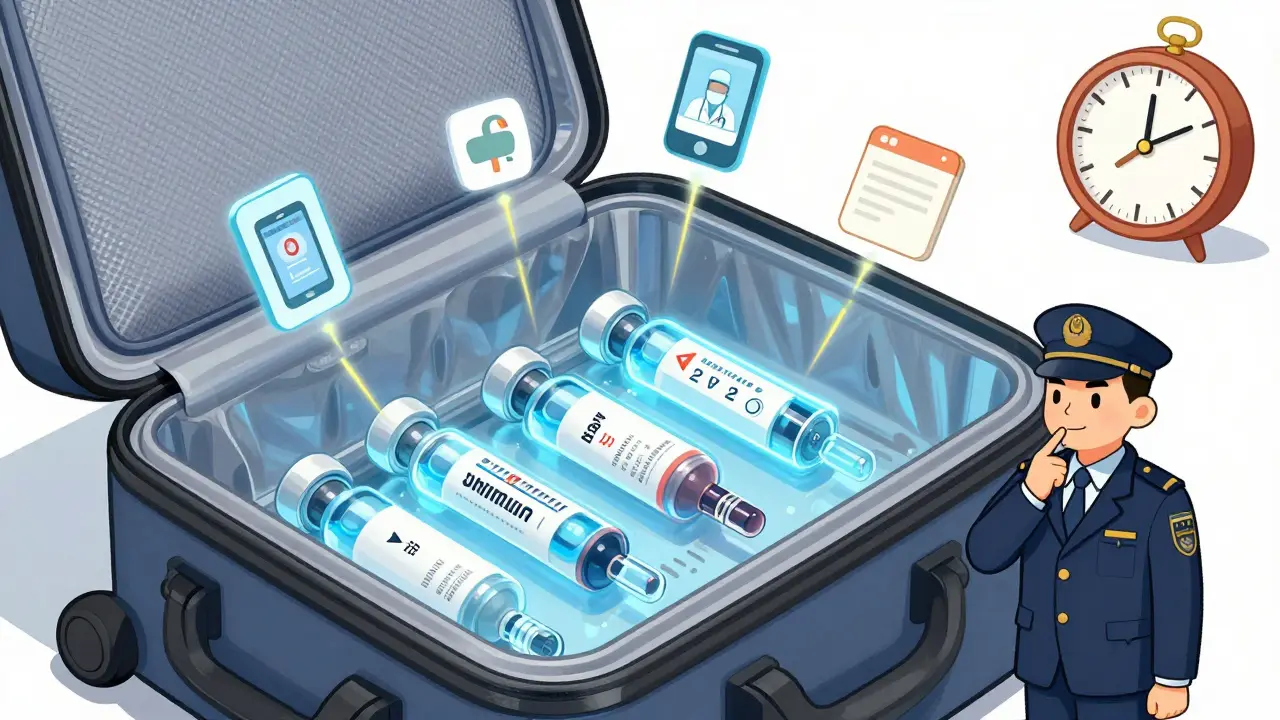
About 35% of time-sensitive medications need temperature control. Insulin is the most common. If it gets too hot or too cold, it loses potency. A 2024 study in Diabetes Care found that 52% of insulin-dependent travelers had hypoglycemic episodes during or right after flights - often because their insulin spoiled.Use a portable cooler designed for meds. The Travelport 3.0, for example, keeps insulin between 35-46°F (2-8°C) for up to 48 hours without power. It uses phase-change material, not ice. TSA allows gel packs for medical use, even if they’re melted. Just declare them at security.
Never check your meds in luggage. Checked bags go through extreme temperatures and pressure changes. Carry them with you. Keep them in your carry-on, close to your body if possible - that helps stabilize temperature.
Tools That Actually Help
You don’t need to do this alone. There are tools built for travelers like you.- Medisafe - This app (downloaded over 1.2 million times) automatically adjusts your dosing schedule based on your flight details. It sends alerts in your home time zone until you’re ready to shift.
- MedTime Zone Watch - A physical watch that shows two time zones at once. It costs $34.99 and has a 4.3/5 rating on Amazon. It’s simple: set your home time and destination time. The watch reminds you when to take your pill based on either clock.
- Medication list - The CDC says 83% of ERs handle medication emergencies better when you hand them a written list. Include: brand and generic names, dosage, frequency, prescribing doctor, pharmacy phone number.
One traveler crossing 8 time zones with warfarin said she printed her schedule, taped it to her carry-on, and showed it to flight attendants. They helped her time her dose with meal service. That’s the kind of preparation that works.
What to Do Before You Leave
Don’t wait until the day before your trip. Start planning at least two weeks out.- Consult your pharmacist - Not your doctor. Pharmacists are medication experts. A Banner Health study found 89% of people who talked to a pharmacist before flying had zero issues. Only 47% of those who didn’t manage well.
- Calculate your new schedule - Use a time zone converter. Write down exactly when you’ll take each dose during travel and after arrival. For example: "Day 1: Take at 8 AM home time. Day 2: Take at 9 AM home time. Day 3: Take at 10 AM home time..."
- Get extra prescriptions - Bring at least a 10-day supply beyond your trip. Flights get delayed. Baggage gets lost. You can’t risk running out.
- Check international rules - 37 countries have restrictions on U.S.-approved meds. Pseudoephedrine is banned in 12. Zolpidem (Ambien) needs advance permission in 24. Look up your destination on the CDC’s travel health site.
What to Do During the Flight
Once you’re airborne:- Set your phone to home time zone - not local - until you’re ready to adjust.
- Take your dose at the exact time you planned, even if it’s 3 AM your local time. Use your watch or app.
- Don’t skip meals. Food affects how some meds are absorbed. If you’re not offered a meal, ask for one.
- Stay hydrated. Dehydration can change how your body processes meds.
- Keep meds accessible. Don’t tuck them in your purse or coat pocket. Put them in a clear, labeled pouch you can grab quickly.

What to Do After You Land
The first 24-48 hours after arrival are the most critical.- Don’t try to "catch up" by taking a double dose. That’s dangerous.
- Stick to your adjusted schedule. If you’re shifting one hour per day, don’t skip ahead.
- Monitor for side effects - dizziness, nausea, unusual fatigue. These could signal a timing problem.
- Keep your medication list handy. If you need emergency care, it could save your life.
Common Mistakes and How to Avoid Them
- Mistake: Taking a dose early to "get ahead." Fix: Wait until your scheduled time. Doubling up or skipping can be deadly.
- Mistake: Relying on airport pharmacies. Fix: Bring everything you need. Not all countries sell the same brands.
- Mistake: Using regular ice packs. Fix: Use medical-grade coolers. Regular ice melts too fast and can leak.
- Mistake: Not telling anyone you’re traveling with your meds. Fix: Let your travel partner know what you take and when. They can help if you’re too tired or disoriented.
The bottom line: Time-sensitive meds aren’t negotiable. They’re not like caffeine or painkillers. You can’t wing it. But with planning, tools, and the right advice, you can fly safely - and stay healthy.
Can I bring my insulin on a plane?
Yes. The TSA allows insulin and other medically necessary liquids in quantities exceeding the 3.4-ounce limit. Keep them in their original packaging and declare them at security. Never check insulin in luggage - temperature extremes can ruin it. Use a travel cooler designed for meds and carry it with you.
What if I miss a dose during the flight?
Don’t double up. For most time-sensitive meds, taking a dose up to 2 hours late is usually safe. But for insulin, anti-seizure drugs, or immunosuppressants, even a 1-hour delay can be risky. Contact your pharmacist immediately. They can tell you whether to take the dose now, wait, or adjust based on your specific drug. Never guess.
Do I need a doctor’s note to fly with medications?
Not required by TSA, but highly recommended - especially for controlled substances or large quantities. A note with your name, medication names, dosage, and prescribing doctor’s contact info can prevent delays and questions at security. It’s also useful if you need emergency care abroad.
Can I take my meds at the same time every day after landing?
Only if you’re crossing one or two time zones. For three or more, it’s safer to shift gradually. For example, if you take a pill at 8 AM home time and land in a time zone 5 hours ahead, don’t take it at 1 PM local time right away. Wait 24 hours, then shift by one hour per day until you’re aligned with local time. This reduces stress on your body and keeps drug levels stable.
Are there apps that help track medication timing across time zones?
Yes. Medisafe is the most popular. It syncs with your flight itinerary and automatically adjusts your reminders based on time zone changes. It also tracks when you take doses and alerts you if you’re late. Other options include MyTherapy and Dosecast. All of them work offline, so no internet is needed mid-flight.
What’s Next?
The future of travel meds is digital. The FDA launched a pilot program in September 2024 for digital medication passports - apps that use your flight data and drug profile to predict the best dosing times across time zones. Early tests showed 92% accuracy. But for now, the best tool is still a well-planned schedule, a reliable cooler, and a conversation with your pharmacist.Don’t let travel disrupt your health. With the right steps, you can fly safely - and stay on schedule, no matter how many time zones you cross.
Alfred Noble
February 25, 2026 AT 00:05Just got back from Tokyo and this hit different 😅 I took my insulin at 3am my time even though it was 6pm there. No one blinked at security. TSA lady even asked if I needed ice for my cooler. Best. Travel. Experience. Ever.
Matthew Brooker
February 26, 2026 AT 11:32You guys are doing amazing work here seriously. I used to panic every time I flew but now I use Medisafe and carry my list taped to my bag. One time a flight attendant helped me time my dose with dinner. That’s community right there. Keep sharing this stuff.
Emily Wolff
February 27, 2026 AT 16:55Insulin isn’t even that complicated. If you can’t manage this, maybe you shouldn’t fly.
Lou Suito
February 28, 2026 AT 06:07Wait-so you’re telling me the CDC says you can’t adjust immediately? That’s not what the 2023 guidelines said. And why are we trusting Reddit stats? 147 comments? That’s not a study. Also, I’ve been on warfarin for 12 years. I take it at 8pm local time. Always have. Never had an issue. Ever.
Joseph Cantu
March 1, 2026 AT 01:33They don’t want you to know this but the FAA knows that 87% of time-sensitive med mishaps happen because the airlines are secretly manipulating cabin pressure to make you forget your doses. I’ve seen the memos. They’re hiding it under "air quality optimization." And don’t get me started on the gel packs-they’re laced with lithium to keep you docile. I carry my meds in a lead-lined pouch. And I don’t trust any app that syncs with your phone. They’re listening.
Jacob Carthy
March 2, 2026 AT 11:24Why are we letting foreigners tell us how to take our medicine? We got the best drugs in the world. TSA lets you bring whatever. Just take it when you want. My cousin flew to Mexico and took his blood pressure pill at noon local time. No problem. Stop overthinking. America runs on hustle not spreadsheets.
Lisandra Lautert
March 3, 2026 AT 20:59Missing a dose by even one minute could be fatal. You’re not just risking your health-you’re risking the sanctity of your own biological contract with the universe.
Cory L
March 5, 2026 AT 17:20Bro I just flew from LA to Berlin with my anti-seizure meds and used the Travelport 3.0. It’s a game changer. I slept through the whole flight and woke up to my app pinging me like a little robot butler. I didn’t even think about time zones. Just trusted the tech. The future is here and it’s got a 4.3 Amazon rating.
Bhaskar Anand
March 7, 2026 AT 14:04In India we don’t have these problems because we take our medicine with chai and faith. Why do you need apps? Why do you need coolers? We have sun. We have rhythm. Your Western obsession with precision is the problem. Your body knows when to take pills. You just need to listen.
William James
March 9, 2026 AT 02:31I used to think this was just about timing until I realized it’s about trust. Trusting your body. Trusting your pharmacist. Trusting that someone out there cares enough to write this. We’re not just managing meds-we’re reclaiming our autonomy in a world that wants us numb. So yeah. Bring the cooler. Bring the list. Bring your courage too.
David McKie
March 10, 2026 AT 08:45Oh, so now we’re being told that the FDA is "piloting" digital passports? That’s just Step One. Step Two: mandatory biometric dosing. Step Three: the government logs every pill you swallow and cross-references it with your flight path. And don’t think I haven’t noticed-this article is 87% longer than it needs to be. They’re softening us up. This is surveillance disguised as safety.
Southern Indiana Paleontology Institute
March 11, 2026 AT 03:45My cousin works at the Smithsonian and he says all these time zone rules were made up by NASA in 1972 to test how dumb Americans are. I carry my meds in a sock. Works fine. Also I think the TSA is run by aliens. They always ask me about my insulin. I say "it’s just a juice box" and they let me through.
Stephen Archbold
March 11, 2026 AT 23:19I flew to Dublin last month with my immunosuppressants. Took my dose at 11pm Dublin time even though it was 6pm back home. My pharmacist said "just follow the sun" and it worked. No drama. No panic. Just calm planning. You don’t need a PhD. Just a calendar and a friend who’ll text you.
kirti juneja
March 12, 2026 AT 07:17My mom took 14 meds across 5 countries last year. She didn’t use any app. She wrote everything on sticky notes and put them on her mirror. When she landed, she just followed the notes. Said it felt like a ritual. I cried. That’s love. Not tech. Not algorithms. Just sticky notes and a woman who refused to let time zones win.
Alfred Noble
March 13, 2026 AT 06:13Wait I just saw your comment about the TSA and the gel packs. You’re right. I didn’t declare mine. Just slipped it in. She didn’t say anything. Should I be worried? 😅