
Kava and Sedative Medications: What You Need to Know About Liver and Sedation Risks
 Dec, 17 2025
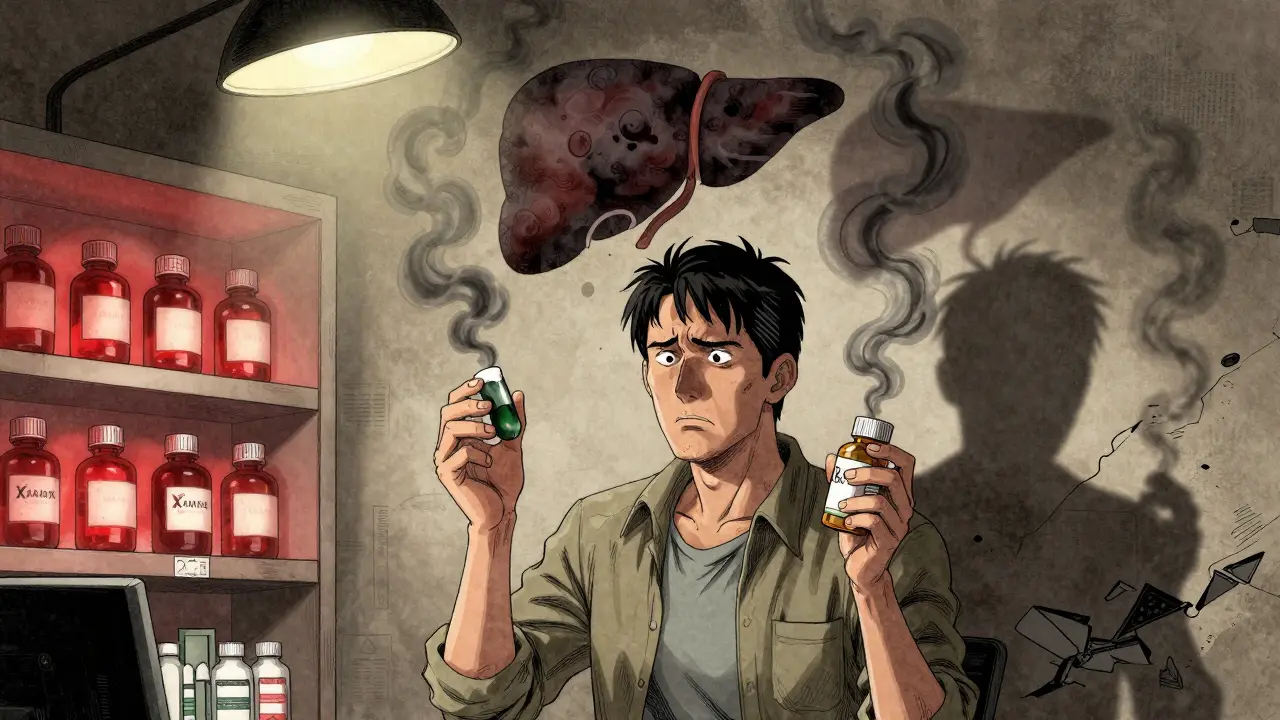
If you're taking medication for anxiety, sleep, or pain-and you also use kava-you could be putting your liver at risk. Kava, a plant-based supplement often used for relaxation, doesn't play nice with common sedatives like benzodiazepines, sleep pills, or even alcohol. The danger isn't just about feeling extra drowsy. It's about something far more serious: liver damage.
What Exactly Is Kava?
Kava comes from the roots of Piper methysticum, a plant native to Pacific islands like Fiji, Vanuatu, and Samoa. For centuries, people there have prepared it as a ceremonial drink by grinding the root and mixing it with water. The active compounds, called kavalactones, give it calming, muscle-relaxing effects. Many people in the U.S. now take it in capsule or liquid form to ease anxiety or help with sleep.
But here’s the catch: the kava you buy in a store isn’t the same as what’s made traditionally. Most commercial products use alcohol or acetone to extract kavalactones, which pulls out more of the compounds than water does. That means you might be getting up to 300 mg per dose-way higher than the 150-250 mg in traditional drinks. And higher doses? That’s where the trouble starts.
Why Kava and Sedatives Are a Dangerous Mix
Kava doesn’t just make you relaxed-it slows down your central nervous system. So does alprazolam (Xanax), diazepam (Valium), lorazepam (Ativan), zolpidem (Ambien), and even some antidepressants and painkillers. When you combine them, the effects don’t just add up-they multiply.
One study found that kava increased the concentration of midazolam (a sedative used in hospitals) by 27% in the bloodstream. That’s not a small bump. That’s enough to cause extreme drowsiness, confusion, slowed breathing, or even loss of consciousness. Reddit users have shared stories of being unable to stand for hours after mixing kava with lorazepam. One person described slurred speech and disorientation that lasted all day.
The FDA has logged 37 reports of sedation-related emergencies linked to kava since 2019. Twelve of those cases required hospital care. And these aren’t rare accidents-they’re predictable outcomes when two CNS depressants meet.
The Liver Risk Is Real-And Often Silent
While the sedation risk is immediate, the liver damage is sneakier. It doesn’t come with a warning sign. No pain. No red flag. Just fatigue, nausea, or dark urine that you might blame on stress or a bad night’s sleep.
Between 2002 and 2023, over 25 international cases of severe liver injury were tied to kava use. Some people needed liver transplants. The U.S. Food and Drug Administration issued a warning in 2002 and still hasn’t pulled kava from shelves-because it’s sold as a dietary supplement, not a drug. That means no mandatory safety testing, no standardized dosing, and no way to know what’s actually in the bottle.
Doctors who specialize in liver disease say kava can interfere with enzymes (CYP2D6, CYP2C9, CYP3A4) that break down medications. When those enzymes are blocked, sedatives build up in your system. That’s one reason the combination is so dangerous. It’s not just kava alone-it’s kava plus your prescription that turns a mild side effect into a medical emergency.

Who’s at Highest Risk?
Not everyone who takes kava gets hurt. But some people are far more vulnerable:
- Those taking benzodiazepines, sleep aids, or opioid painkillers
- People with existing liver conditions like fatty liver or hepatitis
- Those using high-dose supplements (over 250 mg daily)
- Individuals who drink alcohol regularly
- People using kava for more than 3 months without breaks
California’s Department of Public Health reported in 2024 that people who took kava with alcohol had a 5x higher chance of liver enzyme spikes. And Sacramento County case studies showed two patients developed acute liver failure after just 90 days of combining kava with prescription sedatives. One had ALT levels over 2,800 U/L-normal is under 40. That’s a 70-fold increase.
What the Experts Say
There’s disagreement on whether kava itself causes liver damage-or if other factors like poor-quality extracts, contaminated products, or pre-existing conditions are to blame. Dr. Jay Hoofnagle from the National Institutes of Health says at least a dozen cases of liver failure have been clearly linked to kava. Others, like Dr. J. Christopher Gorski, argue that many reports lack solid evidence.
But here’s what no one disputes: kava’s risk-benefit profile is worse than prescription alternatives. The European Medicines Agency banned it as a medicine in 2002. Canada, the UK, and Switzerland followed. Australia still allows it but warns against long-term use and high doses. The U.S. is one of the few countries where you can walk into a store and buy it without a prescription-and without any warning labels about drug interactions.
Even the World Health Organization says traditional water-based kava drinks are far safer than commercial extracts. That’s because water extracts fewer of the toxic compounds. So if you’re going to use kava, avoid pills, tinctures, or powders made with alcohol. Stick to traditional preparations-if you can find them.
What You Should Do
If you’re on sedative medication and use kava, here’s what to do right now:
- Stop taking kava immediately if you’re on benzodiazepines, sleep meds, or opioids.
- Don’t assume it’s safe because “it’s natural.” Natural doesn’t mean harmless.
- Ask your doctor or pharmacist to check for interactions. Most won’t ask you about supplements unless you bring it up.
- If you’ve been using kava for more than 3 months, get a liver function test. ALT, AST, and bilirubin levels can catch early damage.
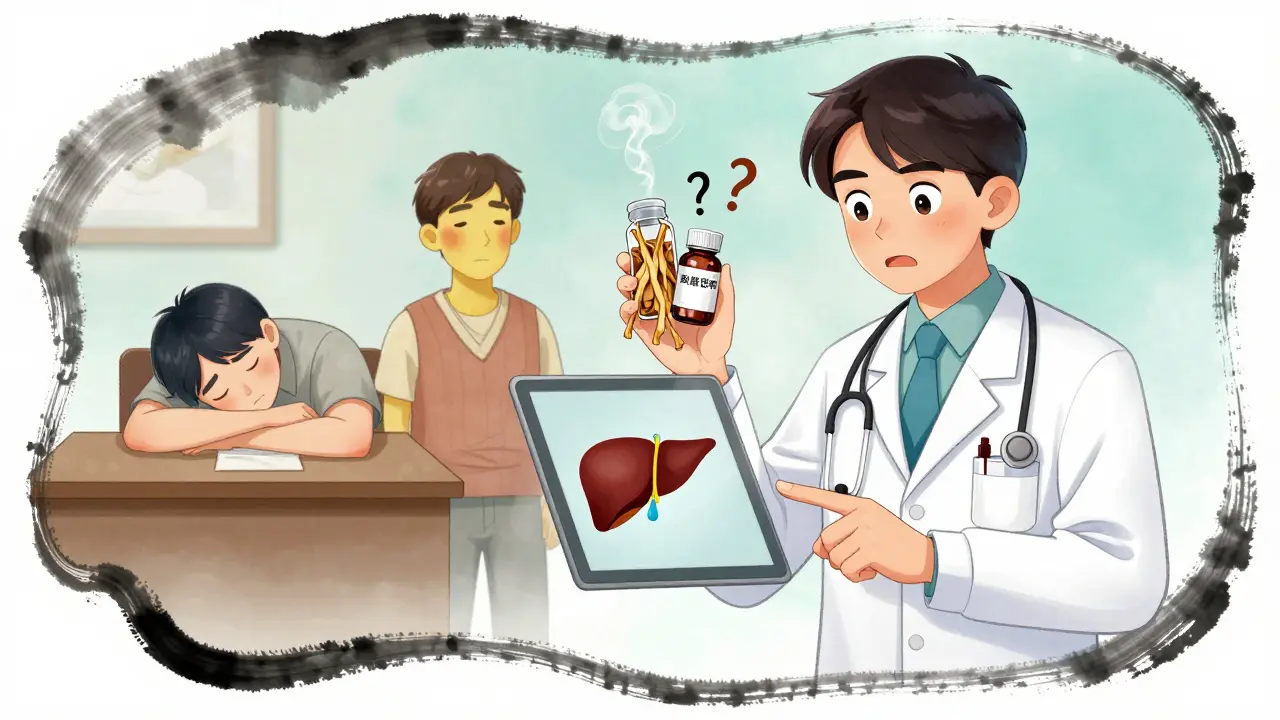
- If you feel unusually tired, nauseous, or notice yellowing of your eyes or skin-get checked immediately.
The American Association for the Study of Liver Diseases says if your ALT level rises above 3 times the normal limit, stop kava right away. In 92% of mild cases, liver function returns to normal within 60 days after quitting.
Alternatives to Kava for Anxiety and Sleep
If you’re using kava for anxiety or sleep, there are safer options:
- Valerian root: Minimal drug interactions, mild sedative effect.
- Magnesium glycinate: Helps with sleep onset and muscle relaxation.
- L-theanine: Found in green tea, reduces stress without drowsiness.
- Cognitive behavioral therapy (CBT): Proven to reduce anxiety long-term without side effects.
- Prescription alternatives: Buspirone, SSRIs, or low-dose trazodone under medical supervision.
None of these are perfect, but they’re better than risking your liver. And unlike kava, their dosing is controlled, their safety profiles are known, and they’re monitored by regulators.
The Bottom Line
Kava might feel like a gentle way to unwind-but when you mix it with sedatives, you’re playing Russian roulette with your liver. The risk isn’t theoretical. It’s documented in hospital records, FDA reports, and patient stories. Even if you’ve used it for years without issues, that doesn’t mean it’s safe. Liver damage can build slowly, silently, and irreversibly.
If you’re taking any kind of sedative-whether it’s a prescription, an OTC sleep aid, or just alcohol-don’t take kava. Period. If you’re not on meds, still be cautious. Stick to low doses (under 70 mg daily), avoid daily use, and get your liver checked if you’ve been using it for more than 3 months.
Your body doesn’t know the difference between a pill and a plant. It only knows what’s in your bloodstream. And right now, kava is a wildcard you don’t need in that mix.
Can kava cause liver damage even if I don’t take any medications?
Yes. While the risk is higher when combined with sedatives, liver injury has been reported in people who took kava alone. Most cases involve long-term use of high-dose supplements (over 250 mg daily). Traditional water-based preparations appear to carry lower risk, but no form of kava is proven completely safe. The FDA and European agencies warn that even without other drugs, kava can trigger hepatitis or liver failure.
How long does it take for kava to affect the liver?
Liver damage can develop anywhere from a few weeks to several months after starting kava. Most cases reported in medical literature show symptoms appearing between 1 and 4 months. Fatigue, nausea, dark urine, and jaundice are early signs. By the time symptoms appear, damage may already be advanced. That’s why regular liver tests are critical if you’re using kava regularly.
Is it safe to use kava occasionally, like once a week?
Even occasional use carries risk if you’re on sedatives. A single dose can still inhibit liver enzymes and raise sedative levels in your blood. If you’re not taking any medications, occasional low-dose use (under 70 mg) of traditional water-based kava may be lower risk-but it’s still not risk-free. There’s no proven safe threshold for long-term use. Many experts recommend avoiding kava entirely if you have any liver concerns.
What should I do if I’ve been mixing kava with my anxiety medication?
Stop taking kava immediately. Do not stop your prescription medication without talking to your doctor. Contact your healthcare provider and ask for a liver function test (ALT, AST, bilirubin). Be honest about your kava use-many patients don’t mention supplements, but doctors need to know to spot early signs of damage. If you feel unusually tired, nauseous, or notice yellowing in your eyes, seek medical attention right away.
Are there any kava products that are safer than others?
Traditional water-extracted kava, made from peeled root and consumed as a beverage, has the lowest reported risk. Commercial extracts made with alcohol, acetone, or other solvents pull out more of the potentially toxic compounds. Look for products labeled “noble kava” and avoid “tudei” or “two-day” varieties, which are linked to higher toxicity. Still, even noble kava isn’t risk-free, especially with long-term use or when combined with other substances.
What’s Next?
If you’re considering kava for anxiety or sleep, talk to your doctor first. Ask about safer, proven alternatives. If you’re already using it, don’t panic-but do act. Get tested. Stop combining it with sedatives. And if you’ve been using it for months without knowing the risks, you’re not alone-but now you know better.
The truth is, you don’t need kava to feel calm. There are safer, smarter ways to get there-and your liver will thank you for it.
Kathryn Featherstone
December 17, 2025 AT 17:43I’ve been using kava for anxiety for about a year, mostly a low-dose capsule once in a while. Never mixed it with anything, but reading this made me pause. I just got my ALT levels checked last month-normal. Still, I’m quitting cold turkey. Better safe than sorry. My liver doesn’t owe me anything.
Nina Stacey
December 19, 2025 AT 12:21Okay so i just read this whole thing and honestly i feel like i’ve been living in a bubble. I’ve been taking kava with my lorazepam for like 2 years cause i thought it helped me sleep better and honestly i never felt any different than usual but now im scared like what if my liver is already fried and i just dont know it yet like why is this even legal i mean its not like its some new fad its been around for centuries but why do we let companies sell it like candy with no warnings like someone needs to get sued over this
Kevin Motta Top
December 21, 2025 AT 02:45Traditional water kava from Fiji is fine. Commercial extracts are the problem. Stick to the real stuff if you’re going to use it. And never mix with meds. Simple.
Alisa Silvia Bila
December 22, 2025 AT 21:12I used to take kava for sleep until my cousin had liver issues from it. She didn’t even take meds-just high-dose capsules daily. It took her months to recover. Now I use magnesium and chamomile. No regrets. Your body doesn’t care if it’s ‘natural’-it just reacts.
Marsha Jentzsch
December 24, 2025 AT 04:25OH MY GOD. OH MY GOD. OH MY GOD. You people are STILL taking kava?!?!?! With SEDATIVES?!?!?!?! Are you trying to die?!?!?! I told my sister not to take it after she had that ‘mild’ liver spike last year and she said ‘but it’s plant-based!’-NO. IT’S NOT. IT’S A TOXIC BOMB WITH A LITTLE CALMING FLAVOR. STOP. JUST STOP. GET A LAB TEST. NOW. I’M NOT JOKING. I’M NOT DRAMATIC. I’M JUST RIGHT.
Henry Marcus
December 26, 2025 AT 00:44Let me guess-the FDA let this slip because Big Pharma wants you hooked on benzodiazepines and they don’t want you using a cheap herbal alternative that actually works. This whole ‘liver damage’ thing is a distraction. They’ve been covering up kava’s benefits since the 90s. Who profits when you’re on pills for life? Who owns the supplement companies pushing alcohol extracts? Think about it. The real danger isn’t kava-it’s the system that lets them sell you poison labeled ‘natural’.
William Liu
December 26, 2025 AT 07:30Thanks for writing this. I’ve been on Xanax for 8 years and started kava last winter because I wanted to reduce my dose. I didn’t realize how dangerous it was. I stopped yesterday and booked a liver panel for next week. I’m scared but I’m doing the right thing.
Aadil Munshi
December 27, 2025 AT 17:37Interesting how the narrative shifts based on geography. Europe bans kava? Sure. But they also ban caffeine in energy drinks and regulate coffee like a controlled substance. Meanwhile, the U.S. lets you buy 500mg kava capsules next to gummy vitamins. The real issue isn’t kava-it’s regulatory inconsistency. Also, calling it ‘natural’ is a marketing scam. Everything you eat is chemical. Even water. The question isn’t ‘is it natural?’ It’s ‘is it safe in this dose, with this context?’ And the answer here is clearly no.
Adrienne Dagg
December 28, 2025 AT 07:19STOP USING KAVA. 🚫 I’m not even mad, I’m just disappointed. You think you’re being healthy? Nah. You’re just one liver transplant away from being a cautionary tale. Get L-theanine. Or yoga. Or therapy. Or a damn walk. You don’t need a root to chill. 💔