
Pharmacist Education: Training on Counterfeit Drug Detection
 Feb, 1 2026
Why Pharmacists Are the Last Line of Defense Against Fake Medicines
Every year, millions of fake pills, injected solutions, and counterfeit patches slip into the global drug supply. Some look identical to the real thing. Others have the wrong dose, the wrong ingredients, or no active drug at all. These aren’t science fiction - they’re real, and they’re killing people. Pharmacists are the final checkpoint before these drugs reach patients. That’s why counterfeit drug detection isn’t just an add-on skill - it’s a core part of modern pharmacy education.
What Exactly Counts as a Counterfeit Drug?
Counterfeit drugs aren’t just knockoffs. They’re dangerous. A fake medicine could be:
- A real pill with the wrong strength (like 10mg instead of 100mg)
- A tablet with no active ingredient - just sugar and dye
- A bottle with real medicine but fake packaging, tampered with to hide expiration dates
- A biologic drug that’s been diluted or stored improperly, making it useless or toxic
The World Health Organization (WHO) defines these as substandard and falsified (SF) medical products. That’s the official term now. And it’s not just about pills. In 2024, law enforcement agencies recorded 6,424 incidents involving 2,428 different medicines - from antibiotics to cancer drugs to insulin. Oncology and biologics are now top targets because they’re expensive and hard to verify without lab equipment.
How Did We Get Here? The Rise of Online Counterfeiting
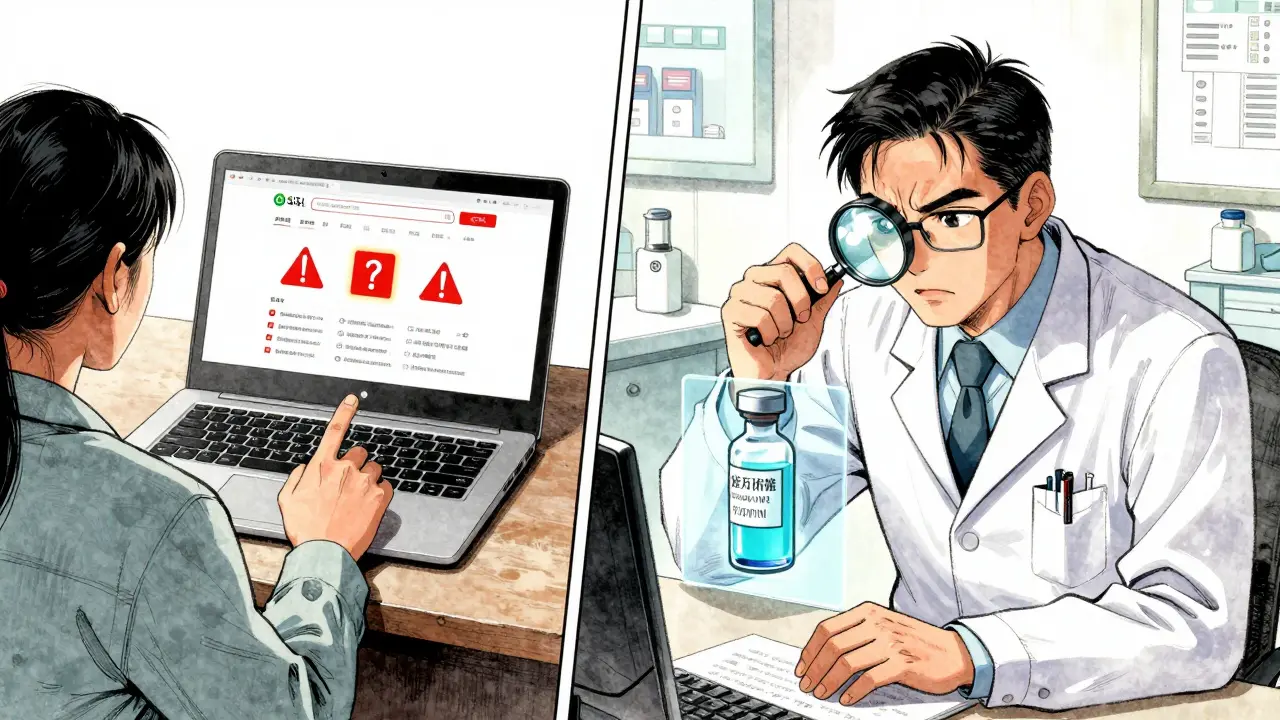
Twenty years ago, fake drugs mostly showed up in street markets or unlicensed clinics. Today, they’re sold on websites that look like real pharmacies. A patient in Bristol, London, or Lagos might order a “discounted” version of Ozempic or Viagra from a site that’s been cloned from a legitimate brand. These sites use fake certifications, stolen logos, and convincing reviews. They ship from hidden warehouses, often overseas.
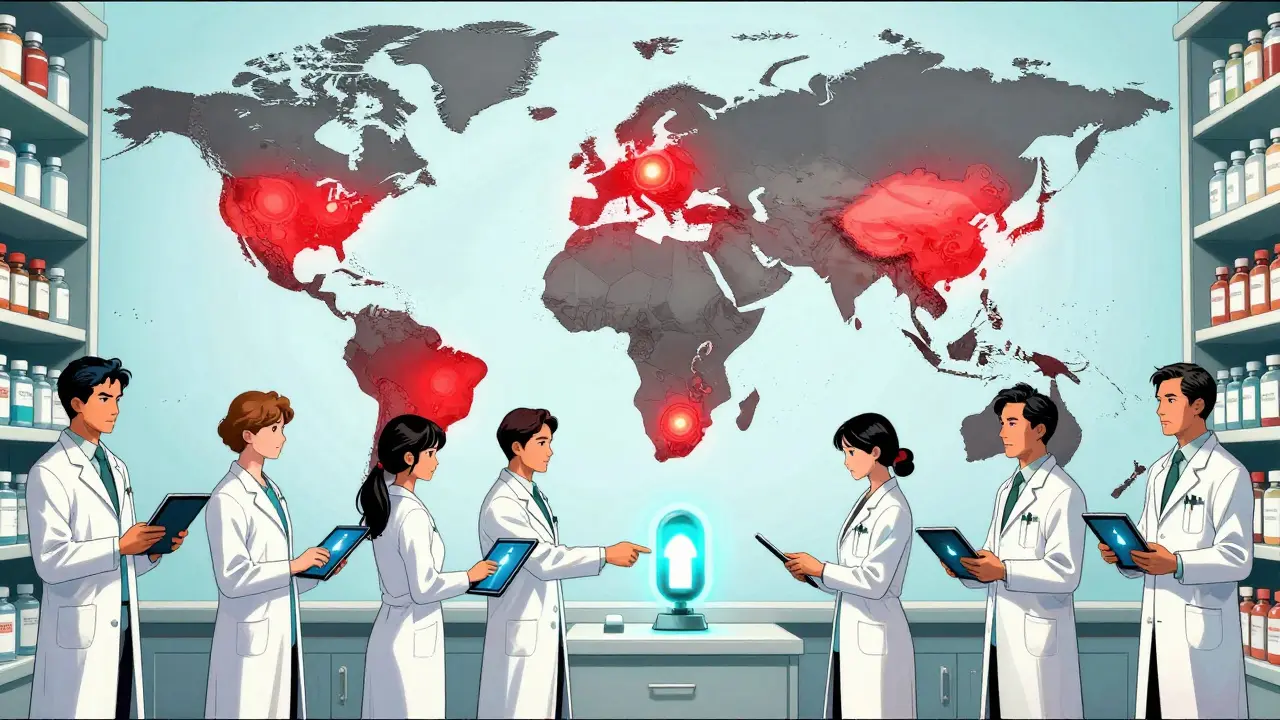
Interpol’s Operation Pangea XVI in 2025 shut down 13,000 illegal online pharmacies and seized over 50 million fake doses. That’s not a one-off. Every year, the number of fake drug websites grows. And the criminals? They’re smarter. They’re using AI to generate fake product labels, and they’re targeting high-demand drugs with complex supply chains.
What Pharmacists Need to Know - Beyond the Basics
Old-school checks - looking at the bottle, calling the manufacturer, comparing packaging - are no longer enough. Here’s what modern training covers:
- Price red flags: If a drug is priced 40% or more below the wholesale acquisition cost, it’s a warning sign. A 10mg tablet of a brand-name statin shouldn’t cost $2 online.
- Supply chain verification: Only order from authorized distributors. Manufacturers like Pfizer, Novo Nordisk, and Roche publish lists of approved partners. If your supplier isn’t on the list, don’t buy.
- Specialty drug red flags: Insulin, cancer therapies, and injectables rarely go through regular distributors. If someone claims to have “direct access” to a specialty drug without a chain of custody, be skeptical.
- Online sales awareness: The WHO’s new 2024 toolkit includes modules on spotting fake e-pharmacies. Pharmacists now learn how to recognize fake SSL certificates, poor website design, and unverifiable contact info.
Real Tools, Real Tech: The New Standard in Verification
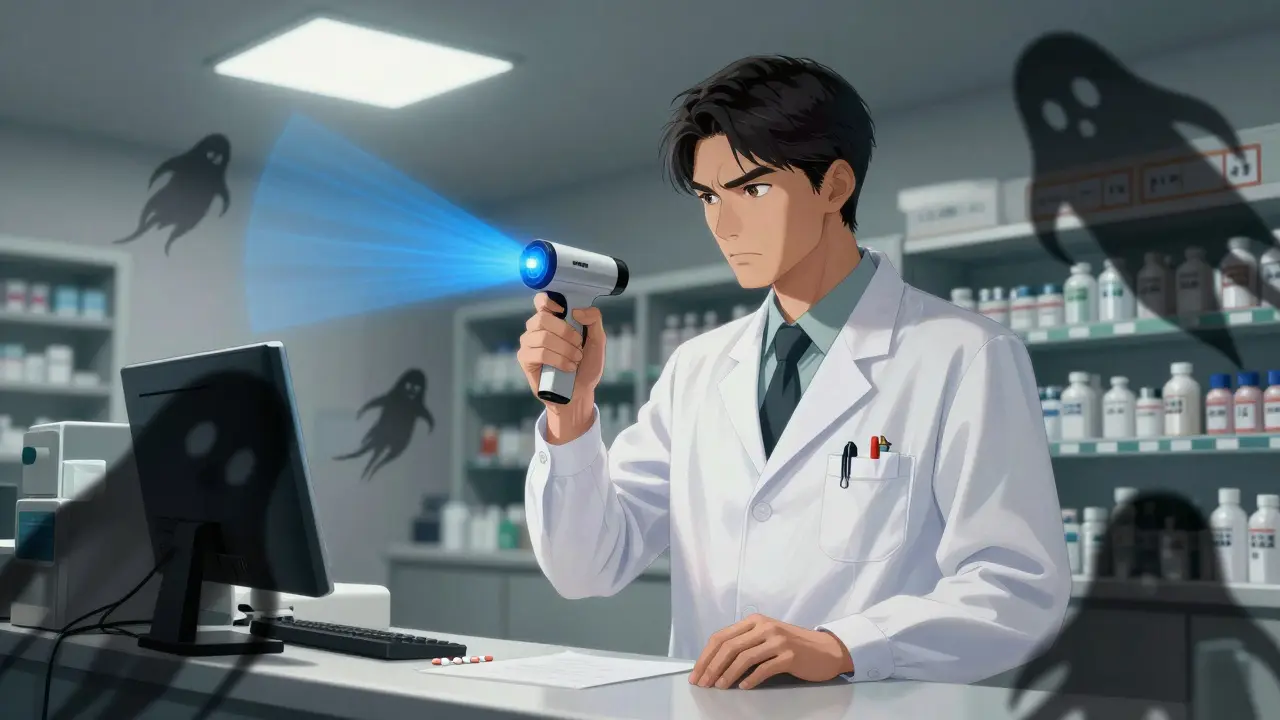
Training isn’t just theory anymore. It’s hands-on. Tools like RxAll’s handheld spectrometer are now part of pharmacy education. These devices shine a light on the pill and analyze its spectral signature - the unique way light reflects off the chemical makeup. A fake metformin tablet might look identical, but its spectral profile won’t match the real one. Results? In under 10 seconds.
Pharmacists in pilot programs in Senegal and Tanzania saw their ability to spot counterfeits jump by 68% after using these tools. And it’s not just about detection. The devices connect to secure cloud databases that log each verification, creating an audit trail. If a fake batch is found, the system can alert other pharmacies and regulators in real time.
Global Training Programs - What Works
Not every country has the same resources. But the best training models are being shared globally:
- FIP/WHO Curriculum: Developed in 2021, this competency-based program is used in 12 countries. It’s designed for pharmacy students and includes case studies on real seizures, legal consequences, and patient harm reports. It’s available in English and French.
- TrainingNow.com’s FWA Course: Popular in the U.S., this 45-minute online course covers Medicare fraud and abuse. While not focused solely on counterfeits, it teaches pharmacists how to spot suspicious ordering patterns - a key skill when fake drugs enter through bulk suppliers.
- PTCB-Recognized Programs: These require certification and focus on controlled substances, but now include modules on diversion and counterfeit detection.
The key difference? Academic programs build long-term awareness. Tech-based tools give immediate, on-the-job power. The best training combines both.
Why This Matters - Real Stories Behind the Stats
In 2023, a community pharmacy in Manchester received a shipment of “generic” insulin. The packaging looked perfect. The batch number checked out. But the vials felt lighter. A pharmacist ran one through a handheld spectrometer. The result? No human insulin. Just saline solution. The patient who used it ended up in the hospital with diabetic ketoacidosis. She survived. But others haven’t.
Pfizer has prevented over 302 million counterfeit doses from reaching patients since 2004 - not just by chasing criminals, but by training pharmacists to spot the signs. That’s the power of education. It doesn’t just protect a business. It saves lives.
What’s Next? The Future of Counterfeit Detection
AI is getting better at spotting fakes. Soon, algorithms will analyze packaging fonts, ink composition, and even the way a pill dissolves in water - all from a photo taken on a smartphone. Pharmacists won’t need expensive devices. They’ll need to know how to interpret the data.
Training is also expanding to include patient education. RxAll now gives pharmacists handouts to explain to patients: “How to spot a fake pharmacy online.” Because if a patient doesn’t know what to look for, they’ll keep buying from shady sites.
The U.S. has the Drug Supply Chain Security Act (DSCSA) - a 10-year system to track every pill from manufacturer to pharmacy. It’s the gold standard. But most countries don’t have that. That’s why global training matters. A pharmacist in Nairobi needs the same skills as one in Birmingham.
What You Can Do Right Now
If you’re a pharmacist:
- Ask your employer if you’ve had counterfeit detection training this year. If not, request it.
- Check your suppliers against the manufacturer’s authorized distributor list. Do it every quarter.
- Learn how to use a verification tool - even if your pharmacy doesn’t have one yet. Many companies offer free demos.
- Report suspicious products. You don’t need proof. Just suspicion. Contact your national medicines regulator.
If you’re a student: Push for this topic to be added to your curriculum. It’s not optional anymore. It’s essential.
How common are counterfeit drugs in the UK?
Counterfeit drugs are rare in the UK’s legal supply chain thanks to strict regulations and the NHS’s centralized procurement system. But fake medicines are still entering through online pharmacies. The MHRA reports that over 70% of counterfeit drug seizures in the UK come from illegal websites, not physical stores. Always buy from registered pharmacies - check the General Pharmaceutical Council’s website to verify a pharmacy’s status.
Can pharmacists be held liable for dispensing counterfeit drugs?
Yes. If a pharmacist dispenses a counterfeit drug and it causes harm, they can face legal action for negligence - even if they didn’t know it was fake. The key is whether they followed standard verification procedures. If they ignored red flags like suspicious pricing or unverified suppliers, liability increases. Training isn’t just good practice - it’s legal protection.
Are there free training resources for pharmacists?
Yes. The WHO and FIP offer their full counterfeit detection curriculum for free download in English. The Pharmaceutical Security Institute also provides public alerts and case studies. TrainingNow.com’s FWA course is often available through employer subscriptions. Local pharmacy associations may also offer free webinars - especially around new WHO guidelines released in late 2024.
Do all pharmacies have access to verification devices like RxAll?
No. High-tech devices are still expensive and mostly used in hospitals, large chains, and academic centers. Community pharmacies often rely on supplier verification and visual checks. But the cost is dropping. Some regional health networks now provide loaner devices to smaller pharmacies. If your pharmacy doesn’t have one, ask if they can partner with a local university or hospital that does.
What should I do if I suspect a drug is counterfeit?
Don’t dispense it. Isolate the product and report it immediately. In the UK, contact the Medicines and Healthcare products Regulatory Agency (MHRA) through their Yellow Card system. In the U.S., report to the FDA’s MedWatch program. Include photos, batch numbers, and supplier details. Your report helps track criminal networks and prevents others from being harmed.
Gary Mitts
February 1, 2026 AT 18:27I'll just keep buying my insulin from the guy who texts me pics of pills from his garage.
Akhona Myeki
February 3, 2026 AT 15:38Chinmoy Kumar
February 4, 2026 AT 00:54Brett MacDonald
February 5, 2026 AT 06:27if you stop fake drugs, you stop the flow of cash.
who benefits from 50 million fake pills being seized? the same people who profit from the supply chain.
education is just a distraction from the real issue: profit over people.
Sandeep Kumar
February 6, 2026 AT 01:01Bridget Molokomme
February 7, 2026 AT 18:16also why is this not on every pharmacy’s website like a safety certificate? like ‘we use RxAll’ or ‘we verify all biologics’?
i’d pay more to know my insulin isn’t saline.
Brittany Marioni
February 8, 2026 AT 11:59phara don
February 8, 2026 AT 15:42so like… if i took a pic of my pill with my phone and an app could tell if it’s fake… would that be a thing soon?
👁️🗨️
Dan Pearson
February 8, 2026 AT 18:21And if they miss one fake pill, they get sued?
Meanwhile, the FDA lets Big Pharma set the prices so high that people turn to sketchy websites.
So let me get this straight-blame the pharmacist for the crisis YOU created?
Pathetic.
Eli Kiseop
February 9, 2026 AT 12:33my cousin just graduated and she had like 3 hours on counterfeit drugs
that’s not enough
that’s less than we got on pharmacy law
larry keenan
February 9, 2026 AT 14:30Nick Flake
February 10, 2026 AT 18:41Every time someone buys a fake drug online, they’re not just risking their life-they’re eroding the last thread of faith in healthcare.
Pharmacists are the last people holding the line between science and chaos.
And if we don’t fund this training, if we don’t demand it, then we’re not just neglecting safety… we’re choosing death.
💔💊
Vatsal Srivastava
February 11, 2026 AT 13:40