
Prescriber Attitudes Toward NTI Drugs and Substitution: What Doctors Really Think
 Jan, 22 2026
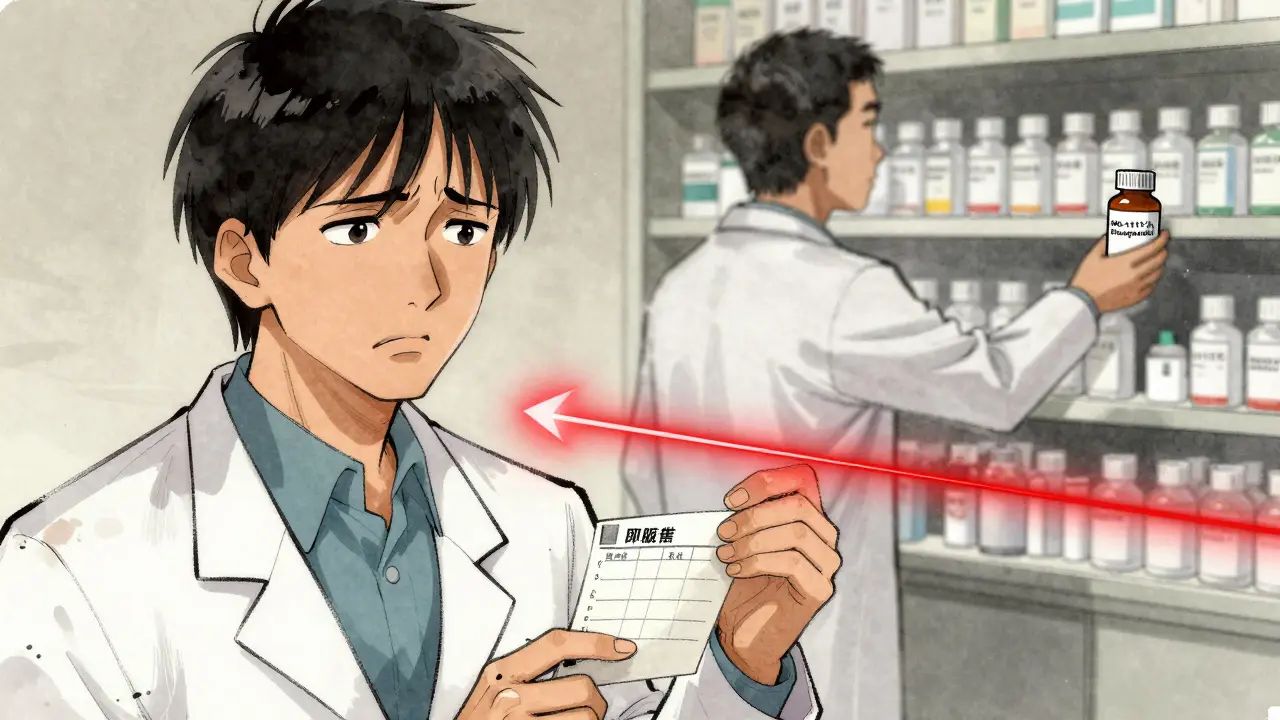
When a doctor writes a prescription for a drug like warfarin, levothyroxine, or tacrolimus, they’re not just picking a medication-they’re choosing stability. These are Narrow Therapeutic Index (NTI) drugs, where even a tiny shift in dose can mean the difference between healing and hospitalization. A 2% change in blood levels might cause a clot, a seizure, or organ rejection. So when a pharmacist swaps the brand-name version for a cheaper generic, it’s not just a billing change. It’s a clinical decision. And many prescribers aren’t comfortable with it.
What Makes a Drug an NTI Drug?
NTI drugs have a razor-thin margin between a therapeutic dose and a toxic one. The FDA defines them as drugs where the ratio between the minimum toxic concentration and the minimum effective concentration is two or less. That means if your blood level of the drug is just 10% too high, you could have serious side effects. If it’s 10% too low, the drug won’t work. For drugs like phenytoin (used for seizures) or lithium (for bipolar disorder), that’s not theoretical-it’s life-or-death.
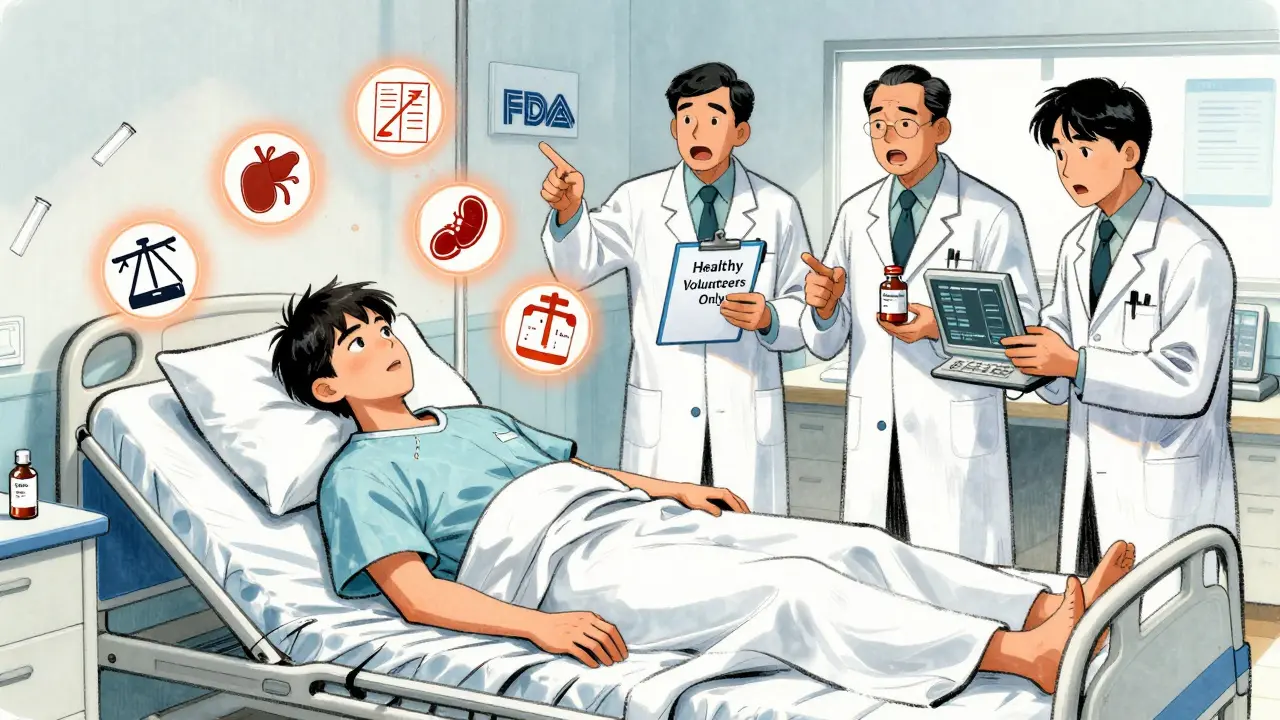
Because of this, the FDA tightened the rules in 2019. For most generic drugs, bioequivalence is proven if the generic’s blood levels fall within 80-125% of the brand. For NTI drugs, that range shrinks to 90-111%. It’s a small change, but it matters. Still, many doctors don’t trust even that. Why? Because bioequivalence studies are done in healthy volunteers, not in patients with kidney disease, liver problems, or multiple medications-all of which can change how a drug behaves in the body.
Doctors Are Divided
Not all prescribers feel the same way. A 2018 survey of 710 pharmacists found that 87% believed most physicians thought generics were just as effective as brand-name NTI drugs. But here’s the catch: only 60% of pharmacists said they’d switch a patient to a generic for a refill, even if the patient had been stable on the brand. That gap tells you something. Doctors might say they’re fine with substitution in theory, but when it comes to actual patients, they hesitate.
Transplant specialists are the most skeptical. A 1997 survey of 59 transplant pharmacists showed that 92% believed bioequivalence testing should be done in real patients, not healthy volunteers. Only 12% thought the FDA’s current standards were good enough for drugs like tacrolimus, which prevents organ rejection. That’s not a small minority-it’s the overwhelming majority of experts in that field.
Neurologists, psychiatrists, and endocrinologists also show strong reservations. The American Academy of Neurology says automatic substitution for levothyroxine, phenytoin, and warfarin should require prescriber approval. Why? Because patients on these drugs often need frequent blood tests to check levels. Switching brands-even if the generic is technically “equivalent”-can trigger a cascade of extra lab visits, dose adjustments, and anxiety for the patient.
State Laws Are a Wild West
The rules vary wildly depending on where you live. As of 2023, 28 U.S. states have special rules for NTI drug substitution. Some, like Texas and Florida, keep official lists of NTI drugs and block automatic substitution. Others require the pharmacist to notify the prescriber before swapping. In 17 states, the patient must give written consent before a generic is dispensed.
Those consent laws have real impact. A 2022 study found that states requiring affirmative patient consent saw 23% fewer NTI generic substitutions. That’s not because patients are refusing-they’re often unaware of the change. It’s because pharmacists are hesitant to move forward without clear approval.
Meanwhile, the Academy of Managed Care Pharmacy argues that restricting substitution is unnecessary. They say pharmacists, working with doctors, should use professional judgment. But in practice, many pharmacists don’t feel empowered to make that call alone. A 2021 survey found that 78% of hospital pharmacists always notify the prescriber before substituting an NTI drug. That’s not efficiency-it’s damage control.
Patients Are Confused-and So Are Doctors
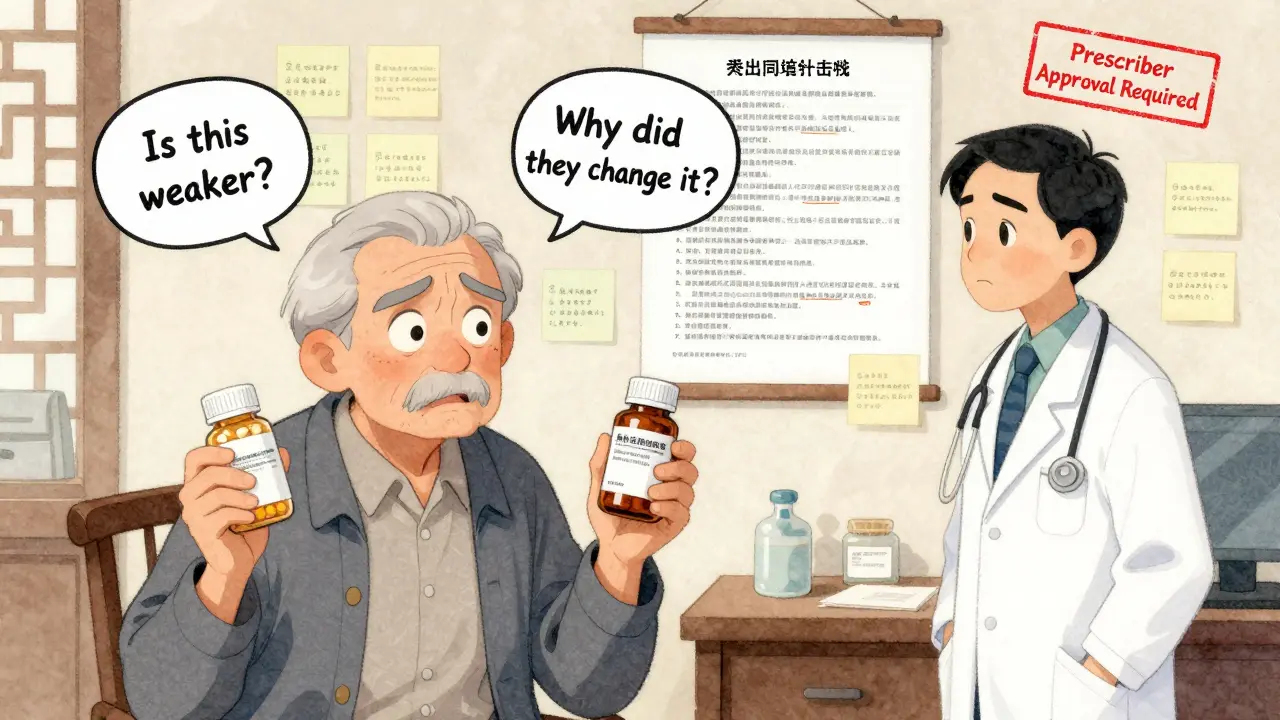
Doctors aren’t the only ones stressed. Patients get confused, too. The AMA reported in 2022 that 41% of physicians had patients come in confused after a switch. One patient thought the generic was “weaker.” Another thought the brand was “better.” Some didn’t realize they’d been switched at all-until they started feeling off.
That confusion leads to more office visits. One study estimated that each NTI substitution incident costs $127 in extra monitoring time. For a primary care doctor seeing 2.7 NTI substitution notifications a month, that’s over $3,400 a year in lost time. For a psychiatrist managing lithium, it’s more than double that.
And the labeling doesn’t help. Many NTI drugs aren’t clearly marked as such on the bottle. Dr. Michael Cohen of the Institute for Safe Medication Practices says prescribers need standardized labels and communication protocols. Right now, there’s no universal symbol, no consistent warning, no clear signal that says: “This drug is dangerous to switch.”
Brand Loyalty Isn’t Just About Profit
Despite the cost savings, brand-name NTI drugs still hold a big chunk of the market. Medicare Part D data from 2022 shows brand-name versions kept 23% of the NTI drug market-compared to just 8% for non-NTI drugs. That’s not because patients are demanding them. It’s because doctors are prescribing them.
The top five NTI drugs with the highest brand persistence:
- Tacrolimus: 32% brand share
- Warfarin: 28%
- Levothyroxine: 25%
- Phenytoin: 21%
- Lithium: 19%
A 2023 survey of internists found that 57% would prescribe the brand-name version when starting a high-risk patient on an NTI drug. The top reason? Stability. They don’t want to risk a drop in INR, a spike in creatinine, or a seizure because of a switch they didn’t initiate.
The Data Says It’s Safe-But Real Patients Don’t Always Agree
The FDA insists that 98% of generic NTI drugs perform within 3-4% of the brand. Post-market surveillance backs that up. The Institute for Safe Medication Practices recorded over 1,200 NTI-related errors between 2015 and 2020-but only 8% caused actual harm. That sounds reassuring.
But here’s what the data doesn’t show: the anxiety. The sleepless nights. The extra blood tests. The patient who calls at 2 a.m. because they feel “off.” The family member who blames the doctor for a switch they didn’t approve. These aren’t captured in clinical trials or FDA reports. They’re part of everyday care.
And the PRESCRIPT-NTI trial-currently enrolling 1,200 patients across 42 sites-is trying to answer that exact question. Will switching NTI drugs cause measurable harm? Or is the fear mostly psychological? Results are expected in mid-2024. Until then, many doctors are playing it safe.
What’s Changing-and What’s Not
The FDA added 12 new drugs to its NTI list in March 2023 and removed 3. That shows the list isn’t static. It’s evolving with new evidence. The American Society of Clinical Oncology now supports generic substitution for oral cancer drugs like capecitabine-as long as therapeutic drug monitoring is in place. That’s a shift. Oncologists used to avoid generics like the plague. Now, they’re cautiously open.
But the biggest change might come from CMS. In November 2023, they proposed a rule requiring prescriber notification for all NTI substitutions under Medicare Part D. That’s not a ban. It’s a pause. A signal that even federal agencies are listening to doctors’ concerns.
Industry analysts predict generic use for NTI drugs will hit 78% by 2028. That’s up from 62% in 2023. But that growth won’t come from forcing switches. It’ll come from better communication, clearer labeling, and real-world data proving that generics are safe in real patients-not just healthy volunteers.
For now, the message from prescribers is clear: don’t assume. Don’t substitute without thinking. And if you do, tell us. Because when it comes to NTI drugs, trust isn’t built in a lab. It’s built one stable dose at a time.
Vanessa Barber
January 24, 2026 AT 08:38People act like switching generics is some kind of medical crime, but I’ve seen patients switch back and forth between brands for years and never blink. The data says it’s fine. The fear is mostly from doctors who got trained in the 90s and never updated their mental software.
Laura Rice
January 26, 2026 AT 04:20my heart goes out to all the patients who get switched without knowing-and then show up to their appointment scared out of their mind because their meds ‘feel different.’ this isn’t about profit, it’s about trust. and trust? it’s not something you can measure in bioequivalence percentages.
Janet King
January 27, 2026 AT 16:02NTI drugs require precise dosing. Generic substitution without prescriber notification increases risk. The FDA standards are insufficient for real-world patients with comorbidities. Standardized labeling and mandatory provider notification are necessary to prevent harm.
Susannah Green
January 27, 2026 AT 22:11Can we just agree that ‘equivalent’ doesn’t mean ‘identical’? A 90-111% range sounds fine on paper, but when you’re on lithium and your kidneys are barely hanging on, that 11% wiggle room? That’s not a margin-that’s a cliff. And then you get stuck in a loop of blood draws, anxiety, and ‘did I just have a seizure or am I just tired?’
Kerry Moore
January 28, 2026 AT 14:44It is important to recognize that while population-level bioequivalence data may demonstrate safety, individual patient variability-particularly in the context of polypharmacy, renal impairment, or hepatic dysfunction-can significantly alter pharmacokinetics. The current regulatory framework does not adequately account for this heterogeneity.
Sue Stone
January 29, 2026 AT 02:52my pharmacist switched my levothyroxine last month. i didn’t notice anything. maybe doctors are just overthinking it?
Anna Pryde-Smith
January 30, 2026 AT 22:11THE SYSTEM IS BROKEN. PHARMACISTS AREN’T DOCTORS. THEY’RE NOT TRAINED TO DECIDE IF A PATIENT CAN HANDLE A SWITCH. AND YET THEY’RE BEING PUSHED TO DO IT BECAUSE SOME BOARDROOM IN NEW YORK WANTS TO SAVE $0.12 PER PILLS. THIS ISN’T HEALTHCARE. THIS IS CORPORATE GAMBLING WITH PEOPLE’S LIVES.
Oladeji Omobolaji
January 31, 2026 AT 21:11in Nigeria we don’t even have generics for these drugs most times. if we did, people would be happy just to get any version that works. i think the fear here is privilege. when you have access to care, you worry about tiny changes. when you don’t, you just hope for anything.
Stacy Thomes
February 2, 2026 AT 11:17if we can get people to switch to generic insulin without panic, why not this? we need education, not fear. patients deserve affordable meds-and doctors need to lead the way in making that safe. let’s stop treating NTI drugs like sacred relics and start treating them like medicine.
dana torgersen
February 2, 2026 AT 23:45it’s funny… we trust algorithms to recommend our music, our dates, our news… but when it comes to our lives? we panic because a pill looks different? maybe the real problem isn’t the drug… it’s that we’ve forgotten how to trust… anything… anymore.