
Rationing Medications: How Ethical Decisions Are Made During Drug Shortages
 Jan, 1 2026
When a life-saving drug runs out, who gets it? This isn’t science fiction. It’s happening right now in hospitals across the U.S. and Australia. In 2023, the FDA tracked 319 active drug shortages, with cancer drugs like carboplatin and cisplatin hitting critical levels. Oncology centers reported that 70% of patients faced delays or denied treatment because of these shortages. When there’s not enough to go around, doctors don’t just guess who gets the medicine. They follow ethical frameworks-structured, sometimes painful, rules designed to make the impossible just a little less unfair.
Why Rationing Happens
Drug shortages aren’t random. They’re the result of broken supply chains, manufacturing failures, and a market that rewards cheap generics over reliable production. Just three companies make 80% of the generic injectable drugs hospitals rely on. When one plant shuts down-because of contamination, labor issues, or profit decisions-it sends shockwaves through the system. Sterile injectables, especially cancer drugs, make up 43% of all shortages. And when these drugs disappear, there’s often no easy substitute. In 2023, a single shortage of carboplatin forced oncologists to choose between two stage IV ovarian cancer patients. One had just finished chemo and was due for maintenance. The other was newly diagnosed with aggressive disease. Both needed the same drug. One would get it. The other wouldn’t. No one wants to be the one making that call. But someone has to.The Ethical Frameworks That Guide Decisions
Hospitals aren’t supposed to make these calls at the bedside. That’s how moral distress, burnout, and inequality creep in. Instead, leading health organizations recommend committee-based systems built on four core principles from the Daniels and Sabin framework:- Publicity: The rules must be clear and shared with staff and patients.
- Relevance: Decisions must be based on evidence-not personal bias or hospital politics.
- Appeals: There must be a way to challenge a decision if you think it’s wrong.
- Enforcement: Someone has to make sure the rules are followed.
What Happens When There’s No System
In 2022, a survey of 247 pharmacy managers found that 51.8% of rationing decisions were made by individual doctors or nurses-no committee, no guidelines, no transparency. That’s bedside rationing. And it’s dangerous. Clinicians who make these calls alone report 27% higher burnout rates. Patients are rarely told what’s happening. Only 36% of patients affected by rationing were informed, according to JAMA. That means two out of three people were denied treatment without knowing why. Some were told the drug was “out of stock.” Others were never told at all. Hospitals without formal committees also see more inequality. One department hoards drugs. Another runs out. Wealthier patients get better access. Rural hospitals? 68% have no formal protocol at all. Academic centers? Only 32% lack one. The gap isn’t just logistical-it’s ethical.
How the Best Hospitals Do It
The hospitals that handle this well don’t wait for a crisis. They prepare. The Minnesota Department of Health released a detailed plan for carboplatin and cisplatin rationing in April 2023. It included:- Priority tiers based on treatment goals (curative vs. palliative)
- Dose optimization: using the lowest effective dose for the longest possible interval
- Strict documentation in electronic health records: every rationing decision must be logged with justification and communication notes
The Real Problem: Inconsistency
The biggest complaint from pharmacists? Inconsistent application. One hospital gives priority to patients with the best prognosis. Another gives it to those who’ve been waiting longest. Another uses a lottery. No national standard exists. No federal mandate. No uniform training. A 2021 Hastings Center Report found that 78% of rationing protocols ignore equity. They don’t account for race, income, geography, or language barriers. A patient in rural Alabama might get the same drug as one in downtown Chicago-but only if they’re lucky. The system doesn’t fix inequality. It amplifies it. And the manufacturers? They’re not helping. The 2012 FDA law required drugmakers to report shortages six months in advance. But only 68% comply. Some wait until the last minute. Others don’t report at all.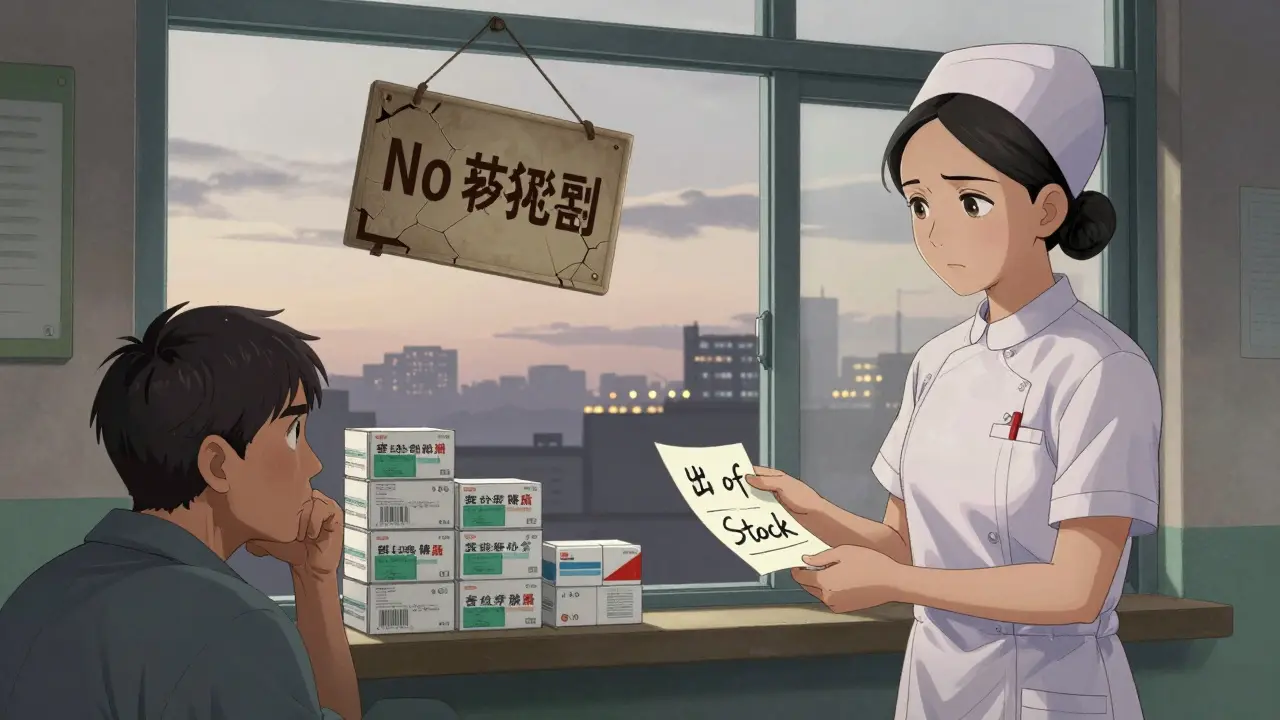
What’s Being Done Now
Change is slow, but it’s happening. In May 2023, ASCO launched an online decision support tool to help oncologists apply ethical criteria in real time. In January 2024, pilot certification programs for hospital rationing committees began in 15 states. The FDA’s new AI-driven early warning system, expected to launch in 2025, aims to predict shortages before they happen-cutting duration by 30%. The National Academy of Medicine is developing standardized ethical metrics for allocation. Draft criteria are due in mid-2024. For the first time, we might have a common language for fairness: what counts as “urgent,” what counts as “benefit,” who gets to decide, and how we measure success.What Patients and Families Can Do
You can’t control the supply chain. But you can ask questions.- Ask: “Is this drug in short supply? If so, what’s the plan if it runs out?”
- Ask: “Is there a committee that makes these decisions? Can I see the criteria?”
- Ask: “Will I be told if I’m not getting the drug? How will I be informed?”
Austin Mac-Anabraba
January 3, 2026 AT 05:18Let’s be brutally honest: this isn’t ethics. It’s triage capitalism. The system doesn’t care if you’re a single mom or a retired vet-it cares about ROI. If your cancer has a 60% five-year survival rate, you’re a ‘good investment.’ If it’s 15%, you’re a liability. The real scandal? The same companies that profit off these drugs are the ones cutting corners on production. They’re not failing-they’re optimizing. And we’re the cost center.
Every ‘ethical framework’ is just a velvet glove over a steel fist. The committees? They’re PR theater. The real decision-makers are the CFOs who decided to outsource manufacturing to a plant with 3 inspectors and a 20% defect rate. Don’t pretend this is about fairness. It’s about who pays the least.
And yes, I know the FDA’s ‘early warning system’ is coming. It’s 2024. We’ve known about these shortages since 2010. We had a decade to fix it. We didn’t. Because fixing it would mean regulating profits. And that’s not how the game works.
Phoebe McKenzie
January 5, 2026 AT 05:17HOW DARE THEY prioritize survival rates over human life?! This isn’t medicine-it’s eugenics with a white coat! They’re deciding who deserves to live based on some cold, soulless algorithm?! What’s next? Rationing insulin for diabetics because they ‘didn’t exercise enough’? What about the 15% patient? They’re still a person! They still have a family! A mother! A child who needs them!
And don’t give me that ‘benefit’ nonsense. You think a 25-year-old with a 15% chance is less valuable than a 60-year-old with 60%? That’s not ethics. That’s genocide by spreadsheet. Someone needs to burn down these hospital committees. Someone needs to go to jail for this. This is not acceptable. I’m furious.
And where are the politicians?! Where’s the outrage?! We’re letting corporations kill people and calling it ‘fair.’
gerard najera
January 5, 2026 AT 23:18Survival probability isn’t age. It’s utility.
It’s not about who lives longest. It’s about who lives meaningfully.
Every drug saved is a life restored. Not a year counted. A life.
That’s the only metric that matters.
Stephen Gikuma
January 6, 2026 AT 20:40They’re lying. All of it. The FDA, the hospitals, the ‘ethicists’-they’re all part of the Great Global Drug Scheme. Why do you think the same three companies make 80% of injectables? Because they’re owned by the same shadow consortium that controls the WHO and the UN’s health agenda. They create shortages on purpose. To force you into their new ‘AI-guided treatment protocols’-which are just coded ways to eliminate the elderly, the poor, and anyone who doesn’t pay for premium insurance.
And don’t tell me about ‘pilot programs.’ They’re testing population control algorithms on cancer patients. You think they’d let a 60-year-old live if they could just ‘optimize’ the system? This is Step One. Next, they’ll ration antibiotics. Then vaccines. Then water.
Wake up. This isn’t a shortage. It’s a reset.
Bryan Anderson
January 7, 2026 AT 20:26Thank you for laying this out so clearly. It’s terrifying, but necessary reading.
I work in a community hospital that just lost its carboplatin supply last month. We had to delay three patients. One was a 42-year-old teacher with two young kids. We told her the drug was ‘on backorder.’ We didn’t tell her we were waiting for a committee to meet, because we don’t have one.
I’ve been pushing for months to get our admin to form a formal rationing team. No one listens. They say it’s ‘too complicated.’ But the truth? It’s too uncomfortable.
If we can’t build systems that make these decisions transparently, we’re just delaying the moral collapse. I hope your article sparks change. We need this in every hospital. Not just the big ones.
Matthew Hekmatniaz
January 8, 2026 AT 17:27I’ve seen this play out in rural India too-except there’s no framework at all. No committees. No documentation. Just a doctor holding a vial and saying, ‘You get it today.’ Or not.
What’s missing isn’t just policy. It’s dignity. People need to know why. Not just ‘out of stock.’ Not just ‘we’re sorry.’ They need to know they were considered. That their life mattered enough to be weighed.
Even in chaos, humanity can be intentional. It’s not about perfection. It’s about presence.
Maybe the real solution isn’t more rules. It’s more listening. To patients. To nurses. To the ones who hold the vials and the tears.
Liam George
January 8, 2026 AT 22:13Let’s deconstruct the Daniels-Sabin framework. Publicity? Relevance? Appeals? Enforcement? These are not ethical principles-they’re bureaucratic theater designed to absolve institutions of moral responsibility.
The real hierarchy isn’t ‘curative intent’ or ‘survival probability.’ It’s who has access to legal counsel, who can demand a second opinion, who has a social worker on speed dial. The ‘fair’ system is a mirage. It’s a procedural smoke screen for structural inequity.
And the fact that only 2.8% of committees include ethicists? That’s not a bug-it’s the feature. Ethics is a cost center. Profit is the only ontology that matters in healthcare now.
Don’t call this rationing. Call it market-based triage. And if you’re not rich, you’re not a patient. You’re a statistic with a pulse.
sharad vyas
January 10, 2026 AT 17:47My father died because the drug ran out. We didn’t know why. No one told us. Just ‘we’re sorry, it’s gone.’
I don’t understand all the rules. But I know this: no one should die because no one had the courage to say, ‘We need a plan.’
Let the doctors decide. But let them decide together. With clear rules. And tell the truth.
That’s all I ask.
Dusty Weeks
January 12, 2026 AT 17:29so like… if you’re poor and get cancer… you just… die? 😔
fr this is messed up. why is this even a thing?? 🤡