
Retail vs Hospital Pharmacy: Key Differences in Medication Substitution Practices
 Jan, 23 2026
When you pick up a prescription at your local drugstore, you might not think twice if the pharmacist hands you a different pill than what the doctor wrote on the script. That’s generic substitution-and it’s routine in retail pharmacies. But if you’re admitted to a hospital and your IV antibiotic gets switched to another drug, that’s not the same kind of change. It’s called therapeutic interchange, and it happens behind the scenes, decided by a team of doctors and pharmacists, not at the counter. These two systems look similar on the surface, but they’re built on completely different rules, goals, and risks.
How Substitution Works in Retail Pharmacies
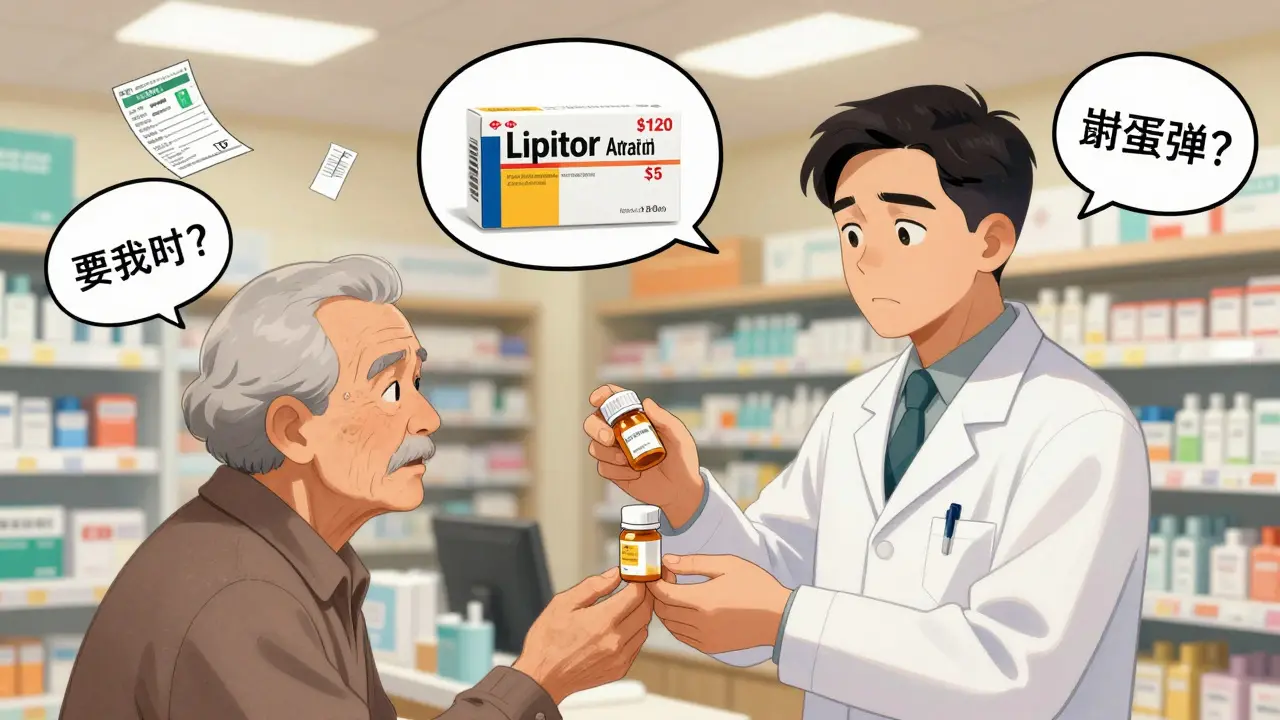
In retail pharmacies, substitution is mostly about cost. When a doctor prescribes a brand-name drug like Lipitor, the pharmacist can legally swap it for a generic version like atorvastatin-unless the doctor says "do not substitute" or the patient refuses. This isn’t optional; it’s expected. In 2023, 90.2% of eligible prescriptions in retail settings were filled with generics, saving patients and insurers billions. The law in every state allows this, and insurance plans often require it.
But here’s the catch: the pharmacist doesn’t just swap the pill and walk away. In 32 states, they must tell you verbally. In 18, they need your written consent the first time. That’s because patients get confused. One in seven people think the generic is weaker or less effective-even when it’s chemically identical. Pharmacists spend hours explaining that a generic isn’t a "copy"-it’s the same active ingredient, same dose, same safety profile. Still, misunderstandings happen. A 2023 Consumer Reports survey found 14.3% of patients reported confusion after a substitution, leading to missed doses or unnecessary calls to their doctor.
Insurance plays a huge role. If your plan doesn’t cover the brand name, the pharmacist has to substitute. But if the brand is cheaper than the generic (yes, that happens), or if prior authorization is denied, the pharmacist becomes a negotiator. One retail pharmacist in Ohio told me: "I had a patient who needed lisinopril. The brand was $5, the generic was $12 because of a glitch in the system. I called the insurer three times. The patient cried in the parking lot. That’s not pharmacy work-that’s customer service with a pharmacy license."
How Substitution Works in Hospitals
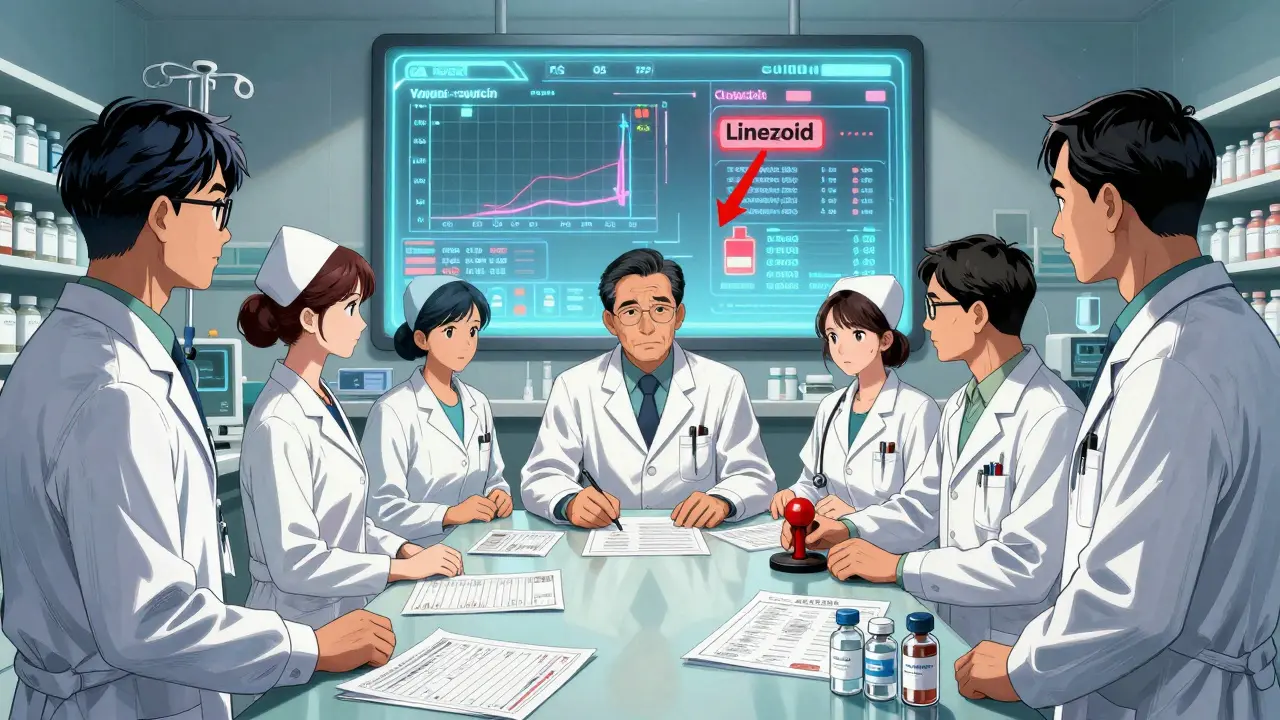
Hospital pharmacies don’t substitute at the counter. There’s no patient standing there asking, "Why am I getting a different pill?" Instead, a committee-called the Pharmacy and Therapeutics (P&T) committee-makes the call. This group includes pharmacists, doctors, nurses, and sometimes infection control specialists. They review drugs for safety, effectiveness, and cost. Then they decide which medications become the hospital’s standard.
For example, if a hospital wants to reduce the risk of C. diff infections, the P&T committee might switch from broad-spectrum antibiotics to narrower ones. Or, they might replace one anticoagulant with another that’s cheaper and just as safe. These aren’t random swaps. They’re clinical decisions based on data, not insurance forms. A 2022 ASHP survey showed 89.7% of hospitals have formal protocols covering 15 to 200 drug classes. And when a substitution happens, the doctor gets notified within 24 hours-required by Joint Commission standards.
What’s more, hospital substitutions aren’t limited to pills. About 68% of therapeutic interchanges involve IV drugs, biologics, or compounded medications. You won’t see that in a retail pharmacy. Why? Because retail mostly deals with oral solids-pills and capsules. Hospitals handle complex cases: cancer patients on IV chemo, ICU patients on vasopressors, newborns on specialized formulas. These aren’t things you can swap without clinical oversight.
Who Decides? The Power Difference
In retail, the pharmacist has legal authority to substitute. They’re acting as a licensed professional under state law. Their job is to make sure the right drug gets to the patient at the right price. But they don’t need to consult the prescriber unless there’s a problem.
In hospitals, the pharmacist doesn’t have that power alone. They can suggest a swap, but the P&T committee votes. Even then, the final order must come from the physician. This isn’t bureaucracy-it’s safety. A patient on dialysis might react differently to one blood pressure drug than another. A kidney transplant patient can’t just switch immunosuppressants without close monitoring. The hospital system is designed to prevent mistakes by layering decisions.
Dr. Lucinda Maine of ASHP put it simply: "Hospital therapeutic interchange operates within a closed-loop system where substitutions are clinically vetted through P&T committees and integrated into care pathways. Retail substitution often occurs as a transactional event driven by third-party payer requirements."
What Gets Substituted? The Drug Differences
Not all drugs are equal when it comes to substitution. In retail, 97.3% of substitutions are for oral pills-things like blood pressure meds, statins, or diabetes drugs. Specialty drugs? Rarely. Only 12.7% of biologics or injectables are eligible for substitution in retail settings, according to Express Scripts. Why? Because these drugs are complex, expensive, and often require special handling. Insurance usually blocks substitution anyway.
In hospitals, it’s the opposite. Nearly 70% of substitutions involve IV medications, injectables, or biologics. A patient might get switched from vancomycin to linezolid for a resistant infection. Or from one insulin to another based on blood sugar trends. These aren’t cost-driven choices-they’re clinical ones. Hospital pharmacists track lab values, renal function, and drug interactions. They’re not just filling orders-they’re managing therapy.
And then there’s the 340B Drug Pricing Program. Hospitals that serve low-income patients can buy drugs at deep discounts. Many use that savings to create formularies that favor cheaper, equally effective drugs. That’s a major driver of therapeutic interchange. Retail pharmacies don’t have access to 340B pricing, so they rely on generic market competition instead.
What Happens When Patients Move Between Settings?
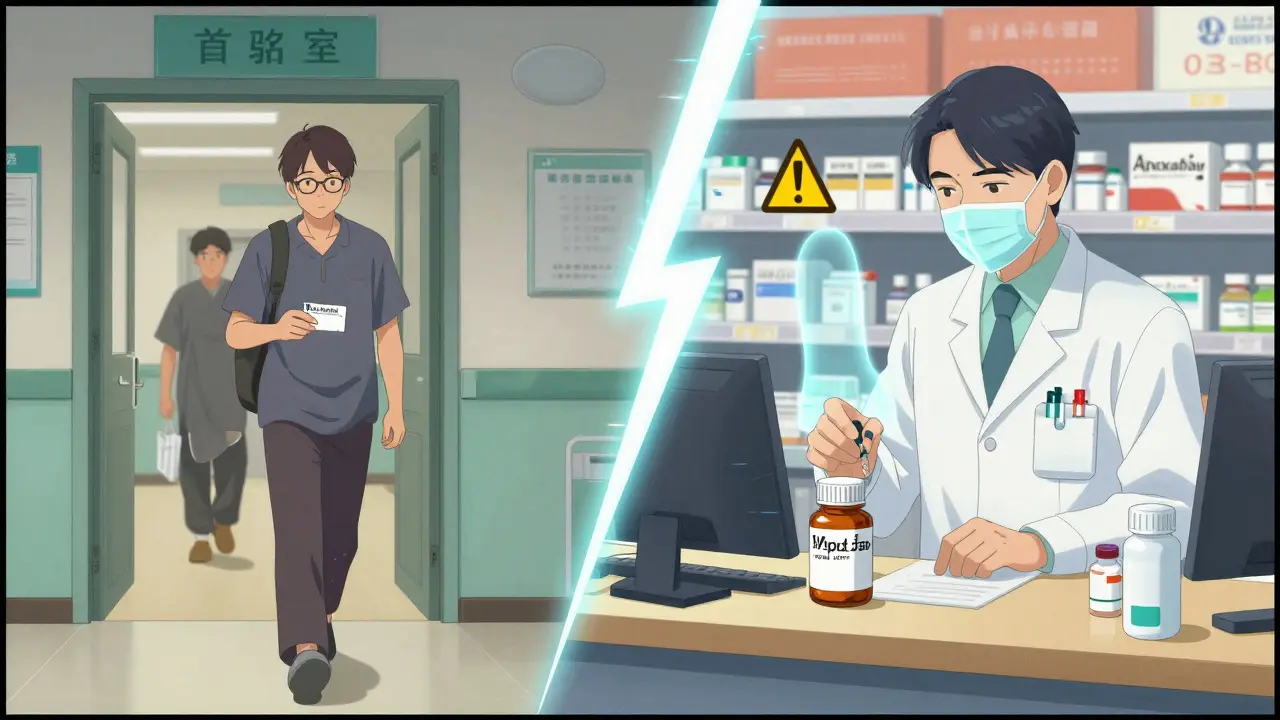
This is where things get dangerous. A patient gets discharged from the hospital on a new medication-maybe a different blood thinner than what they took before. They go home, and their retail pharmacy fills it without knowing the hospital changed it. Or worse: the hospital switched them to a generic, but the discharge summary doesn’t say so. The retail pharmacist sees the brand name on the prescription and dispenses it, not knowing the hospital already switched.
That’s not a minor error. The Institute for Safe Medication Practices found that 23.8% of medication errors during hospital-to-home transitions involve substitution mismatches. In one case, a patient was switched from warfarin to apixaban in the hospital. The discharge note didn’t mention it. The retail pharmacist filled warfarin. The patient ended up in the ER with a dangerous bleed.
That’s why new rules are coming. Starting July 2024, CMS requires all healthcare systems to share substitution history electronically. Epic and Cerner are building tools to show a patient’s full medication history-including which drugs were swapped, where, and why-across hospital and retail systems. By 2025, your pharmacy record should know if your blood pressure pill was changed at the hospital last week.
Skills and Training: Two Different Worlds
Working in retail pharmacy means mastering insurance codes, state laws, and patient communication. New pharmacists spend 3-6 months learning how to navigate formularies, handle prior authorizations, and explain generics without sounding robotic. The most important skill? Listening. Patients don’t care about bioequivalence-they care about cost, side effects, and trust.
Hospital pharmacists need something else: deep clinical knowledge. They need to understand pharmacokinetics, antibiotic stewardship, and how drugs interact with organ failure. They spend 6-12 months training just to understand how P&T committees work. Their job isn’t to answer "Why did I get a different pill?" It’s to answer "Why is this the safest option for this patient right now?"
One hospital pharmacist said: "I spent six months shadowing the ID team before I was allowed to suggest a substitution. I had to know when to push, when to wait, and when to let the doctor keep the original drug-even if it cost more."
What’s Next for Substitution?
The gap between retail and hospital substitution is narrowing. More hospitals now have discharge follow-up programs that call patients after they leave. Some retail chains are partnering with hospitals to review substitution histories before filling new prescriptions. The goal? No more surprises. No more mix-ups. No more patients ending up in the ER because a pill changed without them knowing.
By 2028, Avalere Health predicts 78% of healthcare systems will have integrated substitution protocols. But retail pharmacies will still be the backbone of cost savings. The Generic Pharmaceutical Association estimates $1.7 trillion in savings from generics through 2028. Hospitals will keep optimizing therapy. The difference won’t disappear-it’ll just become invisible. And that’s the point. The best substitution is the one you never notice.
Can a retail pharmacist substitute any prescription?
Not always. Retail pharmacists can substitute generic versions of brand-name drugs only if the prescriber hasn’t marked "dispense as written" and the patient doesn’t refuse. Some drugs-like biologics, controlled substances, or those with narrow therapeutic windows-are exempt from substitution in most states. Insurance rules also play a role; if the generic isn’t on the formulary, the pharmacist may need to get prior authorization.
Why do hospitals use therapeutic interchange instead of simple generic substitution?
Hospitals focus on clinical outcomes, not just cost. Therapeutic interchange means swapping one drug for another that’s not necessarily a generic but is considered equally effective and safer for the patient’s condition. For example, switching from one antibiotic to another to reduce side effects or prevent resistance. These decisions are made by a team of clinicians based on evidence, not insurance formularies.
Are generic drugs as safe as brand-name drugs in both settings?
Yes. The FDA requires generics to have the same active ingredient, strength, dosage form, and route of administration as the brand name, and they must meet the same strict manufacturing standards. The difference isn’t in safety-it’s in how and why they’re substituted. Retail substitution is often driven by cost and insurance rules; hospital substitution is driven by clinical need and team-based decision-making.
What’s the biggest risk when substitution happens between hospital and retail settings?
The biggest risk is lack of communication. If a patient is switched to a different drug in the hospital but the discharge instructions don’t reflect it, the retail pharmacy may fill the original prescription. This mismatch can lead to overdosing, underdosing, or dangerous drug interactions. That’s why new federal rules require electronic sharing of substitution history between systems by 2025.
Do pharmacists in both settings get paid differently for substitution?
No, pharmacists aren’t paid extra for substitution. In retail, the financial incentive comes from the pharmacy’s bottom line-generics cost less, so margins are higher. In hospitals, substitution helps reduce overall drug spending, which benefits the institution. But individual pharmacists don’t get bonuses for swapping drugs. Their reward is better patient outcomes and safer care.
Can patients refuse a substitution in a hospital?
Patients can ask questions and express concerns, but they don’t have the same right to refuse substitution in a hospital as they do in retail. In a hospital, substitutions are part of the treatment plan approved by the care team. If a patient refuses a recommended drug, the medical team will reassess and may choose an alternative. The decision is clinical, not transactional.
Alexandra Enns
January 23, 2026 AT 21:10Let me stop you right there-this whole 'therapeutic interchange' thing is just bureaucratic overkill. In Canada, we swap meds all the time without a committee. Pharmacists are trained professionals, not order-takers. Why do we need 12 people to approve a blood pressure swap? It’s not rocket science. The FDA says generics are identical. End of story. This over-regulation is why our healthcare costs are insane.
Marie-Pier D.
January 23, 2026 AT 22:42Wow, this is so important to understand! 🙌 I had no idea hospitals operated like this-so much more thoughtful and team-based. And the part about patients crying in the parking lot because of a pricing glitch? My heart broke. Pharmacists are the unsung heroes of healthcare. 💙 We need more empathy, not more bureaucracy. Thank you for writing this!
blackbelt security
January 24, 2026 AT 10:35Real talk: if your insurance won’t cover the generic, you’re not getting the brand. Period. This isn’t a conspiracy-it’s capitalism. Hospitals play a different game because they’re funded differently. Stop romanticizing the system. The system works. It’s just not designed to make you feel good.
Patrick Gornik
January 26, 2026 AT 01:33Ah, the grand dichotomy: transactional commodification versus clinical sanctity. The retail pharmacy is the neoliberal echo chamber-where the invisible hand of the insurer dictates the pharmacokinetics of your existence. Meanwhile, the hospital is a cathedral of therapeutic hermeneutics, where the P&T committee, like a modern-day Oracle of Delphi, interprets the sacred scrolls of clinical trials and formulary economics. But tell me-when the algorithmic arbitrage of 340B pricing collides with the ontological anxiety of the patient who just wants their old pill back… who’s really the guardian of the pharmakon? Is it the pharmacist? The physician? Or the algorithm that knows your blood pressure better than you do?
Tommy Sandri
January 26, 2026 AT 12:05This is a well-researched and clearly articulated analysis of two distinct models of pharmaceutical management. The distinction between retail substitution and therapeutic interchange is not merely operational-it reflects deeper philosophical differences in healthcare delivery. The institutional safeguards in hospitals reflect a commitment to systems-based safety, while retail models prioritize accessibility and cost-efficiency. Both are valid, but neither is sufficient alone. Integration, as mentioned, is the logical next step.
Juan Reibelo
January 27, 2026 AT 04:44Okay, but… what about the patients who don’t know they were switched? I had a cousin who got discharged on a new anticoagulant, and her pharmacy filled the old one-because the discharge summary didn’t say anything. She almost bled out. This isn’t theory-it’s life-or-death. And now they’re finally fixing it? Took long enough. The tech is here. The data’s there. Why are we still waiting for 2025?
Josh McEvoy
January 27, 2026 AT 06:17bro. i just got my blood pressure med switched and i didnt even notice. i thought it was the same pill. then i checked the label and it said "atorvastatin" instead of "lipitor". i was like… wait. did they just swap my life? lol. no biggie tho. im chill. 🤷♂️💊
venkatesh karumanchi
January 28, 2026 AT 20:17This is beautiful. In India, we don’t have the luxury of brand-name drugs for most people. Generics save lives daily. But I’ve seen doctors hesitate to switch even when generics are perfect-because patients fear "fake medicine." We need education, not just policy. Thank you for showing that both systems, though different, aim for the same thing: better health.
lorraine england
January 29, 2026 AT 22:29Let’s be real-most people don’t care how it works, they just want to feel safe. If you tell them the generic is "the same," they still think it’s a knockoff. And guess what? The pharmacist who spends 20 minutes explaining bioequivalence? They’re not getting paid extra. This whole system is built on trust… and we’re failing at it. Stop blaming patients. Fix the communication.
Kevin Waters
January 30, 2026 AT 11:34Great breakdown. One thing missing: the role of pharmacists in both settings as patient advocates. In retail, they fight insurers. In hospitals, they fight outdated protocols. Either way, they’re the ones who catch the errors. We need to stop treating them as order-fillers and start recognizing them as clinical partners. The future of safe medication use depends on it.