
Survivorship Plans: Follow-Up, Screening, and Late Effects After Cancer
 Feb, 27 2026
When cancer treatment ends, many survivors assume the hardest part is over. But for many, the real challenge begins now. Without a clear plan, survivors often fall into a gap where no one is sure who’s responsible for their care. Primary care doctors don’t know what treatments you had. Oncologists have moved on to the next patient. And you’re left wondering: What do I do now?
What Is a Survivorship Care Plan?
A survivorship care plan is not just a piece of paper. It’s a roadmap. Created after your cancer treatment ends, it has two core parts: a detailed summary of what you went through, and a clear schedule for what comes next. The Institute of Medicine first defined this in 2006, calling it essential to prevent care from falling through the cracks. Today, nearly all major cancer centers in the U.S. use them. But here’s the problem: only 42% of survivors actually get a full, usable plan with both parts.The treatment summary includes specifics: the type and stage of your cancer, exact dates of chemo, radiation, or surgery, drug names and doses, whether you were in a clinical trial, and contact info for every provider who treated you. This isn’t fluff. It’s critical data. A primary care doctor needs to know if you got anthracycline chemo - because that raises your risk of heart problems years later. They need to know if you had chest radiation - because that changes your mammogram schedule.
The follow-up plan tells you what to do next. It lists when you should see your oncologist again, which tests you need, and how often. It also warns you about possible long-term side effects - things that show up months or even years after treatment ends. These aren’t just common side effects. They’re specific risks tied to your exact treatment. For example, if you received more than 250 mg/m² of doxorubicin, you need an echocardiogram every five years to check your heart. If you had radiation to the chest, you need a mammogram every year starting eight years after treatment.
Why Follow-Up Care Matters
Cancer survivors are not cured and forgotten. They’re living with the aftermath. Studies show survivors who get a structured follow-up plan are 37% more likely to receive the right screenings at the right time. They’re also 2.3 times more likely to catch a recurrence early - when it’s still treatable.But it’s not just about cancer coming back. Late effects can be just as dangerous. Radiation to the neck? You’re at higher risk for thyroid cancer. Chemo that damaged your ovaries? Early menopause and bone loss are likely. Stem cell transplant? You could develop chronic graft-versus-host disease that affects your skin, eyes, or liver. These aren’t rare. They’re predictable - if you know what you were given.
The Children’s Oncology Group (COG) has spent 20 years mapping out these risks. Their 2022 guidelines list 112 specific screening recommendations for 15 organ systems affected by 17 different cancer treatments. That means if you got cisplatin as a child, you need hearing tests every year. If you had alkylating agents, you need colonoscopies starting at age 35. These aren’t guesses. They’re based on decades of data from tens of thousands of survivors.
What Screening Should You Expect?
Screening after cancer isn’t the same as routine checkups. It’s targeted. Here’s what common treatments mean for your future screenings:- Anthracycline chemo (like doxorubicin): Heart monitoring every 5 years with an echocardiogram. Dose matters - over 250 mg/m² triggers this.
- Chest radiation (e.g., for Hodgkin lymphoma): Annual mammogram starting 8 years after treatment or at age 25, whichever comes later. Breast MRI may be added if you were treated young.
- Alkylating agents (e.g., cyclophosphamide): Colonoscopy every 5 years starting at age 35. Risk of colorectal cancer increases over time.
- Radiation to the head or neck: Thyroid function tests yearly. Ultrasound if nodules develop.
- Fluorouracil or oxaliplatin: Watch for long-term nerve damage. Tingling or numbness in hands/feet? That’s not normal aging - it’s chemo-induced neuropathy.
- Immunotherapy (checkpoint inhibitors): Risk of autoimmune issues like colitis, thyroiditis, or lung inflammation. Symptoms can appear years later.
These aren’t optional. They’re evidence-based. Skipping a mammogram because “you’re fine” could mean missing a second cancer. Ignoring heart symptoms could lead to heart failure. The plan tells you exactly what to watch for - and when to act.
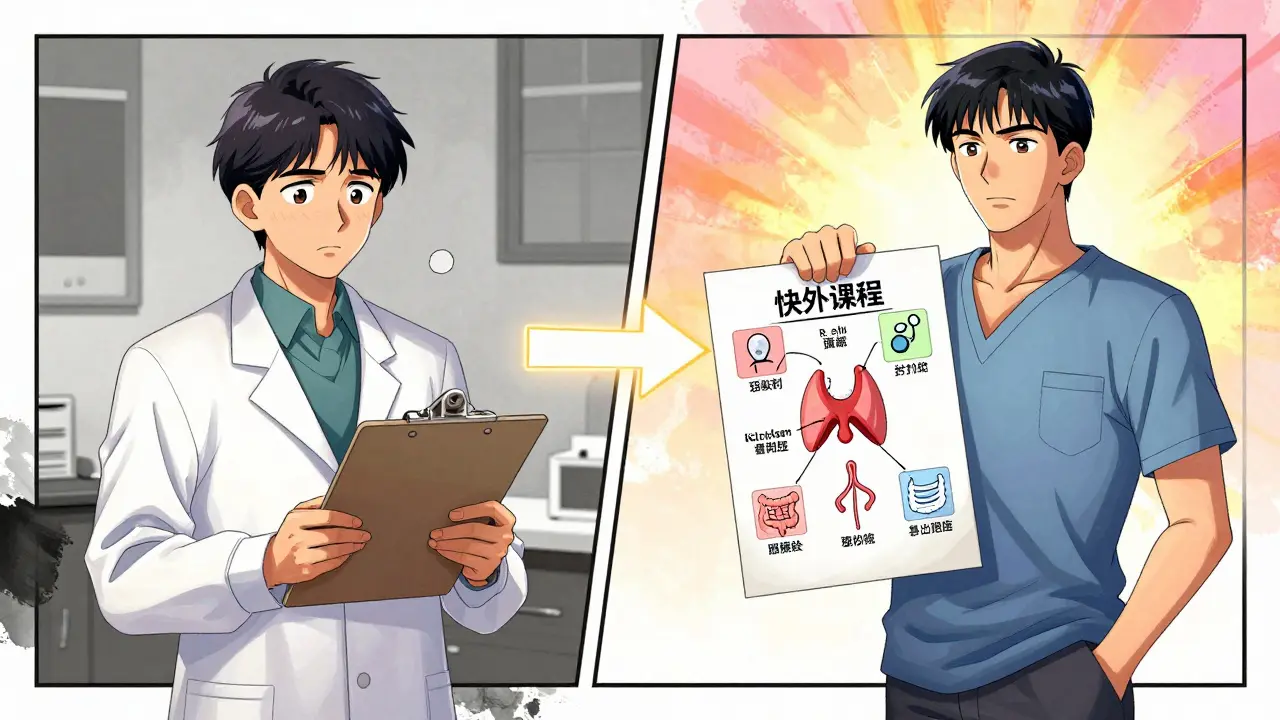
Managing Late Effects
Late effects aren’t just medical. They’re life-changing. Fatigue that never goes away. Memory issues you can’t explain. Sexual dysfunction. Infertility. Weight gain. Depression. These are real. And they’re treatable - if you know they’re coming.Survivorship care plans now include lifestyle guidance too. You’ll see advice like:
- Get at least 150 minutes of moderate exercise per week - not just to stay fit, but to lower your risk of a second cancer and heart disease.
- Avoid alcohol. Even small amounts raise your risk of breast, liver, and esophageal cancers.
- Quit smoking. If you smoked before cancer, your risk of a new tumor is 3x higher. Quitting cuts that risk in half.
- Maintain a healthy weight. Obesity increases risk of recurrence for breast, colon, and endometrial cancers.
- Get vaccinated. Shingles, pneumonia, and flu hit survivors harder. Vaccines aren’t optional - they’re essential.
And don’t forget mental health. Anxiety after cancer is normal. But if it’s keeping you up at night, making you avoid doctors, or stopping you from living - talk to someone. Survivorship isn’t just about surviving. It’s about living well.
The Gap Between Plans and Practice
Here’s the hard truth: even when plans exist, they’re often not used. Only 41% of survivors bring their plan to their primary care visit. Why? Because many plans are generic. Printed on paper. Left in a drawer. Or given at the end of treatment when you’re exhausted and overwhelmed.And providers don’t always know what to do with them. A 2021 study found 68% of primary care doctors feel unprepared to manage cancer survivors without specific guidance. That’s why the plan must be clear, actionable, and shared.
Technology is helping. Tools like OncoLife and ASCO’s digital builder now generate personalized plans in under 10 minutes using your treatment history. These plans sync with your EHR and can be emailed directly to your doctor. Some even send automated reminders for screenings. But only 37% of new plans are digital. Most are still paper-based - and that’s a problem.
Another issue? Payment. Medicare pays $127.50 to create a survivorship plan. The real cost? Around $335. That’s why many clinics don’t do it - or do it poorly. Only 28% of Medicare contractors have a code that covers the full cost. Community hospitals? Only 58% have formal programs. Academic centers? Nearly 100%. That’s a massive gap in care.
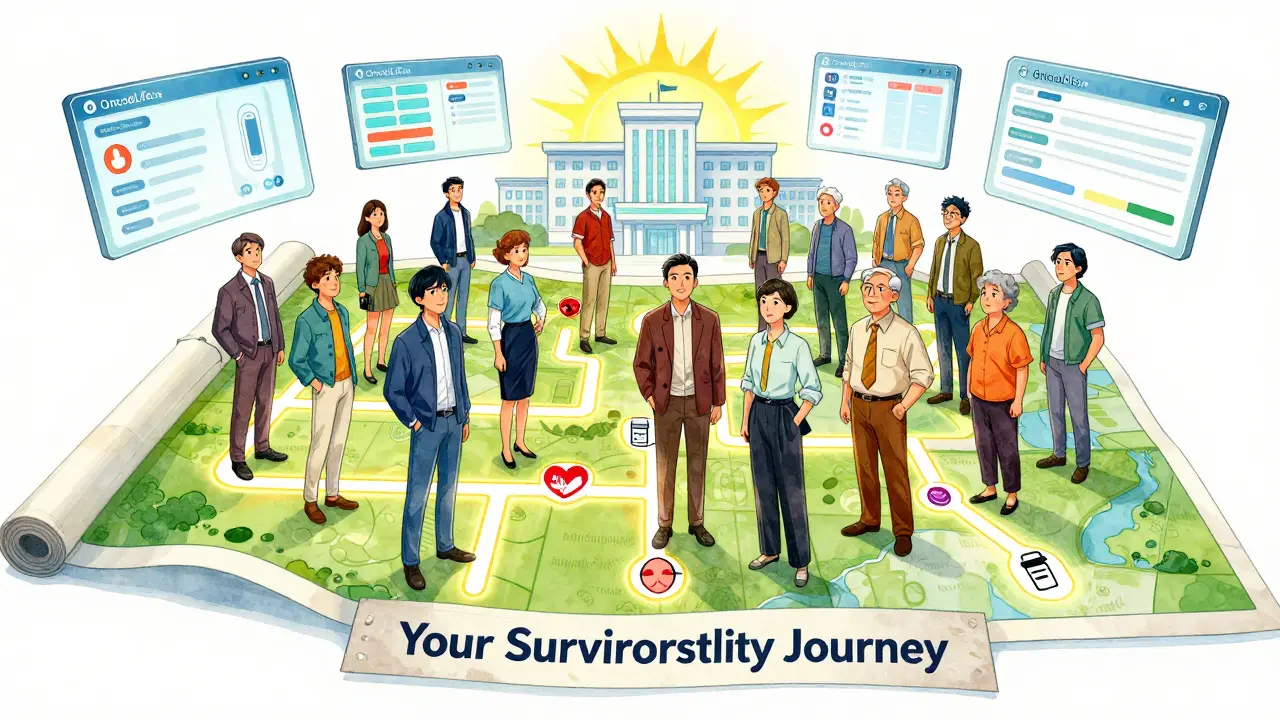
What You Can Do Today
You don’t have to wait for your doctor to give you a plan. Here’s what to do:- Ask for your treatment summary. Request it in writing. Include every drug, dose, date, and procedure.
- Ask for the follow-up plan. Specifically: “What tests do I need, how often, and why?”
- Ask who’s responsible. “Who do I see for routine care? Who do I call if I have symptoms?”
- Bring the plan to your next doctor visit - even if it’s your primary care provider.
- Update it. If you get a new diagnosis, start a new medication, or have a side effect, update the plan.
If your cancer center doesn’t offer one, use the free OncoLife tool from Livestrong and the University of Pennsylvania. Answer 35 questions about your treatment. It generates a personalized plan with 98% accuracy compared to expert guidelines. Print it. Share it. Use it.
The Future of Survivorship Care
The field is changing. New guidelines now include risks from CAR-T therapy and immunotherapy - treatments that didn’t exist 10 years ago. AI is being used to predict who’s at highest risk for heart damage or secondary cancers. Genetic testing is helping tailor screening based on your DNA, not just your chemo history.But the biggest shift? Moving from one-size-fits-all to risk-adapted care. Leading centers now stratify follow-up intensity. A survivor with low-risk treatment gets fewer tests. Someone with multiple high-risk exposures gets more. It’s smarter. More efficient. And it saves lives.
Still, disparities remain. Only 31% of safety-net hospitals offer full survivorship plans. Rural patients? Often left behind. The system isn’t perfect. But you have power. You can ask. You can demand. You can use your plan.
Survivorship isn’t the end of cancer. It’s the beginning of a new chapter. And you deserve a map.
What’s the difference between a treatment summary and a follow-up plan?
The treatment summary is a detailed record of what cancer treatments you received - including drug names, doses, dates of surgery or radiation, and your cancer diagnosis. The follow-up plan tells you what to do next: when to get screened, what symptoms to watch for, how often to see your doctor, and how to stay healthy long-term. One is history. The other is your roadmap forward.
Do I still need to see my oncologist after treatment ends?
Yes, but not forever. Most survivors see their oncologist every 3-6 months for the first 2-3 years, then yearly after that. After 5 years, many transition to primary care - but only if your survivorship plan clearly says so. Your oncologist is still your expert on cancer-related risks. Don’t stop seeing them until your plan says it’s safe.
Can my primary care doctor manage my follow-up care?
They can - but only if they have your full survivorship plan. Most primary care doctors don’t know what chemo or radiation you had. Without that info, they can’t know what screenings you need. Give them your plan. Ask them to review it with you. If they’re unsure, ask for a referral back to your oncologist.
What if I never got a survivorship care plan?
It’s never too late. Contact your oncology clinic and ask for your treatment history. Then use the free OncoLife tool (oncolife.org) to build your own plan. Input your treatment details - it takes 15 minutes. Print it. Share it with your doctors. It’s better than nothing - and it could save your life.
Are survivorship care plans covered by insurance?
Medicare pays $127.50 for a survivorship care plan, but most clinics say that doesn’t cover the cost of creating it. Many insurers don’t have specific billing codes. Still, the plan itself is free for you. You don’t pay to receive it. If your provider charges you, ask why - and request a copy regardless. Your health is worth more than any fee.
Aisling Maguire
February 28, 2026 AT 05:58Brandie Bradshaw
March 1, 2026 AT 06:17Sophia Rafiq
March 1, 2026 AT 20:04Martin Halpin
March 1, 2026 AT 23:50Ajay Krishna
March 2, 2026 AT 09:43Noah Cline
March 3, 2026 AT 04:57Full Scale Webmaster
March 3, 2026 AT 15:30Lisa Fremder
March 4, 2026 AT 12:59Justin Ransburg
March 4, 2026 AT 14:40Sumit Mohan Saxena
March 4, 2026 AT 16:10Ben Estella
March 4, 2026 AT 22:44Jimmy Quilty
March 5, 2026 AT 10:48Sneha Mahapatra
March 6, 2026 AT 21:19