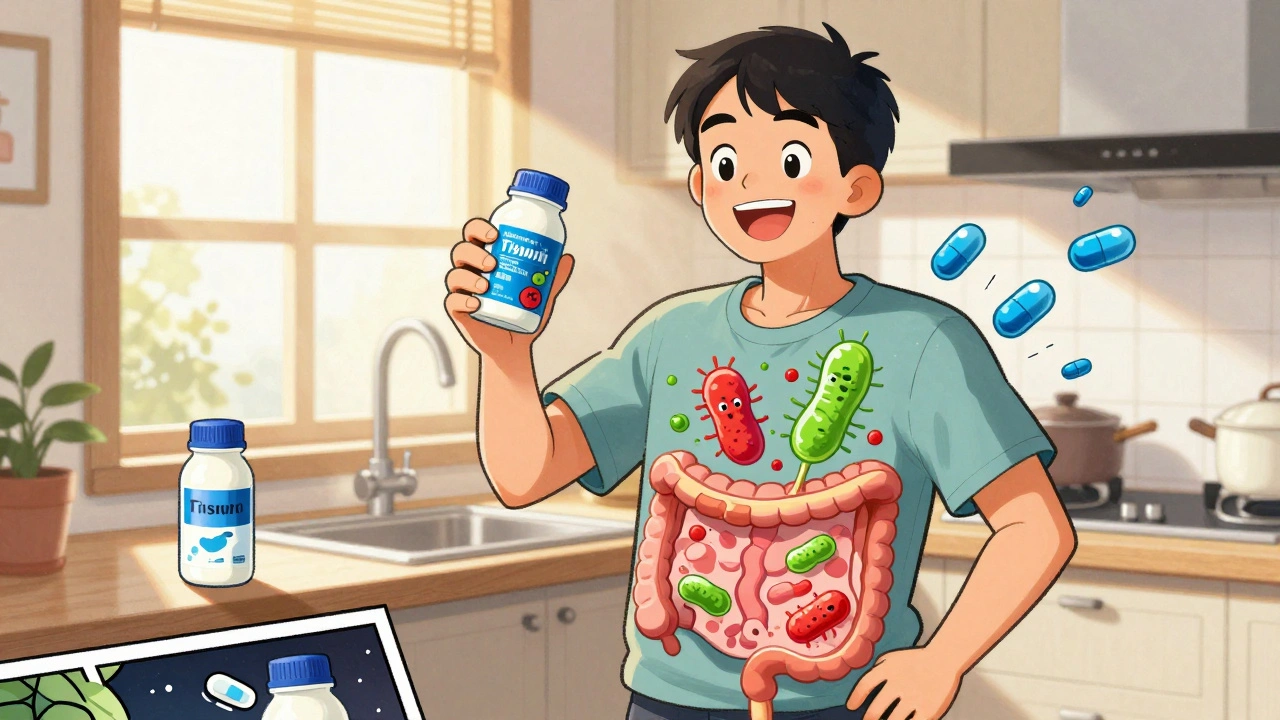
Gut Health During Antibiotics: What Really Happens and How to Protect It
When you take antibiotics, medications that kill harmful bacteria but also wipe out beneficial ones in your digestive tract. Also known as antimicrobials, they’re lifesavers for infections—but they don’t care if they’re killing the good guys too. That’s why your stomach feels off, why you get bloated or diarrhea, and why some people feel tired for weeks after finishing a course. It’s not in your head. It’s your gut microbiome, the trillions of bacteria, fungi, and viruses living in your intestines that control digestion, immunity, and even mood being hit like a storm.
Here’s the thing: not all antibiotics hit the same. Some, like amoxicillin or ciprofloxacin, are like sledgehammers—they wipe out wide swaths of good and bad bugs. Others, like narrow-spectrum ones, are more like scalpels. But even the precise ones still cause damage. Studies show your microbiome can take months to recover, and in some cases, it never fully goes back to how it was. That’s why probiotics, live beneficial bacteria you take to help restore balance matter. Not all of them work, though. Some are just sugar pills with fancy labels. The ones that actually help—like Lactobacillus rhamnosus GG or Saccharomyces boulardii—have been tested in real people taking antibiotics. They cut diarrhea risk by up to 60%. And they’re not magic. You need to take them at the right time: at least two hours after your antibiotic, so the drug doesn’t kill them before they get to work.
Food matters more than you think. Yogurt with live cultures? Sure, it helps. But it’s not enough. You need fiber—real, whole-food fiber from vegetables, legumes, and whole grains. That’s what the good bacteria feed on. No fiber? Even the best probiotic can’t stick around. And sugar? It feeds the bad guys. Avoid it while you’re on antibiotics. Skip the energy bars, sweetened drinks, and processed snacks. Your gut isn’t asking for a treat—it’s asking for fuel to rebuild.
Some people swear by prebiotics—foods like garlic, onions, and bananas that feed good bacteria. They’re helpful, but don’t overdo them if you’re already bloated. Start slow. And skip the fancy supplements with 20 strains if you’re just starting out. Stick to one or two proven strains and real food. Your body doesn’t need complexity. It needs consistency.
What you’ll find in the posts below isn’t theory. It’s what works in real life. You’ll see how to time your fiber without messing up your meds, which probiotics actually help during antibiotic treatment, and why some so-called "gut healing" products are just marketing. You’ll also learn what not to do—like popping random supplements or ignoring symptoms that could mean something worse. This isn’t about feeling better tomorrow. It’s about protecting your long-term digestive health so antibiotics don’t leave you paying the price for years.