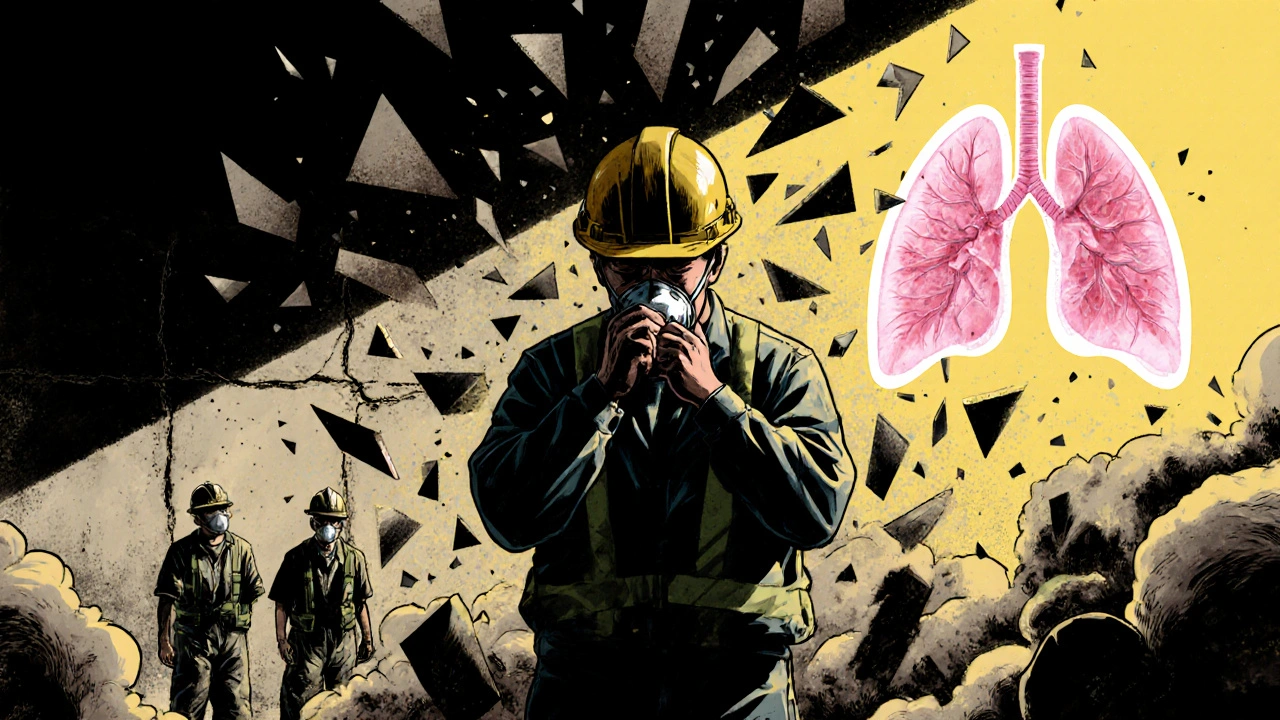
Silicosis: Causes, Risks, and What You Need to Know
When you breathe in tiny particles of silica dust, a fine powder found in sand, rock, and soil that becomes airborne during cutting, grinding, or drilling. It’s not just dirt—it’s a silent threat to your lungs. Over time, this dust doesn’t clear out. Instead, it triggers scarring in the lungs, leading to a condition called silicosis, a progressive and irreversible lung disease caused by long-term exposure to crystalline silica. Also known as miner’s lung or stone mason’s disease, it doesn’t show up overnight. But once it starts, it keeps getting worse.
Silicosis isn’t rare. It’s one of the most common work-related lung diseases worldwide. Workers in construction, mining, sandblasting, stone cutting, and foundries are at highest risk. Even people doing home projects like grinding concrete or drilling tiles can be exposed if they don’t use proper protection. The problem? You can’t see or smell the dust. By the time you feel short of breath or a persistent cough, the damage is already done. There’s no cure. Treatment focuses on slowing the disease, managing symptoms, and preventing further exposure.
What makes silicosis especially dangerous is how it interacts with other health issues. People with silicosis are more likely to develop tuberculosis, lung cancer, and chronic bronchitis. It also increases the risk of autoimmune diseases like rheumatoid arthritis. That’s why understanding your exposure history matters—not just for diagnosis, but for long-term monitoring. If you’ve worked with stone, concrete, or sand for years, even if you’re not currently working, you should talk to a doctor about lung screening.
There’s good news: silicosis is 100% preventable. Simple steps—wearing respirators, using water sprays to control dust, and ensuring good ventilation—can stop it before it starts. Employers are required to follow safety rules, but you’re your own best advocate. If you’re worried about your lungs, don’t wait for symptoms. Know your risks. Ask about exposure levels. Get tested.
The posts below cover real cases, medical insights, and practical advice related to lung health, workplace safety, and conditions that often appear alongside silicosis. You’ll find information on how silica exposure connects to other respiratory illnesses, what tests doctors use to detect lung damage, and how to protect yourself if you’re in a high-risk job. This isn’t just about one disease—it’s about understanding how the air you breathe affects your body, and what you can do to keep it healthy.