
Telepharmacy and Safety Outcomes: What Recent Studies Reveal
 Dec, 20 2025
Telepharmacy Safety Risk Calculator
Telepharmacy Safety Assessment
Calculate your estimated medication safety risk based on your telepharmacy setup. Based on studies showing telepharmacy error rates between 0.2% and 0.8%, this tool helps you understand how different factors impact safety.
Your Safety Assessment
When you live in a rural town with no pharmacy within 50 miles, getting your prescription filled isn’t just inconvenient-it can be dangerous. Missing a dose of blood pressure medication because you can’t drive to the nearest town? That’s not a hypothetical. It’s real. And for thousands of people across the U.S., telepharmacy is changing that. But does it actually keep people safe? Or is it just a quick fix with hidden risks?
What Telepharmacy Actually Does
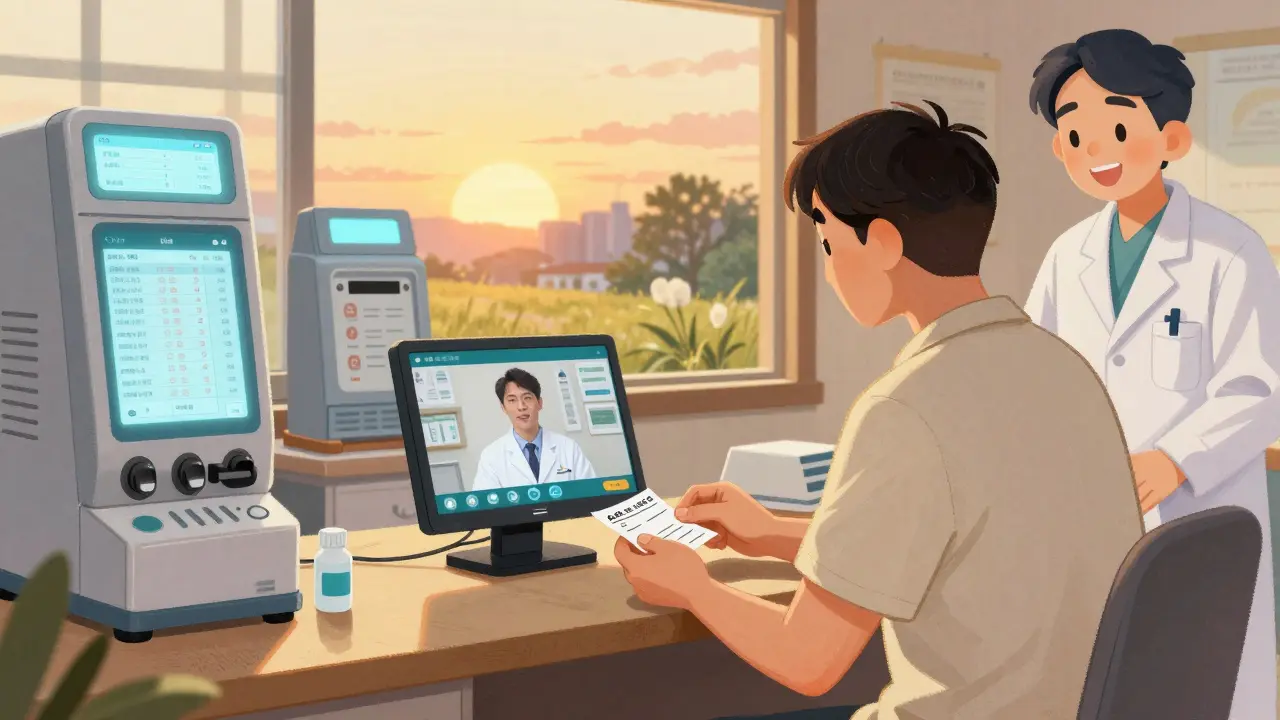
Telepharmacy isn’t just video calls with a pharmacist. It’s a full system: remote dispensing, electronic prescriptions, video consultations, and automated verification-all done from a central pharmacy to multiple rural clinics or community centers. Think of it like a pharmacy branch that doesn’t need a physical building. A pharmacist in a city hub reviews prescriptions, counsels patients via secure video, and approves medications using digital systems that track inventory and flag potential drug interactions.
This model took off after 2020. Before the pandemic, only a handful of states allowed it. By 2023, 28 states had clear rules in place. The goal? Bring pharmacy care to places where pharmacists won’t live. Places like the Navajo Nation, small towns in West Virginia, or isolated areas in Montana. And it’s working. In 2022, 42% of health shortage areas had telepharmacy access-up from just 11% in 2019.
How Safe Is It? The Numbers Don’t Lie
One of the biggest fears people have is that remote care = less careful care. But studies show otherwise. A 2021 review of six major studies found that telepharmacy medication error rates were between 0.2% and 0.8%. Traditional pharmacies? Between 0.1% and 0.7%. The difference? Statistically meaningless.
Here’s what’s surprising: telepharmacy systems actually caught more errors in some cases. One South Dakota hub reported catching 1.2 errors per 100 prescriptions through remote verification. That’s on par with in-person pharmacies. Why? Because automated systems flag interactions humans might miss. A patient on warfarin getting a new antibiotic? The system screams a warning. A pharmacist sees it, calls the patient, and adjusts the dose-before a hospital visit happens.
And it’s not just about errors. A 2021 study in Telemedicine and e-Health tracked 3,782 patients over a year. Those with telepharmacy access had a 12.9% increase in hospitalizations. Those without? 40.2%. That’s not a coincidence. It’s access saving lives.
The Catch: It’s Not Perfect
But let’s not pretend telepharmacy is flawless. There are real gaps.
One patient in North Dakota had an allergic reaction because the video connection dropped during her consultation. The technician didn’t see her rash. The pharmacist didn’t hear her wheeze. That’s not a system failure-it’s a human one. And it’s happened before.
Studies also show that pharmacists miss non-verbal cues. A patient fidgeting, avoiding eye contact, or hesitating before answering questions might be hiding misuse or confusion. Dr. Jerry Fahrni, writing in the Journal of the American Pharmacists Association, points out: “You can’t smell a patient’s breath for alcohol, or see if they’re shaking from withdrawal, through a screen.”
And then there’s training. Not all telepharmacy sites are equal. A 2022 study found that sites with trained technicians had 22% fewer errors than those without. One Indian Health Service program reduced errors to 0.45% by requiring dual verification for high-risk drugs like insulin and opioids. That’s better than the national average. But not every rural clinic has the budget for that.

Who’s Using It-and Why They Love It
Patients aren’t just accepting telepharmacy. They’re depending on it.
A Reddit thread from 2023 with 142 rural users showed 78% said telepharmacy improved their access. One man from Montana said video chats about his warfarin dosing “probably prevented at least two ER visits.” Another woman in Alabama, who can’t drive due to mobility issues, now gets her pain meds delivered with a pharmacist on the line. No more waiting for a ride. No more skipping doses.
But not everyone is happy. A 2022 survey of 450 users found that while 76.4% were satisfied, nearly 30% worried the pharmacist couldn’t fully assess their condition. That’s not fear of tech-it’s fear of being overlooked. And it’s valid.
The Tech Behind the Safety
What makes telepharmacy work isn’t just a webcam. It’s a whole infrastructure.
- High-definition video (minimum 720p) with secure, HIPAA-compliant connections
- Electronic health record integration so pharmacists see full medication histories
- Automated dispensing machines that only release meds after remote pharmacist approval
- Redundant internet lines-because if the connection drops during a critical review, the system doesn’t just freeze. It alerts backup staff.
Companies like MedsAI are now adding AI tools that predict adverse drug events before they happen. Early trials showed an 18.7% improvement in spotting dangerous combinations. That’s not science fiction. It’s happening now.

Regulations Are Playing Catch-Up
Here’s the messy part: rules vary wildly. In some states, telepharmacy is clearly legal and regulated. In others? It’s a gray zone. As of early 2025, 22 states still don’t have clear laws. That means a pharmacist in Texas can legally run a telepharmacy for a clinic in Oklahoma-but not in neighboring Arkansas.
The federal government is stepping in. In late 2022, Medicare expanded reimbursement for telepharmacy services under Part D. That’s huge. It means more clinics can afford to set up. But with reimbursement comes new rules: mandatory reporting of adverse events, standardized training, and audits.
The FDA’s Sentinel Initiative launched in January 2023 to track telepharmacy-related drug reactions. And PCORI is funding a $3.2 million, three-year randomized trial across 12 rural communities to finally answer the big question: Is telepharmacy as safe as in-person care? Results are due in 2026.
What’s Next? The Road to Parity
By 2026, industry analysts predict telepharmacy will match traditional pharmacy safety levels. That’s not hype. It’s based on data. As AI tools get smarter, video quality improves, and training becomes standard, the gaps will shrink.
But there’s one barrier no tech can fix yet: broadband. In parts of Appalachia, the Dakotas, and the Deep South, internet speeds are still too slow for reliable video. Without that, telepharmacy fails. No matter how good the system, if the connection drops, someone’s medication might be delayed-or worse, given incorrectly.
That’s why the American Pharmacists Association set a goal: establish national safety standards for telepharmacy by 2025. It’s not about controlling the tech. It’s about making sure every patient, no matter where they live, gets the same level of care.
Final Thoughts: A Tool, Not a Fix
Telepharmacy isn’t the end-all solution. It’s a tool. A powerful one. It’s brought pharmacy care to places that had none. It’s reduced errors. It’s cut hospital visits. It’s saved lives.
But it’s not magic. Poor internet, undertrained staff, and lack of oversight can still lead to harm. The key isn’t to replace in-person care-it’s to extend it. To make sure every patient, whether they’re in downtown Chicago or a remote Navajo village, has access to a pharmacist who sees them, hears them, and knows their meds.
The evidence says: when done right, telepharmacy is safe. When done poorly, it’s risky. The question isn’t whether it works. It’s whether we’re willing to make it work for everyone.
Is telepharmacy safe compared to in-person pharmacies?
Yes, when properly implemented. Multiple studies show telepharmacy medication error rates are comparable to traditional pharmacies-typically below 1%. Some systems even catch more errors due to automated alerts and remote double-checks. However, safety depends on strong technology, trained staff, and reliable internet. Poor connections or inadequate training can increase risks.
Can telepharmacy reduce hospitalizations?
Yes. A 2021 study found patients with access to telepharmacy had a 12.9% increase in hospitalizations over a year, compared to 40.2% for those without access. This is largely because telepharmacy improves medication adherence and allows pharmacists to catch dangerous interactions early-especially in rural areas where patients previously couldn’t get timely care.
What are the biggest risks of telepharmacy?
The biggest risks are poor video quality, unreliable internet, and lack of staff training. Pharmacists can’t detect non-verbal signs of distress-like shaking hands or confusion-through a screen. There’s also a risk of misidentification if identity verification isn’t strict. And without dual verification for high-risk drugs like insulin or opioids, errors can slip through.
Do patients like telepharmacy?
Most do-especially in rural areas. A 2022 survey found 76.4% of users were satisfied. Many say it saved them hours of driving or eliminated missed doses. But nearly 30% expressed concerns that pharmacists couldn’t fully assess their condition remotely. Satisfaction is high, but trust isn’t automatic. It has to be earned through consistent, reliable service.
Is telepharmacy legal everywhere in the U.S.?
No. As of early 2025, 28 states have clear regulations for telepharmacy, but 22 states still lack specific laws. This creates confusion for providers and patients. Some states require video consultations with a pharmacist present during dispensing; others allow technician-led operations with remote oversight. Federal reimbursement rules are expanding, but state-by-state inconsistency remains a major barrier to nationwide adoption.
What’s being done to improve telepharmacy safety?
Several major initiatives are underway. The FDA’s Sentinel Initiative is now tracking adverse drug events linked to telepharmacy. The Patient-Centered Outcomes Research Institute (PCORI) is funding a $3.2 million randomized trial across 12 rural communities to compare safety outcomes. The American Pharmacists Association aims to establish national safety standards by 2025. And AI tools are being tested to predict medication errors before they happen-early results show up to 18.7% improvement.
Jackie Be
December 20, 2025 AT 19:25Theo Newbold
December 21, 2025 AT 12:40Jason Silva
December 21, 2025 AT 14:53Christina Weber
December 22, 2025 AT 10:27Jon Paramore
December 23, 2025 AT 15:25Michael Ochieng
December 25, 2025 AT 12:23Swapneel Mehta
December 25, 2025 AT 19:55Jay lawch
December 26, 2025 AT 10:28Stacey Smith
December 27, 2025 AT 18:18John Hay
December 28, 2025 AT 22:57Adrian Thompson
December 29, 2025 AT 21:03Cara C
December 30, 2025 AT 04:23Cameron Hoover
December 31, 2025 AT 10:18Jerry Peterson
December 31, 2025 AT 23:09Orlando Marquez Jr
January 1, 2026 AT 14:13