
Antiemetics and QT Prolongation: Ondansetron Risks and Safer Alternatives
 Dec, 21 2025
QT Prolongation Risk Calculator
Assess Antiemetic Cardiac Risk
This tool calculates QT prolongation risk for common antiemetics based on patient factors and medication choice. It's designed for healthcare professionals making medication decisions.
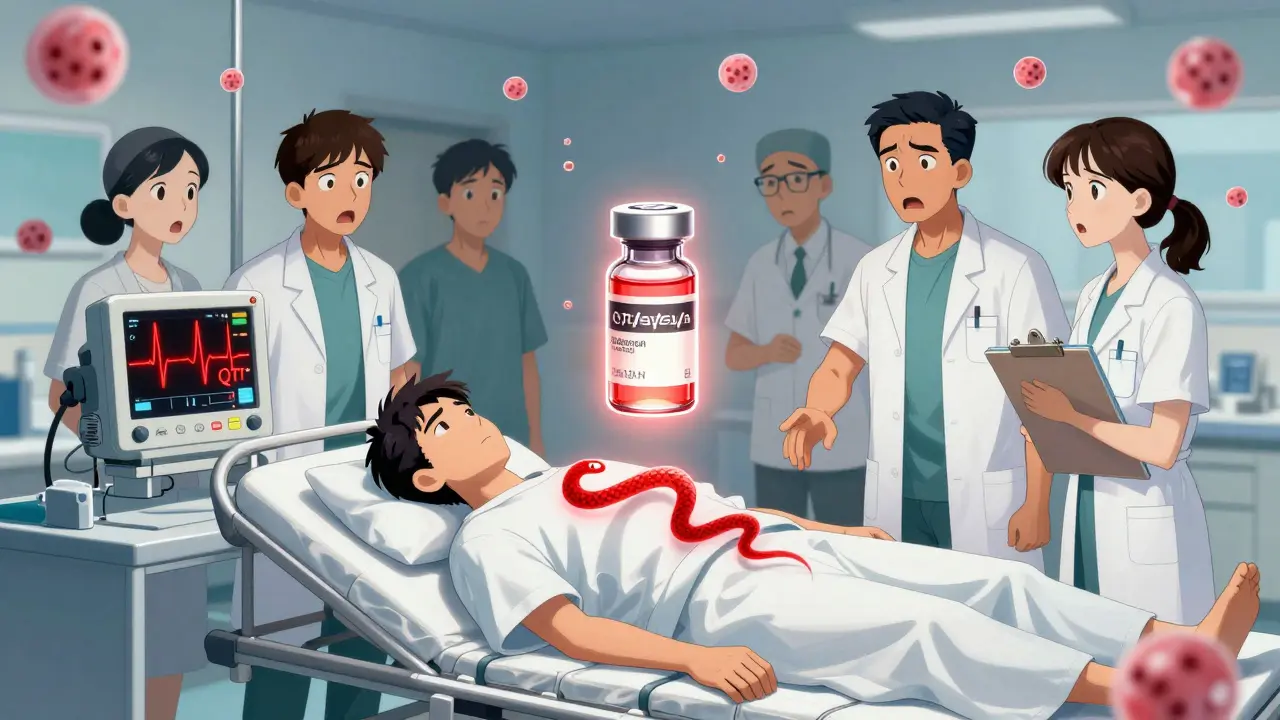
When you're nauseous from chemotherapy or surgery, ondansetron can feel like a lifesaver. It works fast, it’s widely available, and for years, it was the go-to drug for stopping vomiting. But here’s the part no one talks about until something goes wrong: ondansetron can mess with your heart’s rhythm - and sometimes, it can be deadly.
What QT Prolongation Really Means
Your heart doesn’t just beat. It charges and discharges, like a battery. The QT interval on an ECG measures how long it takes for the heart’s lower chambers to recharge after each beat. If that time stretches too long, your heart can slip into a dangerous rhythm called torsades de pointes. It’s rare, but when it happens, it can cause sudden collapse - or death. This isn’t theoretical. Between 2012 and 2022, the FDA recorded 142 cases of torsades linked to ondansetron. Most involved doses over 16 mg given intravenously. Patients didn’t die because they took too much - they died because no one checked their heart first.Why Ondansetron Is Different
Ondansetron blocks serotonin receptors to calm nausea. But it also blocks a key potassium channel in the heart called hERG. That’s the same channel targeted by drugs like citalopram and domperidone - both known for cardiac risks. When hERG is blocked, the heart can’t repolarize properly. The QT interval stretches. And the longer it gets, the higher the risk. Studies show that a single 32 mg IV dose of ondansetron can stretch the QT interval by up to 20 milliseconds. That’s not a small number. For every 10 ms increase in QTc, your risk of a dangerous arrhythmia jumps 5-7%. The FDA stepped in because this wasn’t random - it was predictable, dose-dependent, and avoidable.Dose Matters - A Lot
Here’s the thing: oral ondansetron is far safer than IV. A 24 mg oral dose doesn’t raise the QT interval enough to trigger warnings. But IV? That’s where the danger spikes. The FDA’s 2012 warning was clear: never give a single 32 mg IV dose. And don’t exceed 16 mg in one shot. Yet, years later, many hospitals still used 16 mg routinely. Why? Because it worked too well. But good results don’t justify bad risks. Today, best practice is to cap IV doses at 8 mg for patients with heart problems, low potassium, or a history of long QT syndrome. Some hospitals now require a baseline ECG before even giving 4 mg. That’s not overkill - it’s basic safety.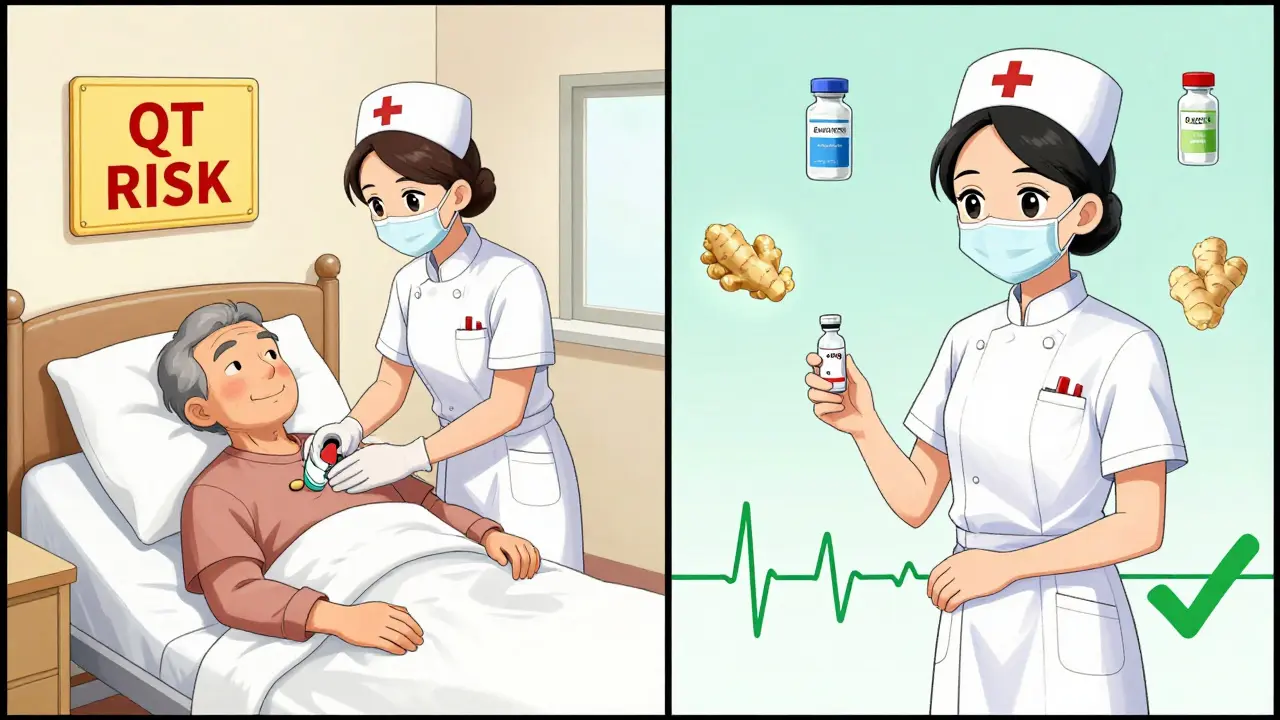
Who’s at Highest Risk?
It’s not just people with known heart conditions. Elderly patients, those with heart failure, kidney disease, or electrolyte imbalances are vulnerable. A 2019 Johns Hopkins case series found that three out of 15 patients over 75 with preexisting heart issues developed QTc intervals over 500 ms after a standard 8 mg IV dose. Women are also more susceptible. QTc thresholds are higher for women (470 ms) than men (450 ms), but their hearts are more sensitive to drug effects. And if you’re taking other QT-prolonging drugs - like certain antibiotics, antidepressants, or antifungals - the risk multiplies. One ER doctor in Massachusetts told her team to stop using ondansetron entirely in heart failure patients. They switched to dexamethasone. No ECG needed. No cardiac monitoring. Same nausea control. Better safety.How Other Antiemetics Compare
Not all antiemetics carry the same cardiac risk. Here’s how they stack up:| Drug | Class | Max QTc Increase (ms) | IV Dose Limit | Cardiac Risk Level |
|---|---|---|---|---|
| Ondansetron | 5-HT3 antagonist | 20 | 16 mg (max single IV) | High |
| Dolasetron | 5-HT3 antagonist | 25 | Not recommended for IV use | Very High |
| Granisetron | 5-HT3 antagonist | 5-8 | 3 mg IV | Low |
| Palonosetron | 5-HT3 antagonist | 9.2 | 0.25 mg IV | Moderate |
| Droperidol | Butyrophenone | 15-20 | 2.5 mg IV | High |
| Prochlorperazine | Phenothiazine | 10-15 | 10 mg IM/IV | Moderate |
Granisetron and palonosetron are now preferred in patients with heart risks. Palonosetron, in particular, has a much lower QT effect and lasts longer - making it ideal for chemotherapy patients who need protection over 24-72 hours. The American Society of Clinical Oncology updated its 2023 guidelines to recommend palonosetron over ondansetron for high-risk patients.

What Hospitals Are Doing Now
Since the FDA warning, adoption of safety protocols has skyrocketed. In 2011, only 37% of U.S. hospitals had formal rules for ondansetron use. By 2022, that number jumped to 92%. Here’s what’s now standard in top hospitals:- Check baseline ECG if the patient is over 65, has heart disease, or takes other QT-prolonging drugs
- Correct low potassium (<3.5 mEq/L) or low magnesium (<1.8 mg/dL) before giving IV ondansetron
- Limit IV dose to 8 mg for high-risk patients; 16 mg max only for healthy adults
- Monitor ECG for 4 hours after IV administration in at-risk patients
- Require pharmacist verification of QTc calculations before high-dose administration
One oncology nurse in Texas told me she used to see ECG changes in 1 out of 5 patients. After protocols changed, it dropped to 1 in 20. That’s not luck - that’s system design.
What You Can Do
If you’re a patient: Ask your doctor if you need an ECG before getting ondansetron. Tell them if you’ve ever had fainting spells, irregular heartbeats, or if you’re on other meds. Don’t assume it’s safe just because it’s common. If you’re a clinician: Stop using 16 mg IV as a default. Use 4-8 mg instead. Combine it with dexamethasone - it’s just as effective and has zero cardiac risk. For high-risk patients, reach for granisetron or palonosetron. They work. They’re safer. And they’re not harder to get.The Bigger Picture
Ondansetron isn’t going away. It’s still the most prescribed antiemetic in the U.S., with over 18 million prescriptions in 2022. But its use is changing. IV use has dropped 22% since 2012. Sales of safer alternatives like palonosetron and aprepitant are growing fast. The future isn’t about banning ondansetron. It’s about using it wisely. Research is already moving toward personalized dosing. A 2022 study found that people with a CYP2D6 poor metabolizer gene variant clear ondansetron slower - meaning they’re more likely to have dangerous QT prolongation. Soon, we may test for that before giving the drug. For now, the message is simple: don’t treat antiemetics like candy. They’re powerful tools. And like any powerful tool, they need respect - and caution.Can I still take ondansetron if I have a heart condition?
If you have a known heart condition, especially long QT syndrome, heart failure, or a history of arrhythmias, avoid IV ondansetron. Oral ondansetron is safer, but even then, talk to your doctor. Alternatives like granisetron, palonosetron, or dexamethasone may be better choices. Never take ondansetron if you’re also on other QT-prolonging drugs without a doctor’s approval.
Is oral ondansetron safe for the heart?
Yes, oral ondansetron carries much lower cardiac risk than IV. The FDA confirms that single oral doses up to 24 mg do not require dosage adjustment for most people. However, if you have multiple risk factors - like low potassium, kidney disease, or are over 65 - even oral doses should be used cautiously. Always check your electrolytes and consider an ECG if you’re unsure.
What are the signs that ondansetron is affecting my heart?
Symptoms of dangerous heart rhythm changes include dizziness, lightheadedness, fainting, palpitations, or a racing or fluttering heartbeat. These can happen within minutes of an IV dose. If you experience any of these after taking ondansetron, seek medical help immediately. Many cases of torsades de pointes are preceded by these warning signs - and they’re treatable if caught early.
Why do some hospitals still use 16 mg IV ondansetron?
Some still do because it’s what they’ve always done - and it works well for nausea. But guidelines changed in 2012, and evidence since then shows the risk outweighs the benefit in most cases. Hospitals that stick to 16 mg doses are operating outside current safety standards. Many have since updated their protocols, but change takes time. If you’re concerned, ask if your hospital follows the FDA’s 2012 recommendations.
Are there natural alternatives to ondansetron for nausea?
There’s no natural substitute that matches ondansetron’s effectiveness for chemotherapy or post-op nausea. But for mild nausea, ginger, peppermint, or acupressure wristbands can help. For moderate to severe cases, dexamethasone is a non-cardiac drug that’s often combined with lower-dose ondansetron or used alone. It’s not a replacement for all cases, but it’s a safer option for high-risk patients.
How do I know if my ECG is normal before taking ondansetron?
A normal QTc interval is under 450 ms for men and under 470 ms for women. If your QTc is above 450 ms (men) or 470 ms (women), you’re at increased risk. Many hospitals now use automated ECG machines that flag borderline or prolonged intervals. If your ECG shows anything above 440 ms and you’re planning to get IV ondansetron, ask if they’ll delay it until you’ve been evaluated.
Charles Barry
December 22, 2025 AT 19:19Let me tell you something they don’t want you to know - ondansetron was never about patient safety. It was about pharma profits. The FDA knew about the hERG blockade since the 90s, but they let it slide because hospitals were addicted to its ‘magic’ nausea control. Now they’re pretending they ‘learned’ something? Please. The same companies that pushed this drug are now selling palonosetron at 10x the price. Wake up. This isn’t progress - it’s rebranding with a side of guilt.
Rosemary O'Shea
December 24, 2025 AT 04:09Oh please. You’re all acting like this is some groundbreaking revelation. I’ve been in oncology nursing since 2008. We stopped using 8mg IV ondansetron routinely in 2015 - not because of the FDA, but because three of our patients coded after chemo rounds. One was a 72-year-old woman with a baseline QT of 440ms. She didn’t survive. We switched to granisetron. No drama. No ECGs. Just… work. The fact that it took a decade for most hospitals to catch up? That’s not negligence. That’s arrogance dressed as protocol.
Kathryn Weymouth
December 25, 2025 AT 15:20It’s important to clarify that the QT prolongation risk is dose-dependent and largely avoidable with proper screening. The FDA’s 2012 warning specifically targeted single IV doses above 16 mg, yet many institutions continued using 16 mg as a standard, ignoring cumulative effects. Studies show that even 8 mg IV can be risky in patients with hypokalemia or concurrent QT-prolonging medications. The real issue isn’t the drug itself - it’s the failure to implement basic cardiac risk assessments. Granisetron and palonosetron aren’t just ‘alternatives’ - they’re the new standard of care for high-risk populations, and guidelines reflect this shift.
Nader Bsyouni
December 26, 2025 AT 19:25Julie Chavassieux
December 27, 2025 AT 01:11Ajay Brahmandam
December 27, 2025 AT 18:32Aliyu Sani
December 28, 2025 AT 10:13Herman Rousseau
December 29, 2025 AT 07:36This is such an important conversation. I’ve seen too many patients get scared away from necessary chemo because they heard ‘ondansetron can kill you’ - but the real danger is NOT treating nausea. The key is balance: screen, don’t scare. Use granisetron for high-risk cases. Check K+ levels. Avoid stacking QT drugs. And for goodness’ sake - don’t give 32mg IV to anyone, ever. Hospitals that adopted protocols saw zero torsades cases in 5 years. This isn’t fear-mongering - it’s smart medicine. 💪🩺
jenny guachamboza
December 30, 2025 AT 18:45