
How to Check Active Ingredients to Avoid Double Dosing in Children
 Dec, 11 2025
Every year, thousands of children end up in emergency rooms because their parents gave them too much of a medicine - not because they meant to, but because they didn’t realize they were giving the same ingredient twice. It’s not laziness or carelessness. It’s confusion. And it’s completely preventable.
Why Double Dosing Happens
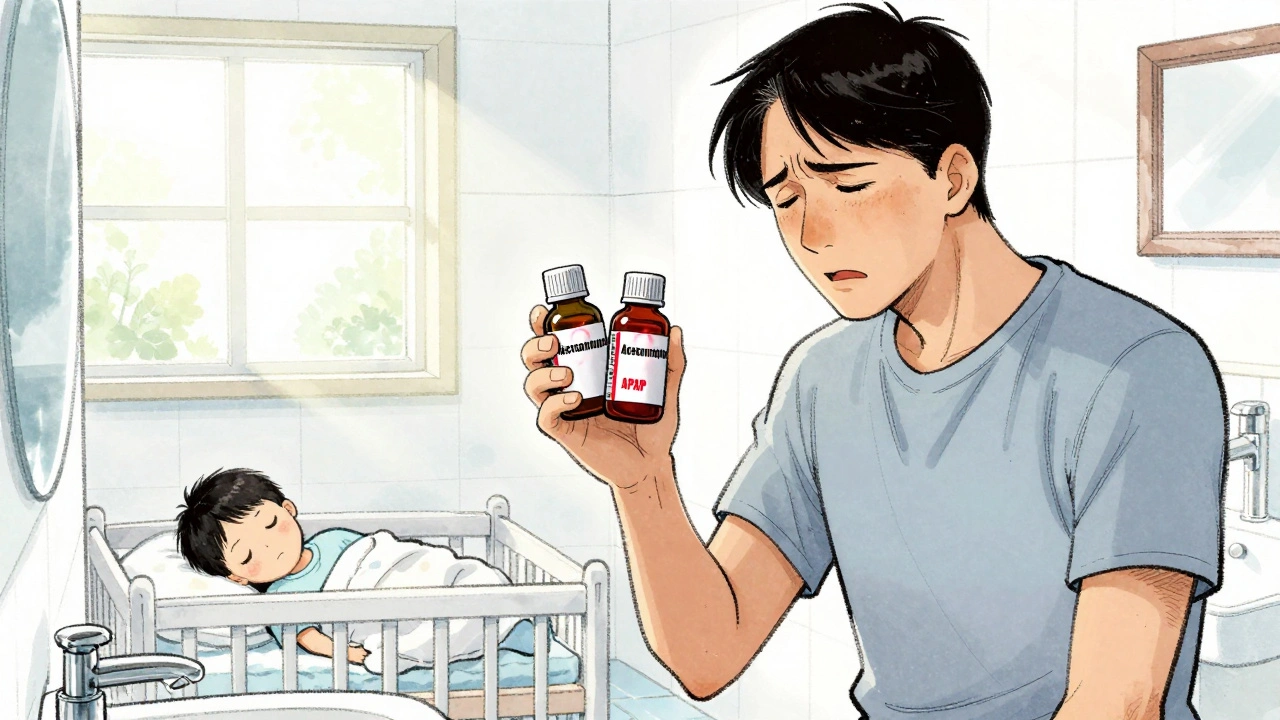
Most parents don’t set out to harm their kids. They’re tired, stressed, and trying to help. One parent gives a fever reducer. Another gives a cough syrup. Neither checks what’s inside. And suddenly, a child has two doses of acetaminophen in two hours - or worse, three. The problem isn’t just with over-the-counter cold medicines. It’s with everything: allergy pills, sleep aids, pain relievers, even some vitamins. Acetaminophen (also called paracetamol or APAP) is in more than 600 products. Ibuprofen is in dozens more. Diphenhydramine, the sleepy-making ingredient in Benadryl, shows up in nighttime cough syrups, sleep aids, and even some cold remedies. A 2023 study found that 89% of multi-symptom cold medicines contain acetaminophen. That means if your child has a cold and you give them a cough syrup and a fever reducer - even if they’re from different brands - you might be giving them double the safe dose. And acetaminophen overdose is the leading cause of acute liver failure in children under six.What You Need to Look For
You don’t need to be a pharmacist. You just need to know three things: active ingredient, strength, and time since last dose. Start by reading the “Active Ingredients” section on the label. It’s usually bolded and near the top. Ignore the brand names. Ignore the flavors. Ignore the claims like “fast-acting” or “gentle on stomach.” Those don’t matter. Only the chemical name does. Here are the most common ones to watch for:- Acetaminophen - also labeled as paracetamol, APAP, or N-acetyl-p-aminophenol
- Ibuprofen - sometimes called Motrin or Advil (but those are brand names)
- Diphenhydramine - found in Benadryl, NyQuil, and many nighttime cough syrups
- Pseudoephedrine - a decongestant in many cold medicines
- Phenylephrine - another decongestant, often used instead of pseudoephedrine
Why Liquid Medications Are Riskier
Liquid medicines are the biggest source of dosing errors. Why? Because parents use the wrong measuring tool. A teaspoon isn’t a teaspoon. A kitchen spoon can hold anywhere from 2.5ml to 7.5ml. The FDA says this variation causes triple dosing in some cases. That’s not a mistake - it’s a hazard. Always use the measuring cup, dropper, or syringe that comes with the medicine. Never guess. Never use a regular spoon. Even if the bottle says “one teaspoon,” use the tool that came with it. That’s the only way you know you’re giving the right amount. Also, pay attention to concentration. A children’s acetaminophen might be 120mg per 5ml. Another might be 160mg per 5ml. They look the same. They taste similar. But one has 33% more medicine. Giving both by accident is like giving a 10-year-old a full adult dose.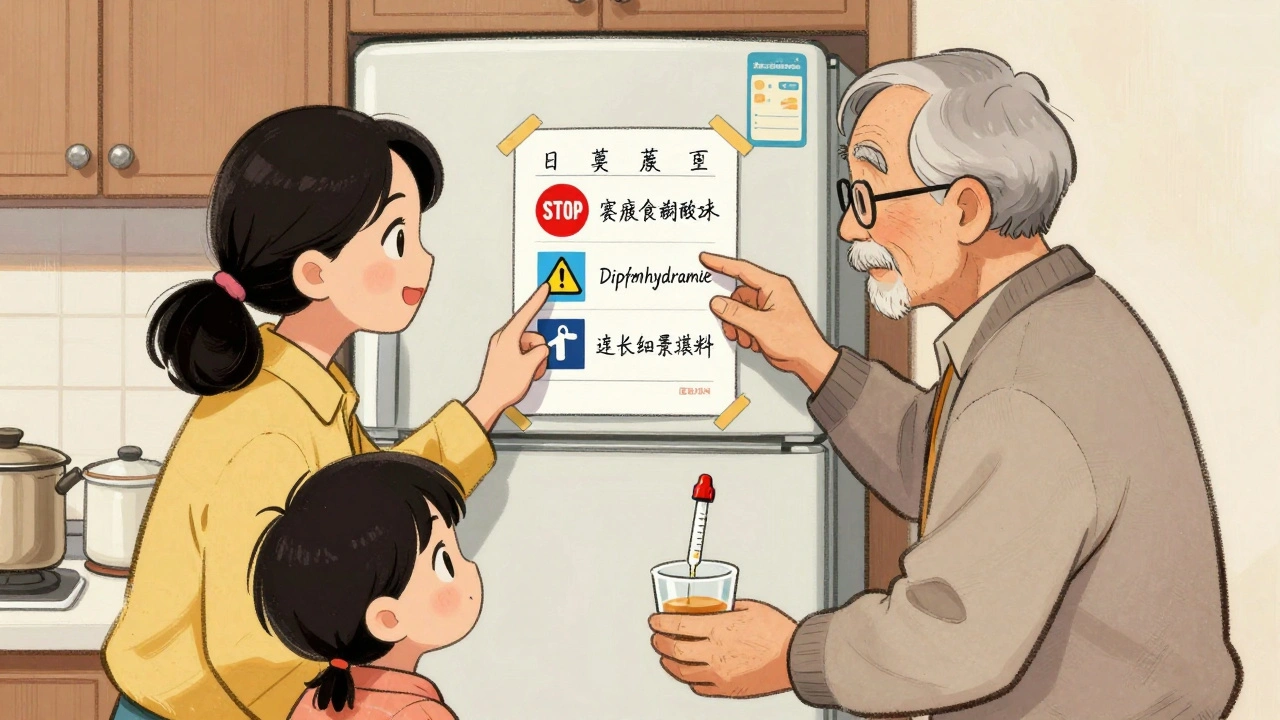
What to Do Before Giving Any Medicine
Make a habit of this before every dose:- Check the label. Find the active ingredient.
- Look at all other medicines you’ve given in the last 4-6 hours. Do any have the same ingredient?
- Check the concentration. Is it the same as the last one?
- Use only the measuring tool that came with the bottle.
- Write down the time and dose - even if you’re the only caregiver.
What Not to Do
There are a few dangerous myths that still circulate:- “Alternating acetaminophen and ibuprofen is safer.” False. The American Academy of Family Physicians says this practice increases double dosing risk by 47%. You’re more likely to mix up timing and end up giving both too often.
- “Flavor means strength.” No. Orange doesn’t mean stronger. Strawberry doesn’t mean weaker. The concentration is the same, no matter the color or taste.
- “I gave it yesterday, so it’s fine today.” Dosing is based on weight and time. Just because you gave it 24 hours ago doesn’t mean it’s safe to give again now. Check the label’s dosing schedule.
When to Call for Help
If you think your child got too much medicine, don’t wait. Don’t Google it. Don’t hope it’s fine. Call Poison Control immediately at 1-800-222-1222. They’re free, confidential, and available 24/7. They’ll ask you:- What medicine was given?
- How much?
- When?
- How old and how much does your child weigh?

Tools That Help
There are apps that can help. Medisafe, Round Health, and others let you input your child’s medicines and send alerts if you try to give something that conflicts. A 2023 Consumer Reports review found these apps reduce double dosing risk by 52% - if you use them consistently. But they’re not magic. You still have to enter the right info. And 72% of parents who try them stop using them after a month. A simpler fix? Keep a printed list. Write down every medicine in your cabinet. List the active ingredient, strength, and how often it can be given. Tape it to the inside of your medicine cabinet door. Update it every time you buy something new.What’s Changing
Good news: things are getting better. Starting in December 2025, the FDA will require all children’s OTC medicines to list active ingredients in bold, standardized format. No more hiding them in tiny print. Some companies are already adding QR codes to packaging. Scan it, and you get a simple breakdown of what’s inside - no reading required. The American Academy of Pediatrics launched a “Know Your Ingredients” campaign in early 2024. They’re putting simple icons on packaging - a little red stop sign for acetaminophen, a blue caution for diphenhydramine. Pilot studies showed this improved parent recognition by 57%. But the biggest change? Awareness. The more parents learn to check, the fewer kids get hurt.Final Tip: One Person, One Medicine
If you have more than one caregiver - partner, grandparent, babysitter - pick one person to handle all medication. That person reads the label, measures the dose, writes it down, and gives it. No one else touches it unless they check the log. This one step cuts double dosing incidents by 38%. It’s not about control. It’s about safety. You don’t need to be perfect. You just need to be careful. And the best way to be careful? Always check the active ingredient. Before every dose. Every time.What should I do if I accidentally double dose my child?
Call Poison Control immediately at 1-800-222-1222. Do not wait for symptoms. Even if your child seems fine, the damage from acetaminophen or other ingredients can take hours to show. Have the medicine bottle ready - they’ll ask what’s in it, how much was given, and when. Follow their instructions exactly.
Can I give my child ibuprofen and acetaminophen together?
It’s not recommended unless a doctor specifically tells you to. Alternating them increases the chance of giving too much of one or both. Studies show this practice raises double dosing risk by 47%. If your child’s fever isn’t breaking with one medicine, wait until the next scheduled dose before switching - and only if your doctor says it’s okay.
Are generic brands safer than name brands?
Yes - if they have the same active ingredient and strength. Generic medicines contain the same chemicals as name brands. The only difference is price and inactive ingredients like flavor or color. Always compare the active ingredient and concentration, not the brand name.
Why do some cough syrups have acetaminophen in them?
Because manufacturers assume parents will use them for fever or pain too. Most multi-symptom cold medicines include acetaminophen to treat fever, headache, or body aches - even if the child only has a cough. That’s why it’s so easy to accidentally double dose. Always read the label - even if it’s just for a cough.
How do I know if my child’s medicine is too strong?
Check the concentration: mg per mL. For acetaminophen, common pediatric strengths are 120mg/5mL or 160mg/5mL. For ibuprofen, it’s usually 50mg/1.25mL or 100mg/5mL. Never assume older children’s medicine is safe for younger ones. Always match the dose to your child’s weight - not age.
Should I use a dosing chart from the internet?
No. Online charts often use outdated or incorrect guidelines. Always use the dosing instructions on the medicine bottle - or ask your pharmacist. They know the exact concentration and can tell you the right amount for your child’s weight.
Jennifer Taylor
December 13, 2025 AT 00:58Okay but have you seen the new FDA labels? They’re literally just putting red stop signs on acetaminophen now. I thought I was losing my mind until I saw my cousin’s baby’s medicine bottle and went FULL TERROR MODE. 🚨 I literally screamed at the pharmacist. They didn’t even know what I was talking about. I had to show them the QR code. I’m not even mad anymore. Just scared. 😭
Ronan Lansbury
December 13, 2025 AT 12:19Of course the government waits until 2025 to standardize labels. Meanwhile, Big Pharma has been quietly stuffing APAP into every syrup, chewable, and ‘natural’ remedy they can get away with. This isn’t negligence-it’s systemic. They want you confused. They want you overdosing. Then they sell you the antidote. Wake up.
Webster Bull
December 15, 2025 AT 08:03Always check the active ingredient. That’s it. No apps. No charts. Just read the tiny print. Done.
nithin Kuntumadugu
December 16, 2025 AT 12:37lol at people using measuring cups. bro, i used a kitchen spoon for my daughter's tylenol for 3 years. she's 7 and still runs like a cheetah. maybe the system is broken, not the parents? 😏
Jade Hovet
December 18, 2025 AT 09:45OMG I JUST REALIZED I DID THIS LAST WEEK 😭 I gave her the cough syrup AND the fever reducer because she was SO SICK and I was TIRED. I’m so scared. I printed out that list from the post and taped it to the fridge. I’m gonna do better. Thank you for this. 💙
Keasha Trawick
December 18, 2025 AT 15:59The real horror isn’t the dosing-it’s the pharmacokinetic synergy of polypharmacy in developing hepatic pathways. Acetaminophen’s glucuronidation saturation threshold in pediatric populations is alarmingly low when co-administered with CYP2E1-inducing agents like diphenhydramine. We’re not talking about ‘mistakes’-we’re talking about metabolic cascade failure. And the FDA’s ‘red stop sign’? A performative Band-Aid on a hemorrhaging system.
Donna Hammond
December 19, 2025 AT 13:49I’m a pediatric nurse. I’ve seen the ER reports. I’ve held the babies who didn’t make it because their parents thought ‘it’s just one more drop.’ This post saved lives. Please, if you’re reading this, print the list. Tape it up. Make your partner read it. Your child doesn’t need you to be perfect-just careful. One check. Every time.
Sheldon Bird
December 20, 2025 AT 03:34My wife and I started using the fridge chart after our second kid almost got double-dosed. It’s silly, but it works. Now even Grandma checks it before she gives anything. No drama. No blame. Just safety. 🙏
Tommy Watson
December 20, 2025 AT 23:59Why are we even giving kids all this crap? My kid got sick last winter and I just gave him honey, water, and cuddles. He was better in 3 days. Who needs all these chemicals? I’m done.
sharon soila
December 22, 2025 AT 05:14Every child deserves to be safe. Every parent deserves to feel confident. This isn’t about being perfect. It’s about being present. One label. One check. One moment of attention. That’s all it takes to change a life. You’ve got this.
Bruno Janssen
December 22, 2025 AT 09:41I gave my son two doses last week. I didn’t mean to. I didn’t even know. I just… didn’t check. I still can’t look at the medicine cabinet. I don’t know if I’ll ever feel okay again.