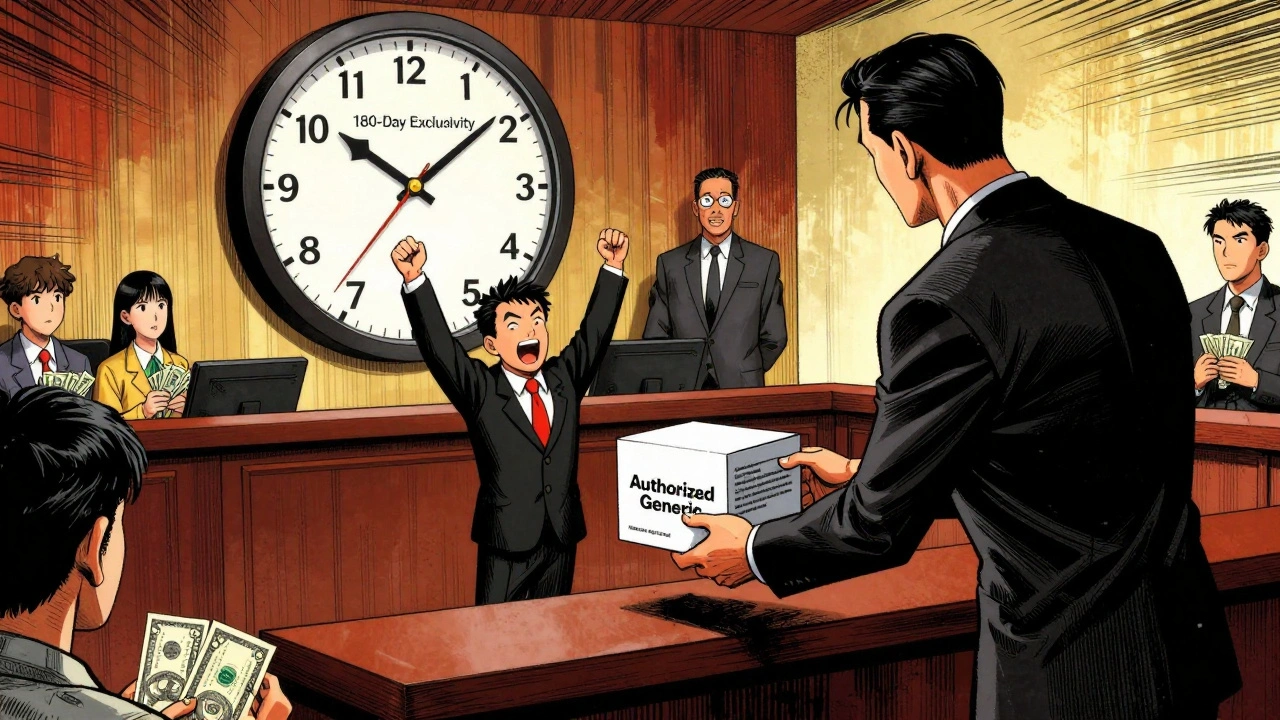
180-Day Exclusivity: What It Means for Generic Drugs and Drug Prices
When a brand-name drug’s patent runs out, the 180-day exclusivity, a special period granted by the FDA to the first generic manufacturer to challenge a patent and win. Also known as generic market exclusivity, it’s a key part of the Hatch-Waxman Act, a 1984 law designed to balance innovation and affordable access. This rule doesn’t give the generic company a monopoly forever—it gives them a head start. For six months, no other generic can enter the market, even if they’ve already been approved. That’s when prices usually drop hard.
Why does this matter to you? Because generic drugs, lower-cost versions of brand-name medications that contain the same active ingredients are how most people afford prescriptions today. Without 180-day exclusivity, the first generic company might not risk the millions it costs to challenge a patent in court. But once they win, they get to be the only one selling that generic for half a year. That’s enough time to capture most of the market—and often, to drive the brand-name drug out of business. After those 180 days, other generics flood in, and prices can drop by 80% or more.
It’s not perfect. Sometimes companies game the system—filing lawsuits just to delay competitors, or teaming up with the brand-name maker to delay the flood of cheaper options. The FDA tries to catch this, but it’s not always fast enough. Still, when it works right, 180-day exclusivity is one of the main reasons your insulin, blood pressure pills, or antidepressants cost a fraction of what they did 15 years ago.
Below, you’ll find real-world examples of how this rule affects what’s on your pharmacy shelf—from the first generic version of a blockbuster drug to how it changes your out-of-pocket costs. You’ll also see how it connects to other issues like drug pricing, patent challenges, and what happens when the system breaks down.