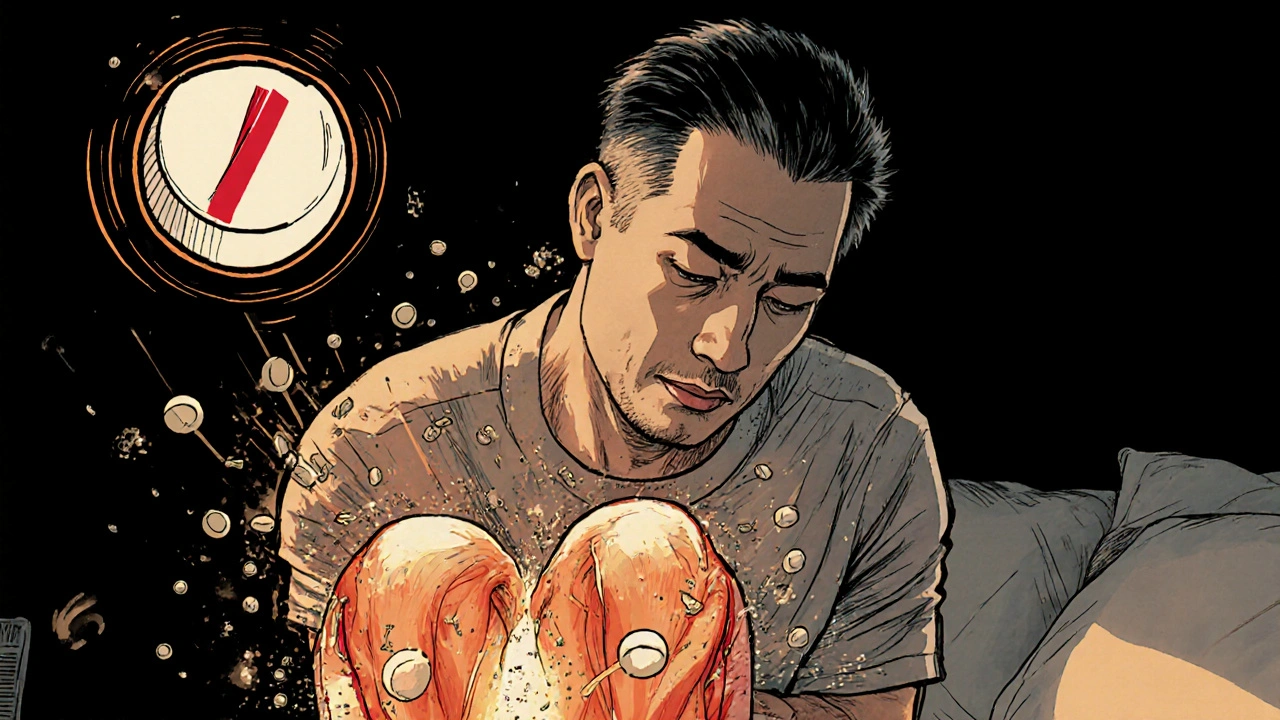
Statin Myopathy: Causes, Symptoms, and What You Can Do
When you take a statin, a class of drugs used to lower LDL cholesterol and reduce heart attack risk. Also known as HMG-CoA reductase inhibitors, they’re among the most prescribed medications in the world. But for some, the benefit comes with a cost: unexplained muscle pain, weakness, or cramps. That’s statin myopathy, a muscle disorder triggered by statin use that ranges from mild discomfort to dangerous muscle breakdown. It’s not rare—studies show up to 1 in 10 people on statins report muscle symptoms, and many doctors miss it because the signs are vague.
Statin myopathy isn’t just "sore muscles from working out." It’s a drug reaction tied to how statins interfere with energy production in muscle cells. The most common form is mild and reversible—stop the drug, symptoms fade. But in rare cases, it can lead to rhabdomyolysis, a life-threatening condition where damaged muscle tissue spills into the bloodstream, risking kidney failure. Risk goes up with higher doses, older age, kidney problems, or mixing statins with certain other drugs like fibrates or antibiotics. People with thyroid disorders or vitamin D deficiency are also more vulnerable.
What does it feel like? Think deep, persistent soreness—not sharp pain, but a dull ache in shoulders, thighs, or calves that doesn’t go away. You might feel unusually tired after walking or climbing stairs. Some notice weakness when lifting groceries or getting up from a chair. Blood tests for creatine kinase (CK) can help, but normal levels don’t rule it out. Many patients have statin myopathy with normal CK. The real clue? Symptoms improve after stopping the statin.
It’s not always the statin’s fault. Other things like thyroid issues, low vitamin D, or even overtraining can mimic the symptoms. But if you’re on a statin and your muscles feel off, don’t ignore it. Talk to your doctor about switching to a different statin, lowering the dose, or trying non-statin options like ezetimibe or PCSK9 inhibitors. Some people find relief by adding CoQ10, though evidence is mixed. The goal isn’t to stop cholesterol control—it’s to find a safer way to get it done.
Below, you’ll find real-world guides on how to spot statin myopathy early, what alternatives exist, how to monitor your muscle health, and what to ask your doctor before you start or keep taking these drugs. These aren’t theoretical discussions—they’re from people who’ve been there, and the science that backs their choices.